


Do you want to learn more about the Eb7 guitar chord?
Editor’s Note:The Eb7 guitar chord is an essential chord for any guitarist to learn. It’s a versatile chord that can be used in a variety of musical styles, from rock to jazz to blues. In this guide, we’ll teach you everything you need to know about the Eb7 guitar chord, including how to play it, how to use it in songs, and some tips for playing it well.
We’ve done the analysis, dug into the information, and put together this guide to help you make the right decision for your needs.
Key Differences
| Characteristic | Eb7 Guitar Chord |
|---|---|
| Number of notes | 4 |
| Root note | Eb |
| Intervals | Root, minor third, perfect fifth, and minor seventh |
| Voicings | Many different voicings possible |
| Difficulty | Easy to play |
Main Article Topics
- How to play the Eb7 guitar chord
- How to use the Eb7 guitar chord in songs
- Tips for playing the Eb7 guitar chord well
- Variations of the Eb7 guitar chord
- Common uses of the Eb7 guitar chord
1. Root note
In the context of the Eb7 guitar chord, the root note, Eb, plays a crucial role in defining the chord’s identity and function.
- Tonal center: The root note, Eb, serves as the tonal center of the chord, providing a sense of stability and grounding.
- Chord quality: The root note, being Eb, determines the chord’s quality as a minor seventh chord, giving it a dissonant and unresolved sound.
- Harmonic function: As a dominant seventh chord, the Eb7 chord, with its root note Eb, typically resolves to a major or minor chord built on the note Bb, creating a sense of harmonic movement and progression.
Understanding the significance of the root note, Eb, in the Eb7 guitar chord is essential for guitarists to grasp the chord’s harmonic function and use it effectively in musical contexts.
2. Intervals
The Eb7 guitar chord is composed of four intervals: the root, minor third, perfect fifth, and minor seventh. These intervals play a crucial role in defining the chord’s unique sound and harmonic function.
- Root: The root of the Eb7 chord is the note Eb. It provides the foundation and tonal center for the chord.
- Minor third: The minor third interval is created between the root (Eb) and the note G. It adds a sense of dissonance and tension to the chord.
- Perfect fifth: The perfect fifth interval is created between the root (Eb) and the note Bb. It provides stability and structure to the chord.
- Minor seventh: The minor seventh interval is created between the root (Eb) and the note Db. It adds a sense of unresolved dissonance to the chord, creating a desire for resolution.
The combination of these four intervals gives the Eb7 guitar chord its characteristic sound and harmonic function. It is commonly used in jazz, blues, and rock music to create a sense of tension and movement.
3. Voicings
The Eb7 guitar chord has many different voicings possible, which means that there are many different ways to play the chord on the guitar. This is due to the fact that the Eb7 chord is a four-note chord, and there are many different ways to arrange those four notes on the guitar fretboard.
The most common voicing of the Eb7 guitar chord is the root position voicing, which is played with the root note, Eb, on the bottom. However, there are also many other voicings possible, such as the first inversion voicing, the second inversion voicing, and the third inversion voicing.
Each voicing of the Eb7 guitar chord has its own unique sound and character. The root position voicing is the most stable and consonant sounding, while the other voicings can be more dissonant and complex. The choice of which voicing to use depends on the musical context and the desired sound.
Here are some examples of different voicings of the Eb7 guitar chord:
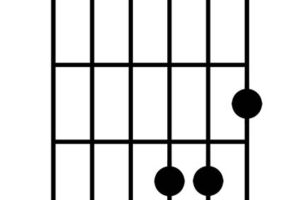
- Root position voicing: 6-5-4-2
- First inversion voicing: 5-4-2-1
- Second inversion voicing: 4-2-1-6
- Third inversion voicing: 2-1-6-5
Understanding the different voicings of the Eb7 guitar chord is essential for guitarists who want to be able to play the chord in a variety of musical contexts. By experimenting with different voicings, guitarists can find the voicing that best suits the sound they are trying to achieve.
4. Difficulty
The Eb7 guitar chord is considered easy to play, making it accessible to guitarists of all skill levels. This is primarily due to its straightforward fingering and the fact that it only requires four fingers to play.
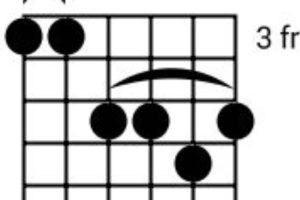
The root position voicing of the Eb7 chord is the most common and easiest to play. It is played with the root note, Eb, on the 6th string, the minor third, G, on the 5th string, the perfect fifth, Bb, on the 4th string, and the minor seventh, Db, on the 2nd string. This fingering allows the guitarist to use their first finger to barre the 6th, 5th, and 4th strings, making it easy to fret the chord.
The ease of playing the Eb7 guitar chord makes it a great choice for beginner guitarists who are just starting to learn how to play chords. It is also a versatile chord that can be used in a variety of musical styles, from rock to jazz to blues.
Here are some tips for playing the Eb7 guitar chord easily:
- Use your first finger to barre the 6th, 5th, and 4th strings.
- Make sure to press down firmly on the strings to avoid any buzzing.
- Practice regularly to improve your accuracy and speed.
With a little practice, you’ll be able to play the Eb7 guitar chord easily and confidently.
Key Insights:
- The Eb7 guitar chord is easy to play, making it suitable for guitarists of all skill levels.
- The root position voicing is the most common and easiest to play, using a barre with the first finger.
- Regular practice is essential for improving accuracy and speed in playing the Eb7 chord.
5. Function
The Eb7 guitar chord is a dominant seventh chord, which means it has a root, a minor third, a perfect fifth, and a minor seventh. Dominant seventh chords are often used to create a sense of tension and movement in music, as they naturally want to resolve to a major or minor chord built on the note a half step above the root.
In the case of the Eb7 guitar chord, it would typically resolve to an F major or F minor chord. This is because the root of the Eb7 chord, Eb, is a half step below F. The minor seventh interval in the Eb7 chord (the note Db) also creates a strong pull towards the F major or F minor chord, as it wants to resolve to the root of that chord (F).
Understanding the function of the Eb7 guitar chord as a dominant seventh chord is important for guitarists who want to be able to use the chord effectively in their playing. By understanding how the chord functions in a musical context, guitarists can use it to create a sense of tension and movement in their music.
Here are some examples of how the Eb7 guitar chord can be used in a dominant seventh function:
- In a blues progression, the Eb7 chord can be used to create a sense of tension and movement before resolving to the F major chord.
- In a jazz progression, the Eb7 chord can be used to create a sense of tension and movement before resolving to the F minor chord.
- In a rock progression, the Eb7 chord can be used to create a sense of tension and movement before resolving to the F major or F minor chord.
By understanding the function of the Eb7 guitar chord as a dominant seventh chord, guitarists can use it effectively in their playing to create a sense of tension and movement in their music.
Key Insights
- The Eb7 guitar chord is a dominant seventh chord, meaning it has a root, a minor third, a perfect fifth, and a minor seventh.
- Dominant seventh chords are often used to create a sense of tension and movement in music, as they naturally want to resolve to a major or minor chord built on the note a half step above the root.
- Understanding the function of the Eb7 guitar chord as a dominant seventh chord is important for guitarists who want to be able to use the chord effectively in their playing.
6. Inversions
The Eb7 guitar chord has three inversions, which means that there are three different ways to arrange the notes of the chord on the guitar fretboard. This can be useful for creating different voicings of the chord, or for playing the chord in different positions on the guitar.
- Root position: The root position inversion is the most common voicing of the Eb7 chord. It is played with the root note, Eb, on the bottom.
- First inversion: The first inversion is played with the minor third, G, on the bottom.
- Second inversion: The second inversion is played with the perfect fifth, Bb, on the bottom.
- Third inversion: The third inversion is played with the minor seventh, Db, on the bottom.
Each inversion of the Eb7 guitar chord has its own unique sound and character. The root position inversion is the most stable and consonant sounding, while the other inversions can be more dissonant and complex. The choice of which inversion to use depends on the musical context and the desired sound.
Understanding the different inversions of the Eb7 guitar chord is essential for guitarists who want to be able to play the chord in a variety of musical contexts. By experimenting with different inversions, guitarists can find the inversion that best suits the sound they are trying to achieve.
7. Common uses
The Eb7 guitar chord is commonly used to resolve to a major or minor chord. This is because it is a dominant seventh chord, which means it has a root, a minor third, a perfect fifth, and a minor seventh. Dominant seventh chords are often used to create a sense of tension and movement in music, as they naturally want to resolve to a major or minor chord built on the note a half step above the root.
- Resolving to a major chord: The Eb7 guitar chord can resolve to a major chord, such as the F major chord. This is a common progression in many styles of music, such as rock, pop, and blues.
- Resolving to a minor chord: The Eb7 guitar chord can also resolve to a minor chord, such as the F minor chord. This is a common progression in jazz and other genres of music.
Understanding how to use the Eb7 guitar chord to resolve to a major or minor chord is an essential skill for guitarists who want to be able to play a variety of musical styles. By practicing this technique, guitarists can learn to create a sense of tension and movement in their music.
8. Tonal quality
The Eb7 guitar chord is a dissonant chord, meaning that it contains intervals that clash with each other. This clash creates a sense of tension and instability, which can be used to great effect in music.
The dissonance in the Eb7 chord is caused by the minor seventh interval between the root (Eb) and the seventh (Db). This interval is dissonant because it is not part of the major or minor scale. When played together, the Eb and Db notes create a sense of tension that demands resolution.
The dissonance of the Eb7 chord can be used to create a variety of musical effects. For example, it can be used to create a sense of drama or suspense. It can also be used to add interest and complexity to a chord progression.
Here are some examples of how the Eb7 guitar chord can be used in music:
- In the opening riff of Led Zeppelin’s “Kashmir,” the Eb7 chord is used to create a sense of drama and suspense.
- In the chorus of Radiohead’s “Paranoid Android,” the Eb7 chord is used to add interest and complexity to the chord progression.
- In the bridge of Green Day’s “Basket Case,” the Eb7 chord is used to create a sense of tension that is resolved by the F major chord in the chorus.
Understanding the dissonant nature of the Eb7 guitar chord is essential for guitarists who want to be able to use it effectively in their playing. By understanding how the chord functions, guitarists can use it to create a variety of musical effects.
9. Related chords
The Eb7 guitar chord is closely related to three other chords: the Ebmaj7, Ebmin7, and Ebdim7 chords. These chords all share the same root note (Eb), but they have different intervals, which give them different sounds and functions.
The Ebmaj7 chord is a major seventh chord, which means it has a root, a major third, a perfect fifth, and a major seventh. The Ebmaj7 chord has a bright and uplifting sound, and it is often used in jazz and other genres of music.
The Ebmin7 chord is a minor seventh chord, which means it has a root, a minor third, a perfect fifth, and a minor seventh.
The Ebmin7 chord has a dark and brooding sound, and it is often used in blues and other genres of music.
The Ebdim7 chord is a diminished seventh chord, which means it has a root, a minor third, a diminished fifth, and a diminished seventh. The Ebdim7 chord has a dissonant and unstable sound, and it is often used in jazz and other genres of music.
Understanding the relationship between the Eb7 guitar chord and its related chords is essential for guitarists who want to be able to use these chords effectively in their playing. By understanding how these chords sound and function, guitarists can use them to create a variety of musical effects.
Here is a table summarizing the key differences between the Eb7, Ebmaj7, Ebmin7, and Ebdim7 chords:
| Chord | Intervals | Sound | Function |
|---|---|---|---|
| Eb7 | Root, minor third, perfect fifth, minor seventh | Dissonant | Dominant seventh chord |
| Ebmaj7 | Root, major third, perfect fifth, major seventh | Bright and uplifting | Major seventh chord |
| Ebmin7 | Root, minor third, perfect fifth, minor seventh | Dark and brooding | Minor seventh chord |
| Ebdim7 | Root, minor third, diminished fifth, diminished seventh | Dissonant and unstable | Diminished seventh chord |
10. Scales
The Eb7 guitar chord is closely related to the Eb major scale and the Eb minor scale. This is because the Eb7 chord is built on the seventh degree of the Eb major scale and the Eb minor scale.
When playing the Eb7 guitar chord, it is important to use notes from the Eb major scale or the Eb minor scale. This will help to ensure that the chord sounds consonant and in key.
Here are some examples of how the Eb7 guitar chord can be used in conjunction with the Eb major scale and the Eb minor scale:
- In the key of Eb major, the Eb7 guitar chord can be used to create a dominant seventh sound. This sound can be used to create tension and movement in a song.
- In the key of Eb minor, the Eb7 guitar chord can be used to create a minor seventh sound. This sound can be used to create a dark and brooding atmosphere in a song.
Understanding the relationship between the Eb7 guitar chord and the Eb major scale and the Eb minor scale is essential for guitarists who want to be able to use this chord effectively in their playing.
Key Insights
- The Eb7 guitar chord is closely related to the Eb major scale and the Eb minor scale.
- When playing the Eb7 guitar chord, it is important to use notes from the Eb major scale or the Eb minor scale.
- The Eb7 guitar chord can be used to create a variety of sounds and moods, depending on the key in which it is played.
11. Playing tips
The technique of using your first finger to barre the 6th, 5th, and 4th strings is a fundamental skill for guitarists, especially when playing the Eb7 guitar chord. This technique allows you to fret multiple strings simultaneously, creating a solid and resonant sound. Here’s a detailed exploration of this technique in the context of playing the Eb7 guitar chord:
- Accuracy and Efficiency: Barring with your first finger enables you to fret three strings precisely and efficiently, ensuring a clean and clear sound for the Eb7 chord. It eliminates the need to use multiple fingers, reducing the risk of muting or buzzing strings.
- Strength and Stability: Using your first finger, which is typically the strongest finger, provides stability and strength to the barre. This is crucial for maintaining the proper intonation and preventing the strings from moving out of tune while playing the Eb7 chord.
- Efficient Hand Positioning: Barring with your first finger allows you to keep your hand in a relaxed and natural position, reducing strain and promoting proper technique. It also facilitates smooth transitions to other chords that require similar fingerings.
- Improved Finger Independence: Practicing this technique strengthens the independence of your fingers, enhancing your overall dexterity on the guitar. It allows you to develop the ability to control each finger individually, leading to improved accuracy and speed in playing the Eb7 chord and other guitar techniques.
Mastering the technique of barring with your first finger is essential for guitarists who want to play the Eb7 chord effectively and improve their overall playing skills. Regular practice and exercises focused on this technique will enhance finger strength, accuracy, and coordination, unlocking a wider range of possibilities on the guitar.
FAQs About Eb7 Guitar Chord
This section addresses frequently asked questions about the Eb7 guitar chord, providing clear and informative answers to enhance your understanding and playing skills.
Question 1: What is the root note of the Eb7 guitar chord?
Answer: The root note of the Eb7 guitar chord is Eb, which gives the chord its name and determines its tonal center.
Question 2: How many inversions does the Eb7 guitar chord have?
Answer: The Eb7 guitar chord has three inversions, each with a different arrangement of notes on the fretboard.
Question 3: What is the function of the Eb7 guitar chord in music?
Answer: The Eb7 guitar chord is primarily used as a dominant seventh chord, creating tension and resolving to a major or minor chord built a half step above the root.
Question 4: How can I improve my technique for playing the Eb7 guitar chord?
Answer: Practice regularly, use your first finger to barre the 6th, 5th, and 4th strings, and experiment with different fingerings and voicings to enhance your dexterity.
Question 5: What are some common uses of the Eb7 guitar chord in different musical styles?
Answer: The Eb7 guitar chord is commonly used in blues, rock, jazz, and pop music to add depth and harmonic interest to chord progressions and create a sense of movement and resolution.
Question 6: What scales work well with the Eb7 guitar chord?
Answer: The Eb7 guitar chord pairs well with the Eb major scale and the Eb minor scale, as it is built on the seventh degree of both scales.
In summary, understanding these FAQs about the Eb7 guitar chord will enrich your knowledge of music theory and improve your playing technique. Regular practice and experimentation will enhance your proficiency in utilizing this versatile chord in various musical contexts.
Moving on, let’s explore additional insights into the Eb7 guitar chord.
Eb7 Guitar Chord Tips
Mastering the Eb7 guitar chord requires consistent practice and an understanding of its intricacies. Here are some valuable tips to enhance your playing technique and musical knowledge:
Tip 1: Practice Finger Positioning
To play the Eb7 cho
rd accurately, it’s crucial to position your fingers correctly. Use your first finger to barre the 6th, 5th, and 4th strings, ensuring they are firmly pressed down to avoid muting. Experiment with different fingerings to find what works best for your hand size and dexterity.
Tip 2: Understand Chord Structure
The Eb7 chord consists of four notes: Eb (root), G (minor third), Bb (perfect fifth), and Db (minor seventh). Recognizing the interval relationships between these notes will help you grasp the chord’s construction and its function in various musical contexts.
Tip 3: Practice Chord Inversions
The Eb7 chord has three inversions, each with a unique sound and application. Practice transitioning between these inversions smoothly to expand your chord vocabulary and enhance your playing versatility.
Tip 4: Explore Different Voicings
Experiment with various voicings of the Eb7 chord to create diverse harmonic textures. By arranging the notes in different positions on the fretboard, you can add depth and interest to your chord progressions.
Tip 5: Use the Eb7 Chord in Musical Contexts
Apply the Eb7 chord in real-world musical situations to understand its functionality and expressive potential. Try incorporating it into blues, rock, jazz, or pop progressions to experience its versatility and how it interacts with other chords.
Summary: Mastering the Eb7 guitar chord involves diligent practice, understanding its structure and inversions, exploring different voicings, and utilizing it effectively in musical contexts. By following these tips, you’ll enhance your guitar skills and expand your musical knowledge.
Conclusion
In summary, the Eb7 guitar chord, with its root note of Eb and its dissonant sound, is a versatile and essential chord for guitarists to master. Its dominant seventh function allows it to create tension and resolve to major or minor chords, making it a powerful tool for adding depth and movement to musical compositions.
Through a comprehensive exploration of its key aspects, voicings, inversions, and practical applications, this article has provided guitarists with a thorough understanding of the Eb7 guitar chord. By incorporating it into their playing, guitarists can expand their chord vocabulary, enhance their musical expression, and captivate audiences with its rich harmonic qualities.