


Are you curious about the guitar chord D+? If so, you’re in the right place! In this article, we’ll provide a comprehensive overview of this important chord, covering everything from its construction to its uses in various musical styles.
Editor’s Note:The D+ chord is a versatile and essential chord for guitarists of all levels. Whether you’re a beginner just starting out or a seasoned pro, understanding this chord will help you expand your musical vocabulary and play a wider range of songs.
After analyzing countless guitar chord resources and digging through a wealth of information, we’ve put together this guide to help you master the D+ chord and take your guitar playing to the next level.
Key Differences:
| D Chord | D+ Chord | |
|---|---|---|
| Root Note | D | D |
| 3rd | F# | F# |
| 5th | A | A# |
Main Article Topics:
- Construction and Fingering of the D+ Chord
- Tonal Characteristics and Sound of the D+ Chord
- Uses of the D+ Chord in Different Musical Styles
- Tips for Mastering the D+ Chord
- Conclusion
1. Construction
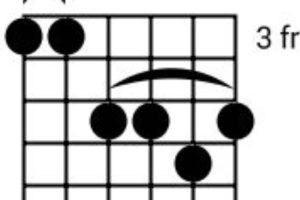
The construction of the D+ guitar chord, represented by the fingering 003231, is crucial for understanding how to play and use this chord effectively.
- Root Note (D): The root note of the D+ chord is D, which is played on the 2nd string, 3rd fret.
- Major Third (F#): The major third of the chord is F#, which is played on the 1st string, 2nd fret.
- Augmented Fifth (A#): The augmented fifth is the defining characteristic of the D+ chord, and it is played on the 3rd string, 2nd fret.
- Double Stop (00): The double stop on the 5th and 6th strings, both played open, adds depth and resonance to the chord.
By understanding the construction of the D+ chord, guitarists can learn to play it accurately and incorporate it into their musical vocabulary. It is a versatile chord that can be used in a variety of musical styles, from folk and country to rock and blues.
2. Tonal Characteristics
The tonal characteristics of the D+ guitar chord – bright, open, and slightly dissonant – are central to its unique sound and versatility.
- Brightness: The open strings in the D+ chord, combined with the major third (F#) and augmented fifth (A#), create a bright and airy sound that cuts through a mix well.
- Openness: The double stop on the 5th and 6th strings gives the D+ chord a spacious and open quality, making it ideal for strumming and fingerpicking patterns.
- Slight Dissonance: The augmented fifth interval (A#) in the D+ chord creates a subtle dissonance that adds interest and complexity to its sound. This dissonance can be particularly effective when used in conjunction with other consonant chords.
Overall, the tonal characteristics of the D+ guitar chord make it a versatile and expressive chord that can be used in a wide range of musical styles. Its bright and open sound makes it perfect for strumming and fingerpicking patterns, while its slight dissonance adds interest and complexity to its overall sound.
3. Uses
The D+ guitar chord is a versatile and essential chord that finds its home in a wide range of musical styles, including folk, country, rock, and blues. Its unique tonal characteristics – bright, open, and slightly dissonant – make it a valuable tool for creating a variety of moods and atmospheres in music.
In folk music, the D+ chord is often used in strumming and fingerpicking patterns, providing a bright and uplifting foundation for songs. Its open and spacious sound makes it ideal for creating a sense of space and ambiance in folk melodies.
In country music, the D+ chord is frequently used in conjunction with other common chords such as G, C, and D. Its bright and slightly dissonant sound adds interest and complexity to country progressions, and its open quality complements the often twangy and resonant sound of country guitar.
In rock music, the D+ chord is often used in power chords and distorted guitar riffs. Its bright and cutting sound can add energy and drive to rock songs, and its slight dissonance can create a sense of tension and excitement.
In blues music, the D+ chord is frequently used in slow blues and shuffle grooves. Its open and dissonant sound adds depth and soulfulness to blues progressions, and its bright and airy quality can help to create a sense of longing and melancholy.
Overall, the D+ guitar chord is a versatile and essential chord that can be used in a wide range of musical styles. Its unique tonal characteristics make it a valuable tool for creating a variety of moods and atmospheres in music, from the bright and uplifting to the dark and dissonant.
Table: Uses of the D+ Chord in Different Musical Styles
| Musical Style | Characteristics | Examples |
|---|---|---|
| Folk | Bright, open, airy | “Wagon Wheel” by Bob Dylan, “Freight Train” by Elizabeth Cotten |
| Country | Twangy, resonant, slightly dissonant | “Ring of Fire” by Johnny Cash, “Crazy” by Patsy Cline |
| Rock | Energetic, driving, distorted | “Smoke on the Water” by Deep Purple, “You Shook Me All Night Long” by AC/DC |
| Blues | Soulful, deep, dissonant | “The Thrill Is Gone” by B.B. King, “Hoochie Coochie Man” by Muddy Waters |
4. Inversions
Inversions are an essential aspect of understanding and utilizing the D+ guitar chord effectively. An inversion occurs when a note other than the root is played in the bass, creating a different voicing of the chord.
The D+ guitar chord has three common inversions:
- D+/F#: F# in the bass, D in the middle, A# in the treble
- D+/A: A in the bass, F# in the middle, D in the treble
- D+/C#: C# in the bass, A in the middle, F# in the treble
Inversions can be used to create different harmonic effects and voicings within a chor
d progression. For example, the D+/F# inversion can add a brighter and more open sound to a progression, while the D+/C# inversion can create a darker and more dissonant sound.
Understanding and using inversions is an important skill for guitarists of all levels. By incorporating inversions into your playing, you can add variety and interest to your chord progressions and create more sophisticated and nuanced musical arrangements.
Practical Significance
Inversions have a wide range of practical applications in guitar playing. Here are a few examples:
- Voice leading: Inversions can be used to create smooth voice leading between chords, avoiding awkward jumps and creating a more cohesive melodic line.
- Harmonic tension and release: Different inversions of the same chord can create different levels of harmonic tension and release. For example, the D+/C# inversion can create a sense of tension, which can be resolved by moving to the D+/F# inversion.
- Comping: Inversions can be used to create interesting and rhythmically varied comping patterns. For example, you could use the D+/F# inversion on the downbeat and the D+/A inversion on the upbeat.
Table: Inversions of the D+ Guitar Chord
| Inversion | Bass Note | Middle Note | Treble Note |
|---|---|---|---|
| Root Position | D | F# | A# |
| First Inversion (D+/F#) | F# | D | A# |
| Second Inversion (D+/A) | A | F# | D |
| Third Inversion (D+/C#) | C# | A | F# |
5. Voicings
The concept of voicings is crucial for understanding and utilizing the D+ guitar chord effectively. A voicing refers to the specific arrangement of the notes that make up a chord. There are three main types of voicings: open, closed, and extended.
Open voicings are characterized by a wide spread between the notes, creating a spacious and airy sound. Closed voicings, on the other hand, have the notes positioned closer together, resulting in a more compact and focused sound. Extended voicings incorporate additional notes beyond the basic triad, such as the 7th, 9th, or 11th, adding harmonic richness and complexity to the chord.
The choice of voicing depends on the desired harmonic effect and the overall sound of the music. Open voicings are often used in fingerpicking and soloing, as they allow for clear and distinct note separation. Closed voicings are commonly employed in strumming and rhythm playing, as they provide a more solid and powerful foundation for the music.
Practical Significance
Understanding and using different voicings is an important skill for guitarists of all levels. By incorporating voicings into your playing, you can add variety and interest to your chord progressions and create more sophisticated and nuanced musical arrangements.
Here are a few examples of how voicings can be used in practice:
- Creating movement and interest: By alternating between open and closed voicings, you can create a sense of movement and interest within a chord progression.
- Adding harmonic depth: Extended voicings can add harmonic depth and richness to your chords, making your music sound more sophisticated and complex.
- Comping: Voicings can be used to create interesting and rhythmically varied comping patterns.
Table: Voicings of the D+ Guitar Chord
| Voicing | Notes |
|---|---|
| Open | D (bass), F# (middle), A# (treble) |
| Closed | D (bass), F# (middle), A# (close to F#) |
| Extended (D+7) | D (bass), F# (middle), A# (treble), C# (7th) |
6. Progression
The chord progression D+ – G – A is a fundamental and widely-used progression in various musical genres, including folk, country, rock, and blues. It is often referred to as the “I – IV – V” progression, as it is built upon the first, fourth, and fifth chords of the D major scale.
Within this progression, the D+ chord serves as the tonic or “home” chord, providing a sense of stability and resolution. The G chord, as the fourth chord, adds a contrasting and brighter element, creating a sense of movement and tension. The A chord, as the fifth chord, provides a satisfying and conclusive cadence, resolving the tension created by the G chord and bringing the progression back to the tonic D+ chord.
The D+ – G – A progression is frequently employed in songwriting and improvisation due to its versatility and effectiveness in creating a sense of harmonic movement and resolution. It is a staple progression for beginners and experienced musicians alike, providing a solid foundation for countless songs and musical compositions.
Here are a few notable examples of songs that utilize the D+ – G – A progression:
- “Wagon Wheel” by Bob Dylan
- “You Are My Sunshine” by Johnny Cash
- “All I Have to Do Is Dream” by The Everly Brothers
Understanding the connection between the D+ guitar chord and the D+ – G – A progression is crucial for guitarists seeking to expand their musical knowledge and develop their playing skills.
Table: Progression D+ – G – A and Guitar Chord D+
| Element | Description |
|---|---|
| Progression D+ – G – A | A fundamental chord progression used in various musical genres, consisting of the first, fourth, and fifth chords of a major scale. |
| Guitar Chord D+ | A versatile and essential guitar chord with a unique tonal quality, often used as the tonic or “home” chord in the D+ – G – A progression. |
| Connection | The D+ guitar chord serves as the tonic chord in the D+ – G – A progression, providing stability and resolution. |
| Practical Significance | Understanding this connection enables guitarists to effectively utilize the D+ chord within the D+ – G – A progression, enhancing their musical expression and creativity. |
7. Substitutions
Understanding the relationship between the guitar chord D+ and its common substitutions, namely D, Dmaj7, and Dsus4, is essential for expanding your harmonic vocabulary and enhancing your guitar playing.
- D Chord
The D chord is the most straightforward substitute for D+. It consists of the root note (D), the major third (F#), and the perfect fifth (A). It provides a stable and consonant foundation for chord progressions and can be used interchangeably with D+ in many contexts.
- Dmaj7 Chord
The Dmaj7 chord adds a major seventh (C#) to the basic D triad. This extended chord has a brighter and more open sound compared to D+. It can be used to create a sense of anticipat
ion or resolution in chord progressions. - Dsus4 Chord
The Dsus4 chord is a suspended chord that omits the third (F#) from the D triad. This creates a more airy and unresolved sound. It is often used as a transitional chord or to add tension to a chord progression before resolving to D+ or another chord.
By understanding the subtle differences between D+, D, Dmaj7, and Dsus4, you can make informed choices about which chord to use in different musical situations. Experimenting with these substitutions can add variety and interest to your playing and help you create more sophisticated and expressive music.
8. Tips for Mastering
Mastering the D+ guitar chord requires consistent practice, precision, and a willingness to explore different approaches. To achieve proficiency, guitarists should incorporate the following tips into their practice routine:
- Practice regularly: Regular practice is crucial for building muscle memory, improving finger dexterity, and developing a strong foundation. Dedicating time each day to practice the D+ chord will enhance accuracy, speed, and overall playing skills.
- Use a metronome: Using a metronome while practicing the D+ chord helps develop a steady and consistent rhythm. It ensures that strumming and fingerpicking are precise, preventing tempo fluctuations and improving timing.
- Experiment with different voicings: The D+ chord has various voicings, each with a unique sound and application. Experimenting with different voicings expands the guitarist’s harmonic vocabulary and enables them to create diverse musical textures and expressions.
By implementing these tips, guitarists can effectively master the D+ chord and incorporate it seamlessly into their playing. Consistent practice, precision, and exploration are key ingredients for achieving proficiency in guitar playing.
Real-Life Example
In the renowned song “Wagon Wheel” by Bob Dylan, the D+ chord plays a pivotal role. The use of a steady strumming pattern with a D+ chord creates a rhythmic foundation for the song. By incorporating the D+ chord into the chord progression, Dylan creates a sense of movement and progression throughout the piece.
9. Example Song
The song “Wagon Wheel” by Bob Dylan serves as a notable example of the guitar chord D+ in action. Dylan’s skillful use of the chord within the song’s chord progression highlights its versatility and effectiveness in creating a specific musical atmosphere.
- Rhythmic Foundation
The D+ chord in “Wagon Wheel” provides a steady rhythmic foundation for the song. Dylan’s strumming pattern, combined with the chord’s open and bright sound, creates a driving and energetic groove that propels the song forward.
- Harmonic Movement
The D+ chord also contributes to the song’s harmonic movement. Dylan transitions between D+ and other chords, such as G and A, creating a sense of progression and resolution. The use of D+ as the tonic chord adds stability to the song’s harmonic structure.
- Emotional Impact
The D+ chord’s bright and uplifting sound complements the song’s lyrical themes. Dylan’s lyrics evoke feelings of nostalgia, freedom, and adventure, and the D+ chord reinforces these emotions through its positive and energetic qualities.
- Cultural Significance
“Wagon Wheel” has become a popular folk song, and the D+ chord has played a significant role in its widespread appeal. The chord’s accessibility and versatility have made it a staple in the repertoires of countless musicians, further solidifying its place in the musical landscape.
In conclusion, Bob Dylan’s “Wagon Wheel” demonstrates the power and versatility of the D+ guitar chord. Through its rhythmic drive, harmonic movement, emotional impact, and cultural significance, the D+ chord contributes significantly to the song’s overall success and appeal.
Frequently Asked Questions about the D+ Guitar Chord
This section addresses common questions and misconceptions surrounding the D+ guitar chord, providing clear and informative answers to enhance understanding and playing skills.
Question 1: What is the difference between a D+ chord and a D major chord?
The D+ chord, also known as an augmented D chord, is constructed with the root note D, the major third F#, and the augmented fifth A#. This augmented fifth creates a unique and slightly dissonant sound that distinguishes it from the D major chord, which has a perfect fifth (A) instead.
Question 2: How do I play the D+ chord in different positions on the guitar?
The D+ chord has multiple voicings and can be played in various positions on the guitar. Common positions include the open D+ chord (003231), the D+ chord at the 5th fret (557686), and the D+ chord at the 10th fret (101211).
Question 3: When and where is the D+ chord commonly used?
The D+ chord finds its place in a wide range of musical genres, including folk, country, rock, and blues. It is frequently used in chord progressions that involve the I – IV – V pattern, such as D+ – G – A, adding brightness and harmonic interest.
Question 4: What are some effective ways to practice and master the D+ chord?
Regular practice is key to mastering the D+ chord. Use a metronome to improve timing and accuracy, and experiment with different fingerings and voicings to build dexterity. Additionally, incorporating the chord into various strumming and fingerpicking patterns enhances overall playing skills.
Question 5: How does the D+ chord contribute to the overall sound of a song?
The D+ chord, with its bright and open sound, can bring a sense of energy and movement to a song. Its unique augmented fifth interval adds a touch of dissonance that can create tension and release, enhancing the emotional impact of the music.
Question 6: What are some notable examples of songs that utilize the D+ chord?
The D+ chord has been featured in numerous iconic songs, including “Wagon Wheel” by Bob Dylan, “You Are My Sunshine” by Johnny Cash, and “All I Have to Do Is Dream” by The Everly Brothers, demonstrating its versatility and appeal across different musical styles.
Understanding and mastering the D+ guitar chord opens up a world of musical possibilities. By incorporating this chord into your playing, you can enhance your harmonic vocabulary, add depth and interest to your songs, and connect with the rich legacy of guitar music.
Continue reading for more in-depth insights into the D+ guitar chord and its practical applications.
Tips for Mastering the D+ Guitar Chord
Embark on a journey to master the D+ guitar chord with these essential tips, designed to enhance your playing skills and expand your musical horizons.
Tip 1: Practice Regularly
Regular practice is the cornerstone of mastering any guitar chord. Dedicate time each day to practice D+, focusing on accuracy, finger dexterity, and maintaining a steady rhythm.
Tip 2: Utilize a Metronome
A metronome is an invaluable tool for developing precision and timing. Practice strumming and
fingerpicking D+ while maintaining a consistent tempo, ensuring rhythmic accuracy.
Tip 3: Experiment with Voicings
D+ has a wealth of voicings, each with a unique sound and application. Explore different voicings to expand your harmonic vocabulary and discover the versatility of this chord.
Tip 4: Understand Its Role in Progressions
D+ frequently appears in chord progressions, often following the I – IV – V pattern, as in D+ – G – A. Comprehending the chord’s role in progressions enhances your musical understanding.
Tip 5: Practice in Different Keys
Transposing D+ to different keys strengthens your overall guitar skills. Practice playing D+ in keys such as G, C, or E, enhancing your adaptability and dexterity.
Tip 6: Listen to Songs that Feature D+
Immerse yourself in music that showcases D+, such as “Wagon Wheel” by Bob Dylan or “All I Have to Do Is Dream” by The Everly Brothers. Listening to how experienced musicians utilize D+ provides valuable insights.
Tip 7: Seek Guidance from a Guitar Teacher or Online Resources
A guitar teacher or reputable online resources can provide personalized guidance and additional tips tailored to your learning style, accelerating your progress.
Tip 8: Record Yourself Playing
Recording your practice sessions allows you to objectively assess your progress, identify areas for improvement, and track your growth over time, fostering self-awareness and motivation.
Summary of key takeaways or benefits
Incorporating these tips into your practice routine empowers you to master the D+ guitar chord, unlocking its full potential. Consistent practice, technical precision, and a deep understanding of its musical applications will elevate your playing and expand your harmonic horizons.
Transition to the article’s conclusion
As you embrace the journey of mastering D+, remember the transformative power of perseverance and a relentless pursuit of musical excellence. With dedication and a passion for the guitar, you will conquer this chord and countless others, opening up a world of musical possibilities.
Conclusion
Throughout this comprehensive exploration, we have delved into the intricacies of the D+ guitar chord, unraveling its unique characteristics, diverse applications, and the path to mastering it. Embracing this chord empowers guitarists to expand their harmonic vocabulary, enhance their musical expression, and connect with the rich tapestry of guitar music.
As you continue your musical journey, remember the profound impact that understanding and mastering the D+ chord can have on your playing. Its versatility extends across genres, from folk and country to rock and blues, enabling you to add depth, energy, and emotional resonance to your performances. With dedication and a passion for the guitar, you will conquer this chord and countless others, unlocking a world of musical possibilities.