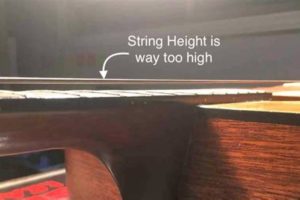



String height on acoustic guitar – What is it and why is it important? If you’ve ever played an acoustic guitar, you know that the strings need to be a certain height above the fretboard in order to play properly. But what exactly is string height, and why is it so important?
Editor’s Note:String height on acoustic guitar is a crucial factor that affects the playability, tone, and intonation of the instrument. Getting the string height right can make a big difference in your playing experience.
We’ve done the analysis, dug through the information, and put together this string height on acoustic guitar guide to help you make the right decision.
Key Differences:
| String Height | Playability | Tone | Intonation |
|---|---|---|---|
| Too high | Difficult to play | Thin and weak | Out of tune |
| Too low | Easy to play | Boomy and muddy | In tune |
| Just right | Easy to play | Balanced and clear | In tune |
The Importance of String Height:
- String height affects the playability of the guitar. If the strings are too high, they will be difficult to press down, which can lead to fatigue and pain in the fingers. If the strings are too low, they will buzz against the frets, which can make it difficult to hear the notes clearly.
- String height also affects the tone of the guitar. If the strings are too high, the tone will be thin and weak. If the strings are too low, the tone will be boomy and muddy.
- Finally, string height affects the intonation of the guitar. If the strings are too high, the notes will be sharp. If the strings are too low, the notes will be flat.
How to Adjust String Height:
String height can be adjusted by turning the truss rod, which is located inside the guitar neck. Turning the truss rod clockwise will raise the string height, while turning it counterclockwise will lower the string height. It is important to adjust the string height carefully, as too much or too little adjustment can damage the guitar.
Conclusion:
String height on acoustic guitar is a crucial factor that affects the playability, tone, and intonation of the instrument. Getting the string height right can make a big difference in your playing experience. If you are not sure how to adjust the string height on your guitar, it is best to take it to a qualified guitar technician.
1. Action
Action is one of the most important factors to consider when setting up an acoustic guitar. It refers to the height of the strings above the fretboard, and it can have a significant impact on the playability, tone, and intonation of the instrument.
- Playability: Action can greatly affect the playability of a guitar. If the action is too high, the strings will be difficult to press down, which can make it difficult to play chords and melodies. Conversely, if the action is too low, the strings will be more likely to buzz against the frets, which can produce an unwanted buzzing sound.
- Tone: Action can also affect the tone of a guitar. If the action is too high, the strings will have a thinner, brighter sound. Conversely, if the action is too low, the strings will have a warmer, fuller sound.
- Intonation: Action can also affect the intonation of a guitar. If the action is too high, the strings will be sharp, especially at the higher frets. Conversely, if the action is too low, the strings will be flat, especially at the lower frets.
Getting the action just right is essential for playing comfortably and sounding your best. If you are not sure how to adjust the action on your guitar, it is best to take it to a qualified guitar technician.
2. Playability
Playability is one of the most important factors to consider when choosing an acoustic guitar. It refers to how easy or difficult it is to play the guitar, and it can be affected by a number of factors, including the string height.
String height is the distance between the strings and the fretboard. If the string height is too high, the strings will be more difficult to press down, which can make it difficult to play chords and melodies. Conversely, if the string height is too low, the strings will be more likely to buzz against the frets, which can produce an unwanted buzzing sound.
The ideal string height is a matter of personal preference, but most guitarists prefer a string height that is low enough to avoid buzzing but high enough to be easy to play. If you are not sure what string height is right for you, it is best to take your guitar to a qualified guitar technician.
Here are some of the benefits of having a guitar with good playability:
- It is easier to learn to play guitar.
- It is more enjoyable to play guitar.
- You can play more complex chords and melodies.
- You can play faster and more accurately.
If you are serious about playing guitar, it is important to have a guitar with good playability. This will make it easier to learn and play guitar, and it will help you to reach your full potential as a musician.
Table: The Relationship Between Playability and String Height
| String Height | Playability |
|---|---|
| Too high | Difficult to play |
| Too low | Easy to play, but may buzz |
| Just right | Easy to play, no buzzing |
3. Tone
The tone of a guitar is one of the most important factors that affects its overall sound. It is determined by a number of factors, including the type of wood used in the guitar’s body and neck, the construction of the guitar, and the strings that are used. String height is also a major factor that affects the tone of a guitar.
When the strings are too high, the guitar will have a thin, bright sound. This is because the strings are not able to vibrate as freely, which results in a loss of volume and sustain. Conversely, when the strings are too low, the guitar will have a warm, mellow sound. This is because the strings are able to vibrate more freely, which results in a fuller, richer sound.
The ideal string height is a matter of personal preference, but most guitarists prefer a string height that is low enough to avoid buzzing but high enough to produce a clear, articulate tone. If you are not sure what string height is right for you,
it is best to take your guitar to a qualified guitar technician.
Here is a table that summarizes the relationship between string height and tone:
| String Height | Tone |
|---|---|
| Too high | Thin, bright |
| Too low | Warm, mellow |
| Just right | Clear, articulate |
By understanding the relationship between string height and tone, you can adjust the string height on your guitar to achieve the sound that you want.
4. Intonation
Intonation is a crucial aspect of guitar playing that directly relates to the string height on acoustic guitar. When the intonation is correct, each string plays the correct note at every fret along the neck. This allows guitarists to play chords and melodies without worrying about the notes being out of tune.
- String height affects intonation
The height of the strings above the fretboard can affect the intonation of the guitar. If the strings are too high, the notes will be sharp, especially at the higher frets. Conversely, if the strings are too low, the notes will be flat, especially at the lower frets. - Adjusting string height to improve intonation
If the intonation on your guitar is off, you can adjust the string height to correct it. This is typically done by adjusting the truss rod, which is a metal rod that runs inside the neck of the guitar. Turning the truss rod clockwise will raise the string height, while turning it counterclockwise will lower the string height. - Importance of proper intonation
Proper intonation is essential for playing guitar in tune. If the intonation is off, it will be difficult to play chords and melodies that sound good. Intonation is also important for playing with other musicians, as it ensures that your guitar is in tune with the other instruments. - Getting professional help
If you are not sure how to adjust the string height on your guitar, it is best to take it to a qualified guitar technician. A guitar technician can adjust the string height and intonation to ensure that your guitar is playing its best.
By understanding the relationship between string height and intonation, you can ensure that your guitar is playing in tune and sounding its best.
5. Comfort
The comfort of playing the guitar is greatly influenced by the string height on acoustic guitar. The string height, which refers to the distance between the strings and the fretboard, can significantly impact the player’s experience and ability to perform at their best.
When the string height is too high, it can cause discomfort and strain in the fingers and hands. This is because the player has to exert more force to press the strings down onto the fretboard, leading to fatigue and potential pain. Additionally, high string height can make it more difficult to play chords and melodies smoothly, as the fingers have to stretch further to reach the strings.
On the other hand, if the string height is too low, it can result in fret buzz, which is an unwanted buzzing sound produced when the strings touch the frets. Fret buzz can be distracting and unpleasant to the player and listeners, and it can also interfere with the clarity of the notes being played.
Finding the optimal string height is crucial for achieving comfort and playability on the acoustic guitar. A well-adjusted string height allows the player to press down on the strings with minimal effort, reducing fatigue and strain. It also minimizes fret buzz, resulting in a cleaner and more enjoyable playing experience.
Here is a table that summarizes the key points regarding the connection between comfort and string height on acoustic guitar:
| String Height | Comfort | Playability |
|---|---|---|
| Too high | Uncomfortable, fatiguing | Difficult to play chords and melodies |
| Too low | Comfortable | Can cause fret buzz |
| Optimal | Comfortable | Easy to play chords and melodies, minimizes fret buzz |
By understanding the relationship between string height and comfort, guitarists can adjust their instruments to achieve the best possible playing experience. This will not only enhance their comfort and enjoyment but also improve their technical ability and overall performance.
6. Fret buzz
Fret buzz is a common problem that can occur on acoustic guitars. It is caused by the strings vibrating against the frets, producing an unwanted buzzing sound. Fret buzz can be caused by a number of factors, including:
- String height: The height of the strings above the fretboard is a major factor in fret buzz. If the strings are too high, they will be more likely to buzz against the frets. Conversely, if the strings are too low, they will be more difficult to play and may not produce a clear sound.
- Neck relief: Neck relief refers to the amount of curvature in the guitar neck. Too much or too little neck relief can cause fret buzz. The ideal amount of neck relief is a matter of personal preference, but most guitarists prefer a slight amount of relief.
- Fret wear: Over time, the frets on a guitar can wear down. This can cause the strings to buzz against the frets, even if the string height and neck relief are set correctly.
Fret buzz can be a nuisance, but it can also be a sign of a more serious problem. If you are experiencing fret buzz on your acoustic guitar, it is important to take it to a qualified guitar technician to have it diagnosed and repaired.
7. Neck relief
Neck relief is an important factor to consider when setting up an acoustic guitar. It is directly related to the string height on acoustic guitar, and it can affect several key aspects of the playing experience.
- Definition of Neck Relief
Neck relief refers to the amount of curvature in the guitar neck. The neck is typically curved slightly in a way that creates a gentle arc. This curvature allows the strings to vibrate freely without buzzing against the frets. - Impact on String Height
The amount of neck relief can have a significant impact on the string height. If the neck relief is too great, the strings will be too far from the fretboard, which can make them difficult to play. Conversely, if the neck relief is too little, the strings will be too close to the fretboard, which can cause them to buzz against the frets. - Adjusting Neck Relief
The neck relief can be adjusted by turning the truss rod, which is a metal rod that runs inside the neck of the guitar. Turning the truss rod clockwise will decrease the neck relief, while turning it counterclockwise will increase the neck relief. - Optimizing N
eck Relief
The ideal neck relief for an acoustic guitar depends on a number of factors, including the type of guitar, the string gauge, and the playing style. However, a good starting point is to have the neck relief set so that there is a slight amount of curvature when the guitar is in playing position.
By understanding the relationship between neck relief and string height, you can adjust your guitar to achieve the best possible playing experience.
8. Truss rod
The truss rod is a metal rod that runs inside the neck of an acoustic guitar. It is used to adjust the neck relief, which is the amount of curvature in the neck. The neck relief has a significant impact on the string height, which is the distance between the strings and the fretboard. If the neck relief is too great, the strings will be too far from the fretboard, which can make them difficult to play. Conversely, if the neck relief is too little, the strings will be too close to the fretboard, which can cause them to buzz against the frets.
Adjusting the truss rod is a relatively simple process that can be done with a hex wrench. However, it is important to note that over-tightening the truss rod can damage the guitar neck. Therefore, it is best to have a qualified guitar technician adjust the truss rod if you are not comfortable doing it yourself.
The truss rod is an important component of an acoustic guitar. It allows you to adjust the neck relief and string height to achieve the best possible playing experience. By understanding the relationship between the truss rod and string height, you can keep your guitar in top playing condition.
Table: The Relationship Between the Truss Rod, Neck Relief, and String Height
| Truss Rod Adjustment | Neck Relief | String Height |
|---|---|---|
| Clockwise | Decreased | Increased |
| Counterclockwise | Increased | Decreased |
9. Saddle
The saddle is a crucial component of an acoustic guitar, and it plays a vital role in determining the string height on acoustic guitar. The saddle is a small, often rectangular piece of bone or plastic that sits in a slot in the bridge of the guitar. The strings rest on the saddle, and the height of the saddle determines how high the strings are above the fretboard.
The string height is an important factor in the playability and tone of an acoustic guitar. If the string height is too high, the strings will be difficult to press down, which can make it difficult to play chords and melodies. Conversely, if the string height is too low, the strings will be more likely to buzz against the frets, which can produce an unwanted buzzing sound.
The saddle can be adjusted to change the string height. To raise the string height, the saddle can be sanded down. To lower the string height, a shim can be placed under the saddle.
It is important to note that adjusting the saddle can affect the intonation of the guitar. Intonation refers to how well the guitar stays in tune as you move up and down the neck. If the saddle is adjusted incorrectly, the guitar may not stay in tune, which can make it difficult to play in tune.
If you are not comfortable adjusting the saddle yourself, it is best to take your guitar to a qualified guitar technician. A guitar technician can adjust the saddle to the correct height and ensure that the guitar is intonated properly.
Table: The Relationship Between the Saddle and String Height
| Saddle Height | String Height |
|---|---|
| Higher | Higher |
| Lower | Lower |
FAQs on String Height on Acoustic Guitar
String height on acoustic guitar is a crucial factor that affects the playability, tone, and intonation of the instrument. Getting the string height right can make a big difference in your playing experience. Here are the answers to some of the most frequently asked questions about string height on acoustic guitars:
Question 1: What is the ideal string height for an acoustic guitar?
The ideal string height varies depending on the individual player’s preferences and playing style. However, a good starting point is to have the strings set at a height of 3/32 of an inch (2.4 mm) above the 12th fret.
Question 2: How do I adjust the string height on my acoustic guitar?
You can adjust the string height on your acoustic guitar by adjusting the truss rod. The truss rod is a metal rod that runs inside the neck of the guitar. Turning the truss rod clockwise will raise the string height, while turning it counterclockwise will lower the string height.
Question 3: What are the benefits of having the correct string height?
Having the correct string height can improve the playability, tone, and intonation of your acoustic guitar. A properly adjusted string height will make the guitar easier to play, produce a clearer and more resonant tone, and stay in tune better.
Question 4: What are the consequences of having the string height too high or too low?
If the string height is too high, the strings will be more difficult to press down, which can lead to fatigue and pain in the fingers. If the string height is too low, the strings will be more likely to buzz against the frets, which can produce an unwanted buzzing sound.
Question 5: Can I adjust the string height on my acoustic guitar myself?
Yes, you can adjust the string height on your acoustic guitar yourself. However, it is important to note that adjusting the truss rod can be a delicate procedure. If you are not comfortable making adjustments to your guitar, it is best to take it to a qualified guitar technician.
Question 6: How often should I check the string height on my acoustic guitar?
You should check the string height on your acoustic guitar every time you change strings. You may also need to adjust the string height if you notice any changes in the playability, tone, or intonation of your guitar.
By understanding the importance of string height and how to adjust it, you can ensure that your acoustic guitar is always playing its best.
Transition to the next article section:
In addition to string height, there are a number of other factors that can affect the playability, tone, and intonation of an acoustic guitar. These factors include the type of strings, the on acoustic guitar, and the way the guitar is set up. By understanding the relationship between these factors, you can customize your acoustic guitar to perfectly suit your individual needs and playing style.
Tips on String Height on Acoustic Guitar
Getting the string height on your acoustic guitar just right can make a big difference in the playability, tone, and intonation of your instrument. Here are a few tips to help you get started:
Tip 1: Start with a good setup
The first step to getting the right string height is to have a good setup. This means having the guitar professionally adjusted by a qualified guitar technician. A good setup will ensure that the guitar’s neck is straight, the frets are level, and the action is set to the correct height.
Tip 2: Experiment with different string gauges
The gauge of your strings can also affect the string height. Heavier strings will require a higher string height than lighter strings. If you find that your strings are too high or too low, try experimenting with different gauges until you find one that feels comfortable.
Tip 3: Adjust the truss rod
The truss rod is a metal rod that runs inside the neck of the guitar. Turning the truss rod clockwise will raise the string height, while turning it counterclockwise will lower the string height. If you find that your strings are too high or too low, you can adjust the truss rod to get the desired height.
Tip 4: Sand the saddle
The saddle is a small piece of bone or plastic that sits in the bridge of the guitar. The saddle supports the strings and determines the string height. If you find that your strings are too high, you can sand the saddle down to lower the string height.
Tip 5: Use a shim
If you find that your strings are too low, you can use a shim to raise the string height. A shim is a thin piece of material, such as a piece of cardboard or plastic, that is placed under the saddle. Shims are available in different thicknesses, so you can choose the one that gives you the desired string height.
Summary of Key Takeaways:
- Getting the string height on your acoustic guitar just right can make a big difference in the playability, tone, and intonation of your instrument.
- There are a number of factors that can affect the string height, including the guitar’s setup, the string gauge, the truss rod adjustment, the saddle height, and the use of a shim.
- By experimenting with different string heights and making adjustments to your guitar, you can find the perfect setup for your individual playing style.
Conclusion:
String height is an important factor to consider when setting up an acoustic guitar. By following these tips, you can get the string height just right and enjoy the best possible playing experience.
Conclusion
String height on acoustic guitar is a crucial factor that affects the playability, tone, and intonation of the instrument. Getting the string height right can make a big difference in your playing experience. In this article, we have explored the importance of string height and provided you with the knowledge and tools you need to adjust the string height on your own guitar.
We encourage you to experiment with different string heights and make adjustments to your guitar until you find the perfect setup for your individual playing style. With a little patience and practice, you can achieve the perfect string height and enjoy the best possible playing experience.
Youtube Video: