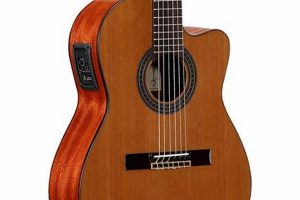
When it comes to getting the best possible sound out of your acoustic guitar, one of the most important factors to consider is the saddle. The saddle is a small, but crucial, piece of the guitar that sits under the strings and helps to transfer their vibrations to the body of the guitar. A well-made saddle will help to improve the guitar’s intonation, volume, and overall tone.
Editor’s Note:“A replacement saddle for acoustic guitar can make a world of difference in the sound of your instrument. If you’re not happy with the sound of your guitar, or if you’re experiencing problems with intonation or volume, a new saddle may be the solution.”
We’ve done the research and put together this guide to help you choose the right replacement saddle for your acoustic guitar. We’ll cover the different types of saddles available, the pros and cons of each type, and how to install a new saddle.
Key Differences
| Type of Saddle | Pros | Cons |
|---|---|---|
| Bone | Produces a warm, rich sound | Can be expensive |
| Tusq | A synthetic material that is durable and affordable | Can sound a bit brighter than bone |
| Plastic | The most affordable option | Can produce a thin, brittle sound |
Main Article Topics
- The different types of replacement saddles for acoustic guitar
- The pros and cons of each type of saddle
- How to install a new saddle
- Tips for choosing the right saddle for your guitar
1. Material
The material of the replacement saddle significantly influences the sound and playability of an acoustic guitar. Here’s how the choice of material impacts the overall quality of the instrument:
- Bone: Bone saddles are known for their warm, rich, and resonant tone. They are also highly durable and can withstand heavy playing. However, bone saddles are more expensive than other materials.
- Tusq: Tusq is a synthetic material that offers a similar sound to bone, but at a lower cost. Tusq saddles are also very durable and resistant to wear and tear.
- Plastic: Plastic saddles are the most affordable option, but they also produce a thinner and less resonant sound compared to bone and Tusq. Plastic saddles are also less durable and may need to be replaced more often.
Ultimately, the best material for a replacement saddle depends on the desired sound and budget. Bone saddles are the preferred choice for professional musicians and those seeking a warm, rich tone. Tusq saddles offer a good balance of sound quality and affordability, while plastic saddles are a budget-friendly option for beginners or casual players.
| Material | Tonal Characteristics | Durability | Cost |
|---|---|---|---|
| Bone | Warm, rich, resonant | High | High |
| Tusq | Similar to bone, but brighter | High | Medium |
| Plastic | Thin, less resonant | Low | Low |
2. Shape

The shape of the replacement saddle for an acoustic guitar plays a crucial role in ensuring accurate intonation and proper string spacing. Intonation refers to the guitar’s ability to produce notes that are in tune with each other, while string spacing determines the distance between the strings, affecting the guitar’s playability and overall sound.
The saddle’s shape directly influences the intonation of the guitar. A properly shaped saddle ensures that the strings are positioned correctly over the frets, allowing for accurate fretting and clear notes. An improperly shaped saddle can cause intonation problems, resulting in notes that sound sharp or flat when played.
String spacing is another important factor affected by the saddle’s shape. The distance between the strings should be consistent and wide enough to allow for comfortable fingerpicking and strumming. A saddle with the correct shape will provide optimal string spacing, making the guitar easier to play and reducing the risk of accidental string muting.
When choosing a replacement saddle, it is essential to consider the shape of the saddle in relation to the guitar’s bridge and fingerboard. The saddle should fit snugly into the bridge slot and match the radius of the fingerboard. A well-fitted saddle will ensure proper intonation, string spacing, and overall playability.
| Saddle Shape | Intonation | String Spacing |
|---|---|---|
| Straight | Ensures accurate intonation for standard string gauges | Provides consistent string spacing for easy playing |
| Compensated | Improves intonation accuracy for extended range guitars | Maintains consistent string spacing despite intonation adjustments |
| Radius | Matches the radius of the fingerboard for optimal string contact | Provides comfortable string spacing and reduces fret buzz |
3. Height

The height of the replacement saddle for an acoustic guitar is a critical factor that directly affects the guitar’s string action and intonation. String action refers to the distance between the strings and the frets, while intonation refers to the accuracy of the notes produced when the strings are fretted. A properly adjusted saddle height ensures optimal playability and accurate tuning across the entire fretboard.
Adjusting the saddle height is essential for achieving a comfortable and playable string action. A saddle that is too high will result in high action, making it difficult to fret notes and potentially causing fret buzz. Conversely, a saddle that is too low will result in low action, which can make the strings more difficult to pluck and may cause notes to sound muted or unclear.
In addition to affecting string action, the saddle height also plays a crucial role in intonation. A properly adjusted saddle height ensures that the strings are correctly positioned over the frets, allowing for accurate fretting and clear notes. An improperly adjusted saddle height can cause intonation problems, resulting in notes that sound sharp or flat when played.
When installing a replacement saddle, it is important to carefully adjust the height to achieve optimal string act
ion and intonation. This can be done using a feeler gauge to measure the distance between the strings and the frets. The ideal saddle height will vary depending on the guitar’s neck relief, string gauge, and personal playing style.
| Saddle Height | String Action | Intonation |
|---|---|---|
| Too High | Difficult to fret, fret buzz | Sharp notes |
| Optimal | Comfortable to play, no fret buzz | Accurate notes |
| Too Low | Difficult to pluck, muted notes | Flat notes |
4. Compensation

In the world of acoustic guitars, intonation plays a crucial role in ensuring that the guitar produces accurate and consistent notes across the entire fretboard. A compensated saddle is a specialized type of replacement saddle designed to enhance the intonation accuracy, particularly for guitars with extended range. These saddles are essential for achieving optimal playability and ensuring that the guitar stays in tune even when playing complex chords and melodies.
- Facet 1: Intonation and Extended Range Guitars
Extended range guitars, such as 7-string and 8-string guitars, present a unique challenge in terms of intonation. The increased number of strings and the wider fretboard require careful adjustment to ensure that each string is properly intonated. Compensated saddles are designed to address this challenge by adjusting the position of each string’s saddle slightly, compensating for the variations in string length and tension.
- Facet 2: How Compensated Saddles Work
Compensated saddles are typically designed with a stepped or offset profile, where each string’s saddle is positioned at a slightly different distance from the nut. This adjustment effectively shortens the effective string length for the lower strings (e.g., the bass strings) and lengthens it for the higher strings (e.g., the treble strings). By compensating for the natural intonation tendencies of each string, the saddle helps to ensure that every note played on the guitar is in tune.
- Facet 3: Benefits of Compensated Saddles
The primary benefit of using compensated saddles is improved intonation accuracy. This is especially noticeable when playing chords and scales across the entire fretboard, as it reduces the likelihood of notes sounding out of tune or sharp/flat. Additionally, compensated saddles can enhance the overall playability of the guitar, making it easier to play complex passages and achieve accurate bends and vibrato.
- Facet 4: Considerations for Compensated Saddles
While compensated saddles offer significant benefits, it’s important to note that they are not a one-size-fits-all solution. The specific compensation required for a guitar will depend on factors such as the scale length, string gauge, and playing style. It’s generally recommended to have a qualified guitar technician or luthier install and adjust a compensated saddle to ensure optimal intonation for the specific guitar.
In conclusion, compensated saddles play a vital role in enhancing the intonation accuracy of acoustic guitars, particularly for guitars with extended range. By compensating for the natural intonation tendencies of each string, these saddles help to ensure that every note played on the guitar is in tune, resulting in improved playability and overall sound quality.
5. Radius

The radius of the replacement saddle for an acoustic guitar plays a crucial role in ensuring proper string contact and optimal playability. The saddle’s radius refers to its curvature, which should closely match the radius of the guitar’s fingerboard. This alignment ensures that the strings make proper contact with the saddle, allowing for clear and accurate intonation.
- Facet 1: Intonation and String Contact
A well-matched saddle radius is essential for accurate intonation, as it ensures that the strings are positioned correctly over the frets. When the saddle’s radius matches the fingerboard radius, the strings will have the correct curvature and will make optimal contact with the frets, resulting in clear and in-tune notes.
- Facet 2: Playability and Comfort
A properly radiused saddle also enhances the guitar’s playability and comfort. When the strings are properly seated on the saddle, they will have a more natural feel and will be easier to fret. This can reduce fatigue and improve overall playing experience, especially during extended playing sessions.
- Facet 3: Buzz and Fretting Issues
A mismatch between the saddle radius and the fingerboard radius can lead to several issues. If the saddle’s radius is too flat, the strings may buzz against the frets, creating an unpleasant and distracting sound. Conversely, if the saddle’s radius is too curved, the strings may not make proper contact with the frets, resulting in muted or choked notes.
- Facet 4: Common Saddle Radii
The most common saddle radii for acoustic guitars are 10 inches, 12 inches, and 16 inches. The appropriate radius for a particular guitar will depend on the fingerboard radius and the string gauge being used. It is generally recommended to match the saddle radius to the fingerboard radius as closely as possible.
In summary, the radius of the replacement saddle for an acoustic guitar is a critical factor that affects intonation, playability, and overall sound quality. By carefully matching the saddle’s radius to the fingerboard radius, guitarists can ensure that their instrument delivers optimal performance and playing experience.
6. Intonation

Intonation is a crucial aspect of any stringed instrument, and the acoustic guitar is no exception. It refers to the accuracy of the notes produced when the strings are fretted at different positions along the neck. A properly fitted saddle is essential for achieving accurate intonation, as it ensures that the strings are positioned correctly over the frets.
When the saddle is not properly fitted, it can cause the strings to be out of tune when fretted at certain positions. This can make it difficult to play in tune, and can also lead to intonation problems when playing chords. A properly fitted saddle will ensure that the strings are in tune at all positions along the neck, making it easier to play in tune and produce clear, accurate notes.
There are a few things to consider when choosing a replacement saddle for your acoustic guitar. The first is the material of the saddle. Bone and Tusq are common choices, as they are both durable and produce a good tone. The second is the height of the saddle. The saddle height will affect the action of the guitar, so it is important to choose a saddle that is the correct height for your playing style.
Once you have chosen a replacement saddle, it is important to have it installed by a qualified guitar technician. A properly installed saddle will ensure that your guitar plays in tune and produces a clear, accurate tone.
Table: Benefits of a Properl
y Fitted Saddle
| Benefit | Description |
|---|---|
| Improved intonation | A properly fitted saddle ensures that the strings are positioned correctly over the frets, resulting in accurate intonation across the entire fretboard. |
| Easier to play in tune | With accurate intonation, it becomes easier to play in tune, as the notes will be in tune at all positions along the neck. |
| Clearer, more accurate tone | A properly fitted saddle will help to produce a clearer, more accurate tone, as the strings will be vibrating at the correct frequency. |
7. Volume
The choice of replacement saddle for an acoustic guitar can have a noticeable effect on the overall volume and projection of the instrument. This is because the saddle plays a crucial role in transferring the vibrations of the strings to the body of the guitar, which in turn produces sound.
- Facet 1: Material and Density
The material and density of the saddle can influence the volume and projection of the guitar. Denser materials, such as bone or metal, tend to produce a louder and more resonant sound, while softer materials, such as plastic, may result in a quieter and less projecting tone.
- Facet 2: Saddle Shape and Design
The shape and design of the saddle can also affect the volume and projection of the guitar. A wider and thicker saddle will typically produce a louder sound, while a narrower and thinner saddle may result in a softer and more mellow tone.
- Facet 3: Saddle Height and Action
The height of the saddle and the resulting action of the guitar can also influence the volume and projection. A higher saddle and lower action will generally produce a louder and brighter sound, while a lower saddle and higher action may result in a quieter and more mellow tone.
- Facet 4: Saddle Compensation
Saddles that are compensated for intonation can also affect the volume and projection of the guitar. Compensated saddles are designed to adjust the intonation of the guitar, particularly for guitars with extended range. By adjusting the position of each string’s saddle slightly, compensated saddles can help to ensure that each string produces a clear and balanced sound.
When choosing a replacement saddle for an acoustic guitar, it is important to consider the desired volume and projection. By carefully considering the material, shape, height, and compensation of the saddle, guitarists can optimize the sound of their instrument to suit their playing style and preferences.
8. Tone
The choice of replacement saddle for an acoustic guitar can significantly impact the overall tone and sound quality of the instrument. Different saddle materials possess unique tonal characteristics that can enhance or alter the guitar’s sonic profile.
- Facet 1: Material and Tonal Properties
The material of the saddle plays a crucial role in determining the tonal qualities of the guitar. Bone saddles are renowned for their warm, rich, and resonant sound, while Tusq saddles offer a brighter and more articulate tone. Plastic saddles, on the other hand, tend to produce a thinner and less resonant sound.
- Facet 2: Density and Sustain
The density of the saddle material also affects the tone and sustain of the guitar. Denser materials, such as bone and metal, enhance sustain and produce a more resonant sound. Conversely, less dense materials, such as plastic, may result in shorter sustain and a less vibrant tone.
- Facet 3: Saddle Design and Intonation
The shape and design of the saddle can influence both the tone and intonation of the guitar. A wider and thicker saddle generally produces a louder and brighter sound, while a narrower and thinner saddle may result in a softer and more mellow tone. Additionally, saddles that are compensated for intonation can help to ensure that each string produces a clear and balanced sound.
- Facet 4: Saddle Height and Action
The height of the saddle and the resulting action of the guitar can also affect the tone. A higher saddle and lower action will typically produce a louder and brighter sound, while a lower saddle and higher action may result in a quieter and more mellow tone.
By carefully considering the tonal qualities of different saddle materials and designs, guitarists can select a replacement saddle that optimizes the sound of their instrument to suit their playing style and preferences.
9. Durability
The durability of a replacement saddle for an acoustic guitar is a significant factor that affects the longevity and playability of the instrument. Different saddle materials exhibit varying degrees of durability, influencing the frequency of saddle replacement and the overall maintenance requirements of the guitar.
- Facet 1: Material Composition and Hardness
The durability of a saddle is primarily determined by the material from which it is crafted. Bone and Tusq saddles are renowned for their exceptional durability due to their inherent hardness and density. These materials can withstand the constant pressure and friction of the strings, maintaining their shape and integrity over extended periods of use.
- Facet 2: Resistance to Wear and Tear
Bone and Tusq saddles exhibit excellent resistance to wear and tear, ensuring long-lasting performance. They are less susceptible to scratches, dents, or other damage that can affect the saddle’s function and intonation. This durability reduces the need for frequent saddle replacement, saving time and resources.
- Facet 3: Stability under Environmental Conditions
Bone and Tusq saddles are relatively stable under varying environmental conditions, such as changes in temperature or humidity. Unlike plastic saddles, which may expand or contract, bone and Tusq saddles maintain their dimensions, ensuring consistent intonation and playability regardless of the playing environment.
The superior durability of bone and Tusq saddles makes them ideal choices for guitarists who seek a replacement saddle that will withstand the rigors of regular playing and maintain optimal performance over time.
10. Cost

The cost of a replacement saddle for an acoustic guitar can vary significantly depending on several factors, including the material used, the quality of construction, and the brand of the saddle. Understanding these factors can help guitarists make informed decisions when choosing a replacement saddle that meets their needs and budget.
- Material:
The material of the saddle is a major determinant of its cost. Bone and Tusq saddles are typically more expensive than plastic saddles due to their superior du
rability and tonal qualities. However, plastic saddles can be a cost-effective option for budget-conscious guitarists or those seeking a brighter sound. - Quality:
The quality of construction also affects the cost of a replacement saddle. Saddles that are precision-crafted using high-quality materials and manufacturing processes will generally be more expensive than saddles that are mass-produced or made with inferior materials.
- Brand:
The brand of the saddle can also influence its price. Well-known and reputable brands often charge a premium for their products, as they have established a reputation for quality and reliability. However, lesser-known brands may offer comparable saddles at a lower cost.
By considering the cost of different replacement saddles in relation to their material, quality, and brand, guitarists can make informed decisions that align with their playing style, tonal preferences, and financial constraints. Whether seeking a high-end bone saddle for optimal sound and durability or a budget-friendly plastic saddle for a brighter tone, there is a wide range of options available to meet the needs of every guitarist.
11. Installation
Installing a replacement saddle on an acoustic guitar requires specialized tools and knowledge to ensure proper intonation, string action, and overall playability. The process involves carefully removing the old saddle, preparing the saddle slot, fitting the new saddle, and adjusting its height and compensation.
- Facet 1: Specialized Tools
Installing a replacement saddle requires a set of specialized tools, including a saddle puller, a radius gauge, a feeler gauge, and a set of hex keys or screwdrivers. These tools are necessary for safely removing the old saddle, measuring and adjusting the saddle slot, and ensuring the proper fit and alignment of the new saddle.
- Facet 2: Saddle Slot Preparation
Before installing the new saddle, the saddle slot must be properly prepared to ensure a snug fit. This involves using a radius gauge to check the curvature of the slot and a feeler gauge to measure the height of the new saddle. The slot may need to be widened or narrowed, and the bottom of the slot may need to be leveled to accommodate the new saddle.
- Facet 3: Saddle Fitting and Adjustment
Once the saddle slot is prepared, the new saddle can be fitted into place. It is important to ensure that the saddle is properly aligned and that its height is adjusted to achieve the desired string action. The saddle height can be adjusted using a shim or by sanding the bottom of the saddle. Additionally, the saddle may need to be compensated to ensure accurate intonation across the entire fretboard.
- Facet 4: Stringing and Intonation
After the saddle is installed and adjusted, the strings can be strung back onto the guitar. It is important to ensure that the strings are properly seated in the saddle and that the intonation is checked and adjusted as necessary. This involves using a tuner to check the accuracy of each note at different positions along the fretboard and making adjustments to the saddle position or compensation if needed.
Installing a replacement saddle on an acoustic guitar is a task that requires specialized tools and knowledge to ensure proper intonation, string action, and overall playability. By understanding the process and the tools involved, guitarists can confidently replace their own saddles or have them professionally installed for optimal performance.
FAQs on Replacement Saddles for Acoustic Guitars
Before making a decision on a replacement saddle for your acoustic guitar, it’s helpful to address some frequently asked questions to ensure an informed choice.
Question 1: What are the primary benefits of replacing the saddle on an acoustic guitar?
Replacing the saddle can enhance the guitar’s intonation, tone, volume, and overall playability. A well-fitted saddle ensures accurate intonation along the fretboard, allowing for clear and in-tune notes. Different saddle materials, such as bone or Tusq, impart unique tonal characteristics, from warm and rich to bright and articulate. The saddle also influences the guitar’s volume and projection, with denser materials typically producing a louder sound. Additionally, a properly installed saddle optimizes string action and playability, making the guitar more comfortable and enjoyable to play.
Question 2: How do I choose the right saddle material for my acoustic guitar?
The choice of saddle material depends on desired tone and durability. Bone saddles offer a warm, rich, and resonant sound, while Tusq saddles provide a brighter and more articulate tone. Plastic saddles are a cost-effective option but may produce a thinner and less resonant sound. Consider the guitar’s existing tone and your personal preferences when selecting a saddle material.
Question 3: Is it difficult to install a replacement saddle on an acoustic guitar?
Installing a replacement saddle requires specialized tools and knowledge of guitar setup. It involves carefully removing the old saddle, preparing the saddle slot, fitting the new saddle, and adjusting its height and compensation. If you are not comfortable performing these steps yourself, it is recommended to have the saddle installed by a qualified guitar technician to ensure proper intonation and playability.
Question 4: How often should I replace the saddle on my acoustic guitar?
The frequency of saddle replacement depends on several factors, including playing style, string gauge, and environmental conditions. If you notice intonation problems, changes in tone, or difficulty playing the guitar, it may be time to consider replacing the saddle. Regular maintenance and inspection can help determine the optimal time for saddle replacement.
Question 5: What are the signs of a poorly fitted saddle?
A poorly fitted saddle can manifest in several ways: intonation problems, such as notes sounding sharp or flat when fretted; buzzing or muted strings; and difficulty playing chords or melodies cleanly. If you encounter any of these issues, it is recommended to have the saddle checked and adjusted by a qualified guitar technician to ensure proper setup and performance.
Question 6: Can a replacement saddle improve the overall sound quality of my acoustic guitar?
Yes, a well-chosen and properly installed replacement saddle can significantly improve the overall sound quality of an acoustic guitar. By enhancing intonation, optimizing string action, and imparting unique tonal characteristics, a new saddle can revitalize the guitar’s tone, making it more resonant, articulate, and enjoyable to play.
These FAQs provide valuable insights to help you make informed decisions about replacing the saddle on your acoustic guitar. By considering the factors discussed, you can choose the right saddle material, ensure proper installation, and maximize the performance and sound quality of your instrument.
Transition: To further enhance your knowledge and understanding, explore the following resources on replacement saddles for acoustic guitars…
Tips for Choosing and Installing a Replacement Saddle for Acoustic Guitar
Enhancing the performance and sound of your acoustic guitar involves careful consideration and proper installation of the replacement saddle. Here are essential ti
ps to guide you through the process:
Tip 1: Determine the Saddle Material
The saddle material significantly influences the guitar’s tone and durability. Bone saddles deliver a warm, rich sound, while Tusq saddles offer a brighter, more articulate tone. Plastic saddles are a budget-friendly option but may produce a thinner sound. Consider your desired tone and playing style when selecting the saddle material.
Tip 2: Measure and Prepare the Saddle Slot
Before installing the new saddle, ensure the saddle slot is properly prepared. Use a radius gauge to check the curvature of the slot and a feeler gauge to measure the height of the new saddle. The slot may need to be widened or narrowed, and the bottom of the slot may require leveling for a snug fit.
Tip 3: Fit and Adjust the Saddle Height
Once the saddle slot is prepared, fit the new saddle into place. Adjust its height using a shim or by sanding the bottom of the saddle to achieve the desired string action. The saddle should be high enough to prevent buzzing but low enough to allow for comfortable playing.
Tip 4: Compensate the Saddle for Intonation
For accurate intonation across the fretboard, the saddle may need to be compensated. This involves adjusting the position of each string’s saddle slightly to ensure that notes played at different positions are in tune. Use a tuner and make gradual adjustments until the intonation is correct.
Tip 5: Consider Professional Installation
If you are not confident in performing the saddle installation yourself, it is recommended to have it professionally installed. A qualified guitar technician possesses the necessary tools and expertise to ensure proper intonation, string action, and overall playability.
Summary:
By following these tips, you can choose the right replacement saddle for your acoustic guitar and install it correctly. Remember to consider the saddle material, prepare the saddle slot accurately, adjust the saddle height effectively, compensate the saddle for intonation, and seek professional assistance if needed. With a well-chosen and properly installed saddle, you can enhance the tone, intonation, and playability of your acoustic guitar, elevating your playing experience.
Conclusion
Replacing the saddle on an acoustic guitar can significantly enhance its intonation, tone, volume, and playability. Choosing the right saddle material, ensuring proper installation, and considering factors such as compensation and string action are crucial for optimizing the guitar’s performance. By following the tips and guidance provided in this article, guitarists can make informed decisions and achieve the desired sound and feel from their instrument. A well-chosen and properly installed replacement saddle can breathe new life into an acoustic guitar, allowing musicians to fully express their creativity and enjoy the instrument’s true potential.
The exploration of “replacement saddle for acoustic guitar” in this article has shed light on its importance and the various factors that influence its selection and installation. By understanding these aspects, guitarists can approach the task of replacing their guitar’s saddle with confidence and make choices that align with their musical preferences and playing style. Embracing the opportunity to enhance the performance and sound of their acoustic guitars through a well-chosen replacement saddle is a testament to the enduring love and dedication that guitarists have for their craft.
Youtube Video: