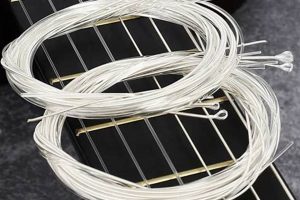
When it comes to choosing guitar strings, there are many factors to consider, including the material, the gauge, and the tension. Lighter gauge guitar strings are a popular choice for many players, as they offer a number of benefits.
Editor’s Note:Lighter gauge guitar strings are an important topic for guitarists of all levels. They can make a big difference in the playability and sound of your guitar.
We’ve done the research and digging, and put together this lighter gauge guitar strings guide to help you make the right decision for your playing style.
Key Differences: Lighter Gauge vs. Heavier Gauge Guitar Strings
| Characteristic | Lighter Gauge Strings | Heavier Gauge Strings |
|---|---|---|
| Tension | Lower tension | Higher tension |
| Playability | Easier to play | More difficult to play |
| Tone | Brighter, twangier tone | Warmer, fuller tone |
Main Article Topics:
- The benefits of lighter gauge guitar strings
- The drawbacks of lighter gauge guitar strings
- How to choose the right gauge of guitar strings for your playing style
1. Lower tension
The lower tension of lighter gauge guitar strings makes them easier to bend and fret, which can be a major advantage for guitarists who play lead guitar or use a lot of string bending in their playing.
When you bend a guitar string, you are essentially stretching it, which increases the tension on the string. This can make it more difficult to bend the string to the desired pitch, and can also lead to the string breaking if you bend it too far.
Lighter gauge strings have a lower tension than heavier gauge strings, which means that they are easier to bend without breaking. This can be a major advantage for guitarists who want to be able to bend strings easily and accurately.
In addition, the lower tension of lighter gauge strings can also make them easier to fret. This can be helpful for guitarists with smaller hands or who have difficulty fretting chords on heavier gauge strings.
Overall, the lower tension of lighter gauge guitar strings makes them easier to bend and fret, which can be a major advantage for guitarists of all levels.
Table: Benefits of Lower Tension Strings
| Benefit | Description |
|---|---|
| Easier to bend | Lower tension means less effort is required to bend strings to the desired pitch. |
| Easier to fret | Lower tension makes it easier to press down on the strings to fret notes. |
| Reduced finger fatigue | Lower tension means less strain on the fingers, reducing fatigue during extended playing sessions. |
2. Brighter tone

Lighter gauge guitar strings produce a brighter tone with more treble response. This is because thinner strings vibrate more quickly than thicker strings, which results in a higher pitch and a more pronounced treble sound.
The brighter tone of lighter gauge strings can be an advantage for guitarists who want a more cutting or aggressive sound. It can also be helpful for guitarists who play in a band setting, as the brighter tone will help their guitar to stand out in the mix.
However, the brighter tone of lighter gauge strings can also be a disadvantage for guitarists who prefer a warmer or more mellow sound. It can also be more difficult to control feedback with lighter gauge strings.
Overall, the brighter tone of lighter gauge guitar strings is a matter of personal preference. Some guitarists prefer the brighter sound, while others prefer a warmer sound. It is important to experiment with different gauges of strings to find the sound that you like best.
Table: Brighter Tone of Lighter Gauge Strings
| Characteristic | Description |
|---|---|
| Higher pitch | Thinner strings vibrate more quickly, resulting in a higher pitch. |
| More pronounced treble response | Thinner strings produce more treble frequencies. |
| Cutting or aggressive sound | The brighter tone can be advantageous for guitarists seeking a more aggressive sound. |
| Stands out in a band mix | The brighter tone helps the guitar to be heard more clearly in a band setting. |
3. Reduced finger fatigue

Lighter gauge guitar strings require less effort to play than heavier gauge strings. This is because thinner strings have less tension, which makes them easier to press down on the fretboard. This can be a major advantage for guitarists who play for long periods of time or who have difficulty fretting chords on heavier gauge strings.
Reduced finger fatigue can lead to several benefits for guitarists. First, it can help to prevent pain and discomfort in the fingers, hands, and wrists. This is especially important for guitarists who play for extended periods of time or who have a history of hand or wrist injuries. Second, reduced finger fatigue can improve playing speed and accuracy. When guitarists don’t have to struggle to fret chords, they can play more quickly and accurately. This can be a major advantage for guitarists who play lead guitar or who play in a band setting.
Here are some real-life examples of how lighter gauge guitar strings can help to reduce finger fatigue:
- A guitarist who has been playing for many years develops carpal tunnel syndrome. The doctor recommends that the guitarist switch to lighter gauge strings to reduce the strain on his wrists.
- A guitarist who is learning to play lead guitar finds that she can play faster and more accurately with lighter gauge strings.
- A guitarist who plays in a band finds that he can play for longer periods of time without experiencing hand fatigue.
Overall, the reduced finger fatigue that comes with lighter gauge guitar strings can be a major benefit for guitarists of all levels. Lighter gauge strings can help to prevent pain and discomfort, improve playing speed and accuracy, and make it easier to play for longer periods of time.
Table: Benefits of Reduced Finger Fatigue
| Benefit | Description |
|---|---|
| Reduced pain and discomfort |
Lighter gau ge strings put less strain on the fingers, hands, and wrists, reducing the risk of pain and discomfort. |
| Improved playing speed and accuracy | When guitarists don’t have to struggle to fret chords, they can play more quickly and accurately. |
| Increased playing endurance | Lighter gauge strings make it easier to play for longer periods of time without experiencing hand fatigue. |
4. Improved playability
Lighter gauge guitar strings offer improved playability, making them particularly suitable for beginners and players with smaller hands. Here are several key facets to consider:
- Reduced string tension: Lighter gauge strings have lower tension, which makes them easier to press down on the fretboard. This can be a major advantage for beginners, as it requires less finger strength to fret chords and notes. It also benefits players with smaller hands, who may find it difficult to stretch their fingers to fret chords on heavier gauge strings.
- Easier to bend and vibrato: The lower tension of lighter gauge strings also makes them easier to bend and perform vibrato. This can be beneficial for beginners who are learning to play lead guitar or for players who want to add expression to their playing. Lighter gauge strings are also less likely to break when bending, which is important for beginners who may not have developed the proper technique for bending strings.
- Less finger fatigue: Lighter gauge strings require less effort to play, which can reduce finger fatigue. This is especially beneficial for beginners who may not have built up the strength and endurance in their fingers. It also benefits players with smaller hands, who may find it more tiring to play on heavier gauge strings.
- Suitable for a wider range of guitars: Lighter gauge strings can be used on a wider range of guitars, including acoustic guitars, electric guitars, and classical guitars. This makes them a versatile choice for beginners who may not yet know what type of guitar they want to play.
Overall, the improved playability of lighter gauge guitar strings makes them an excellent choice for beginners and players with smaller hands. They are easier to press down, bend, and vibrato, and they cause less finger fatigue. As a result, lighter gauge strings can help beginners to learn to play guitar more quickly and easily, and they can also benefit experienced players with smaller hands.
5. Less magnetic pull
In the realm of electric guitars, the interplay between lighter gauge guitar strings and magnetic pull is a crucial factor that shapes the instrument’s tone and performance. Lighter gauge strings, with their reduced mass, experience a weaker magnetic pull from the pickups compared to their heavier counterparts.
- Reduced sustain
Sustain, the duration of a note’s decay after being picked, is affected by the string’s magnetic pull. Lighter gauge strings, with their weaker magnetic connection to the pickups, exhibit reduced sustain. This is because the weaker magnetic pull allows the strings to vibrate more freely, resulting in a quicker decay of the sound.
- Lower output
The output of an electric guitar, measured in millivolts (mV), is influenced by the strength of the magnetic field between the strings and the pickups. Lighter gauge strings, with their decreased magnetic interaction, produce a lower output compared to heavier gauge strings. This reduced output can result in a cleaner, less distorted sound, which may be desirable for certain genres and playing styles.
Understanding the connection between lighter gauge guitar strings and reduced magnetic pull is essential for electric guitarists seeking to tailor their sound and playing experience. Lighter gauge strings offer a unique combination of playability, reduced finger fatigue, and a brighter tone, but they come with the compromise of decreased sustain and output. By considering these factors, guitarists can make informed decisions about the gauge of strings that best suit their musical preferences and playing style.
6. Prone to breakage
Lighter gauge guitar strings are more prone to breakage than heavier gauge strings due to their reduced tensile strength and increased flexibility. This characteristic requires careful handling and regular replacement for optimal performance and longevity.
- Reduced tensile strength: Lighter gauge strings have a lower breaking point compared to heavier gauge strings. This is because they are made of thinner wire, which can withstand less tension before snapping.
- Increased flexibility: Lighter gauge strings are more flexible than heavier gauge strings, making them more susceptible to bending and kinking. This increased flexibility can lead to premature breakage, especially if the strings are not handled with care.
- Regular replacement: Due to their increased susceptibility to breakage, lighter gauge strings require more frequent replacement than heavier gauge strings. Regular replacement is essential to maintain optimal tone, intonation, and playing feel, and to minimize the risk of string breakage during performance or practice.
- Careful handling: Lighter gauge strings require careful handling to avoid premature breakage. This includes avoiding excessive bending or kinking, using proper string winding techniques, and storing the guitar in a climate-controlled environment to prevent rust and corrosion.
Understanding the relationship between lighter gauge guitar strings and their proneness to breakage is crucial for guitarists seeking to maintain the playability and longevity of their instruments. By carefully handling and regularly replacing lighter gauge strings, guitarists can ensure optimal performance and minimize the risk of string breakage, allowing them to focus on their music without interruption.
7. Not suitable for all genres

The choice of guitar strings, particularly their gauge, plays a crucial role in shaping the overall sound and playability of the instrument. Lighter gauge guitar strings, while offering advantages such as reduced tension and improved playability, may not be suitable for all musical genres, especially those that demand a powerful and projecting sound, such as heavy rock or metal.
The primary reason behind this limitation lies in the physical properties of lighter gauge strings. Their reduced mass and lower tension result in a decrease in the amplitude of their vibrations. This diminished vibration amplitude translates into a weaker signal being transmitted to the pickups, leading to a lack of power and projection in the amplified sound.
Furthermore, the increased flexibility of lighter gauge strings makes them more susceptible to bending and distortion
under the aggressive playing techniques commonly employed in heavy rock and metal. This can result in a loss of string clarity and definition, particularly during high-gain or palm-muted passages.
Examples of guitarists who prefer heavier gauge strings for heavy rock or metal include:
- Jimmy Page (Led Zeppelin)
- Tony Iommi (Black Sabbath)
- Dimebag Darrell (Pantera)
These guitarists rely on the increased tension and mass of heavier gauge strings to achieve the powerful, thick, and aggressive tones that are characteristic of their respective genres.
In contrast, lighter gauge strings are often favored by guitarists in genres such as blues, folk, and fingerstyle, where a brighter, more articulate sound is desired.
In summary, understanding the connection between lighter gauge guitar strings and their suitability for different genres is essential for guitarists seeking to optimize their sound and playing experience. Lighter gauge strings, while offering advantages in terms of playability and reduced tension, may not be the ideal choice for genres requiring a powerful and projecting sound, such as heavy rock or metal.
Table: Lighter Gauge Guitar Strings and Genre Suitability
| Genre | Lighter Gauge Strings | Heavier Gauge Strings |
|---|---|---|
| Heavy Rock / Metal | May lack power and projection | Recommended for powerful, thick tones |
| Blues / Folk / Fingerstyle | Brighter, more articulate sound | May be too stiff or difficult to play |
8. May require truss rod adjustment

When using lighter gauge guitar strings, it is important to consider the potential need for truss rod adjustment. The truss rod is a metal rod that runs through the neck of the guitar, and it is used to adjust the neck’s relief, or curvature. The relief of the neck affects the action of the guitar, which is the distance between the strings and the fretboard. Lighter gauge strings have less tension than heavier gauge strings, and this reduced tension can cause the neck to bow forward, resulting in a higher action.
- Facet 1: Understanding Neck Relief
Neck relief refers to the slight curvature of the guitar neck. When the truss rod is properly adjusted, the neck will have a slight forward bow, which allows the strings to vibrate freely without buzzing against the frets. Lighter gauge strings, with their reduced tension, can cause the neck to bow forward excessively, leading to high action and potential fret buzz. Adjusting the truss rod can correct this by counteracting the reduced string tension and restoring the neck to its optimal relief.
- Facet 2: Truss Rod Adjustment Techniques
Truss rod adjustment requires specific tools and techniques to avoid damaging the guitar. The truss rod is typically adjusted using an Allen key or a specialized truss rod wrench. Turning the truss rod clockwise tightens it, which reduces the neck’s relief, while turning it counterclockwise loosens it, which increases the neck’s relief. Small adjustments should be made gradually, and the guitar should be tuned to pitch after each adjustment to assess the impact on the neck relief and action.
- Facet 3: Impact on Playability and Tone
Proper truss rod adjustment is essential for optimal playability and tone. When the neck relief is set correctly, the strings will have the ideal action, making them easier to fret and play. Additionally, the guitar’s intonation will be more accurate, ensuring that the notes played at different frets are in tune. Correct truss rod adjustment also contributes to the overall tone of the guitar, as it affects the string’s vibration and sustain.
Understanding the connection between lighter gauge guitar strings and the potential need for truss rod adjustment is crucial for maintaining the guitar’s playability and performance. By carefully adjusting the truss rod, guitarists can compensate for the reduced string tension of lighter gauge strings, ensuring that their instrument plays and sounds its best.
9. Can enhance fingerstyle playing

The use of lighter gauge guitar strings can significantly enhance the experience of fingerstyle playing, making it easier for guitarists to perform intricate techniques and achieve a more expressive and nuanced sound.
The reduced tension of lighter gauge strings allows for easier fretting and bending, which is essential for fingerstyle techniques such as hammer-ons, pull-offs, and slides. The lower tension makes it less physically demanding to execute these techniques, allowing guitarists to play for longer periods without experiencing fatigue or discomfort.
Furthermore, the increased flexibility of lighter gauge strings allows for more precise control over string bending and vibrato. This is crucial for fingerstyle guitarists who rely on subtle variations in pitch to create expressive melodies and harmonies.
Real-life examples of guitarists who have successfully incorporated lighter gauge strings into their fingerstyle playing include:
- Tommy Emmanuel
- Andy McKee
- Antoine Dufour
These guitarists have demonstrated the versatility and expressiveness that lighter gauge strings can bring to fingerstyle playing, showcasing the ability to perform complex and intricate techniques with ease and precision.
Understanding the connection between lighter gauge guitar strings and enhanced fingerstyle playing is crucial for guitarists seeking to expand their technical abilities and achieve a more nuanced and expressive sound. By embracing the advantages of lighter gauge strings, guitarists can unlock new possibilities in their fingerstyle playing, allowing them to create beautiful and captivating melodies and harmonies.
Table: Benefits of Lighter Gauge Strings for Fingerstyle Playing
| Benefit | Description |
|---|---|
| Easier fretting and bending | Reduced string tension makes it easier to press down on the strings and bend them to the desired pitch. |
| Increased flexibility | Lighter gauge strings are more flexible, allowing for more precise control over string bending and vibrato. |
| Reduced fatigue | The lower tension of lighter gauge strings reduces finger fatigue, making it easier to play for longer periods. |
10. Can improve intonation
The reduced tension of lighter gauge guitar strings offers a significant advantage in terms of intonation, enabling guitarists to achieve more accurate tuning. Intonation refers to the accuracy of the guitar’s notes across the entire fretboard, ensuring that each note plays at the correct pitch when fretted. Lighter gauge strings, with their lower tension, exhibit less stretching and deformation under tension, resulting in improved intonation stability.
The lower string tension
of lighter gauge strings reduces the amount of force required to fret notes, making it easier for guitarists to press the strings down to the fretboard without inadvertently bending them out of tune. This is particularly beneficial for complex chords and passages that require precise fretting. Additionally, the reduced tension allows the strings to return to their original pitch more quickly after being fretted, improving the overall accuracy and clarity of each note.
Real-life examples of guitarists who have experienced improved intonation with lighter gauge strings include:
- Eric Johnson
- John Petrucci
- Steve Vai
These guitarists have consistently praised the benefits of lighter gauge strings for their enhanced playability and intonation accuracy, allowing them to perform complex and demanding pieces with confidence.
Understanding the connection between lighter gauge guitar strings and improved intonation is crucial for guitarists seeking to achieve the best possible sound and performance from their instruments. By embracing the advantages of lighter gauge strings, guitarists can enjoy more accurate intonation, making their playing more expressive and enjoyable.
Table: Benefits of Lighter Gauge Strings for Intonation
| Benefit | Description |
|---|---|
| Reduced stretching and deformation | Lower string tension minimizes string stretching and deformation under tension, resulting in improved intonation stability. |
| Easier fretting | Reduced string tension makes it easier to fret notes accurately, reducing the risk of bending strings out of tune. |
| Faster string return to pitch | Lower tension allows strings to return to their original pitch more quickly after being fretted, enhancing note clarity and accuracy. |
11. Can extend the lifespan of vintage guitars

Vintage guitars are prized for their unique tone and craftsmanship, but they can be delicate and susceptible to damage. Using lighter gauge guitar strings can help to extend the lifespan of a vintage guitar by reducing the stress on the instrument’s neck and body.
The tension of guitar strings can put a significant amount of stress on the neck of a guitar. Over time, this stress can cause the neck to bow or warp, which can lead to problems with intonation and playability. Lighter gauge strings have less tension than heavier gauge strings, which means they put less stress on the neck. This can help to prevent the neck from bowing or warping, and it can also help to reduce the risk of other damage to the guitar’s neck and body.
In addition to reducing the stress on the guitar’s neck, lighter gauge strings can also help to improve the guitar’s tone. Lighter gauge strings produce a brighter, more articulate sound than heavier gauge strings. This can be beneficial for vintage guitars, which often have a darker, more mellow sound.
Here are a few examples of guitarists who have used lighter gauge strings to extend the lifespan of their vintage guitars:
- Eric Clapton
- Jimmy Page
- Keith Richards
These guitarists have all used lighter gauge strings on their vintage guitars for many years, and their guitars continue to sound and play great.
If you have a vintage guitar, using lighter gauge strings is a good way to help extend its lifespan. Lighter gauge strings will reduce the stress on the guitar’s neck and body, which will help to prevent damage. Lighter gauge strings can also improve the guitar’s tone, making it sound brighter and more articulate.
Table: Benefits of Using Lighter Gauge Strings on Vintage Guitars
| Benefit | Description |
|---|---|
| Reduced stress on the neck | Lighter gauge strings put less stress on the neck, which can help to prevent bowing or warping. |
| Reduced risk of damage | Lighter gauge strings reduce the risk of damage to the guitar’s neck and body. |
| Improved tone | Lighter gauge strings can help to improve the guitar’s tone, making it sound brighter and more articulate. |
12. Available in various materials

The availability of lighter gauge guitar strings in various materials, namely nickel-plated steel, stainless steel, and nylon, plays a crucial role in tailoring the sound, feel, and durability of these strings to suit different playing styles and preferences. Each material imparts unique characteristics that cater to specific needs and genres.
Nickel-plated steel strings are a popular choice due to their bright, twangy tone and comfortable feel. They offer a balanced blend of warmth and clarity, making them versatile for various genres, including rock, blues, and country. Their affordability and wide availability make them a go-to option for many guitarists.
Stainless steel strings provide increased durability and corrosion resistance compared to nickel-plated steel strings. They retain their brightness and clarity over a longer period, making them ideal for players who prefer a consistent sound. Their higher tensile strength allows for lower string tension at a given pitch, contributing to easier playability and reduced finger fatigue.
Nylon strings, commonly found on classical guitars, offer a softer, warmer tone with less projection. They are gentler on the fingers, making them suitable for beginners or players with sensitive fingertips. Nylon strings produce a distinctive, mellow sound that is often associated with fingerstyle playing and traditional genres like classical, flamenco, and Brazilian music.
The choice of material for lighter gauge guitar strings ultimately depends on the desired sound, playing style, and personal preferences. Experimenting with different materials allows guitarists to find the optimal combination that complements their instrument and enhances their playing experience.
Table: Characteristics of Different Lighter Gauge Guitar String Materials
| Material | Tone | Feel | Durability | Applications |
|---|---|---|---|---|
| Nickel-plated steel | Bright, twangy | Comfortable | Moderate | Rock, blues, country |
| Stainless steel | Bright, clear | Smooth | High | Jazz, fusion, metal |
| Nylon | Soft, warm | Gentle | Low | Classical, flamenco, fingerstyle |
Frequently Asked Questions (FAQs) About Lighter Gauge Guitar Strings
This section addresses common queries and misconceptions associated with lighter gauge guitar strings, providing informative answers to enhance your understanding.
Question 1: Are lighter gauge strings easier to play than heavier gauge strings?
Answer: Yes, lighter gauge strings have lower tension, making them easier to press down on the fretboard. This reduced tension can be beneficial for beginners, players with smaller hands, or those who experi
ence finger fatigue with heavier gauge strings.
Question 2: Do lighter gauge strings produce a different sound than heavier gauge strings?
Answer: Yes, lighter gauge strings produce a brighter, twangier tone with more treble response. This is because thinner strings vibrate more quickly than thicker strings, resulting in a higher pitch and a more pronounced treble sound.
Question 3: Are lighter gauge strings less durable than heavier gauge strings?
Answer: Yes, lighter gauge strings have a lower breaking point and are more susceptible to breakage due to their reduced tensile strength and increased flexibility. Careful handling and regular replacement are recommended to maintain optimal performance.
Question 4: Can lighter gauge strings be used on all types of guitars?
Answer: While lighter gauge strings can be used on most guitars, they may not be suitable for all genres or playing styles. For instance, they may lack the power and projection required for heavy rock or metal.
Question 5: Are lighter gauge strings more likely to go out of tune than heavier gauge strings?
Answer: Lighter gauge strings have lower tension, which can make them more susceptible to stretching and deformation under tension. This reduced tension may require more frequent tuning adjustments to maintain accurate intonation.
Question 6: Are lighter gauge strings better for beginners than heavier gauge strings?
Answer: For beginners, lighter gauge strings can be easier to play due to their reduced tension. They can also be beneficial for players with smaller hands or those who experience finger fatigue. However, the choice of string gauge ultimately depends on personal preferences and playing style.
Summary: Understanding the characteristics and considerations associated with lighter gauge guitar strings can help guitarists make informed decisions about their string choice. Lighter gauge strings offer advantages such as improved playability, brighter tone, and reduced finger fatigue, but they also have limitations, including reduced durability, lower output, and potential tuning instability. By carefully weighing the pros and cons, guitarists can select the gauge of strings that best suits their playing needs and musical style.
Transition to the Next Section: Lighter gauge guitar strings offer a unique playing experience and tonal response, making them a popular choice for many guitarists. In the next section, we will provide a comprehensive guide on how to choose the right gauge of guitar strings for your playing style.
Tips for Using Lighter Gauge Guitar Strings
Lighter gauge guitar strings offer several advantages, but they also require specific considerations for optimal performance. Here are some tips to help you get the most out of lighter gauge strings:
Tip 1: Choose the Right Gauge for Your Playing Style
The ideal string gauge depends on your playing style, guitar type, and personal preferences. Experiment with different gauges to find the combination that provides the desired tone, feel, and playability.
Tip 2: Adjust Your Truss Rod
Lighter gauge strings have less tension, which can affect the neck relief of your guitar. Adjust the truss rod accordingly to maintain optimal string height and intonation.
Tip 3: Use a Lighter Touch
Lighter gauge strings are more prone to breakage, so avoid excessive force when fretting or bending. Develop a lighter touch to preserve the strings and enhance their longevity.
Tip 4: Stretch Your Strings Regularly
Stretching new strings helps to stabilize them and reduce the risk of breakage. Regularly stretch your lighter gauge strings to maintain their tuning stability and improve their lifespan.
Tip 5: Consider Your Guitar’s Scale Length
The scale length of your guitar (the distance from the nut to the bridge) affects string tension. Lighter gauge strings may feel looser on guitars with a longer scale length, so adjust your string choice accordingly.
Tip 6: Experiment with Different Materials
Lighter gauge strings are available in various materials, such as nickel-plated steel, stainless steel, and nylon. Experiment with different materials to find the tone and feel that best suits your playing style.
Tip 7: Use a String Winder
A string winder can make changing strings easier and reduce the risk of over-tightening. Use a string winder to ensure proper string tension and avoid potential damage to the guitar or strings.
Summary: By following these tips, you can optimize the performance and longevity of lighter gauge guitar strings. Choose the right gauge, adjust your truss rod, use a lighter touch, stretch your strings regularly, consider scale length, experiment with materials, and use a string winder. These tips will help you harness the benefits of lighter gauge strings while minimizing potential drawbacks.
Transition to Conclusion: Lighter gauge guitar strings can enhance your playing experience and expand your musical possibilities. By understanding their unique characteristics and following these tips, you can make an informed decision about whether lighter gauge strings are the right choice for you.
Conclusion
Lighter gauge guitar strings offer a unique playing experience and a distinct tonal response, making them a popular choice for many guitarists. They provide advantages such as improved playability, reduced finger fatigue, and a brighter, twangier sound. However, it’s important to consider their potential drawbacks, including reduced durability, lower output, and possible tuning instability.
By carefully evaluating the characteristics and considerations associated with lighter gauge guitar strings, guitarists can make informed decisions about their string choice. Whether you’re a beginner seeking easier playability or an experienced player exploring new tonal possibilities, lighter gauge strings can enhance your playing experience when used appropriately. Embrace the benefits, mitigate the limitations, and discover the unique musical expression that lighter gauge guitar strings can bring.