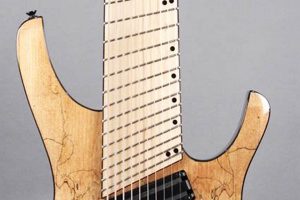



How many strings on standard guitar? Most standard guitars have six strings, but there are also 7-string, 8-string, and even 9-string guitars on the market. The number of strings on a guitar affects its sound, playability, and versatility.
Editor’s Notes:“How many strings on standard guitar” is an important topic for guitarists of all levels. Whether you’re just starting out or you’re a seasoned pro, understanding the different types of guitars and their string configurations can help you make the right decision about which guitar is right for you.
We’ve done the research and put together this guide to help you understand how many strings on standard guitar. We’ll also provide some tips on how to choose the right guitar for your needs.
Key Differences
| Number of Strings | Sound | Playability | Versatility |
|---|---|---|---|
| 6 | Bright, twangy | Easy to play | Versatile |
| 7 | Extended range | More challenging to play | Less versatile |
| 8 | Even more extended range | Even more challenging to play | Even less versatile |
| 9 | Wide range of sounds | Very challenging to play | Very versatile |
Main Article Topics
- The different types of guitars
- The pros and cons of different string configurations
- How to choose the right guitar for your needs
- Tips for playing guitar with different string configurations
1. Tuning
The tuning of a guitar is closely related to the number of strings on the guitar. Standard guitars have six strings, and they are typically tuned to EADGBE. This tuning is used for a wide variety of genres of music, including rock, pop, country, and blues.The tuning of a guitar affects the sound of the guitar, as well as the playability of the guitar. Guitars with more strings can be tuned to a wider range of notes, which gives the guitarist more versatility. However, guitars with more strings can also be more difficult to play, especially for beginners.The tuning of a guitar is also important for intonation. Intonation is the accuracy of the notes that are played on the guitar. A guitar that is not properly intonated will sound out of tune, and it will be difficult to play in tune with other instruments.Overall, the tuning of a guitar is an important factor to consider when choosing a guitar. The tuning of the guitar will affect the sound of the guitar, the playability of the guitar, and the intonation of the guitar.
Here is a table that summarizes the key points:
| Number of Strings | Tuning | Sound | Playability | Versatility |
|---|---|---|---|---|
| 6 | EADGBE | Bright, twangy | Easy to play | Versatile |
| 7 | EADGBE + low B | Extended range | More challenging to play | Less versatile |
| 8 | EADGBE + low B + high E | Even more extended range | Even more challenging to play | Even less versatile |
| 9 | EADGBE + low B + high E + high G | Wide range of sounds | Very challenging to play | Very versatile |
2. Range
The range of a guitar is the difference between the lowest and highest notes that can be played on the guitar. The number of strings on a guitar affects the range of the guitar. Guitars with more strings have a wider range of notes that can be played. This is because each string can be tuned to a different note, and the more strings there are, the more notes that can be played.
- Standard guitars have a range of two octaves. This means that the lowest note that can be played on a standard guitar is two octaves below the highest note that can be played.
- Guitars with more strings have a wider range of notes that can be played. For example, a 7-string guitar has a range of three octaves, and an 8-string guitar has a range of four octaves.
- The range of a guitar is important for playing certain types of music. For example, if you want to play heavy metal, you will need a guitar with a wide range of notes so that you can play the low, chugging riffs that are characteristic of the genre.
- When choosing a guitar, it is important to consider the range of the guitar. If you are not sure what range of guitar you need, you can talk to a guitar teacher or salesperson.
The range of a guitar is an important factor to consider when choosing a guitar. The range of the guitar will affect the types of music that you can play on the guitar. If you are not sure what range of guitar you need, you can talk to a guitar teacher or salesperson.
3. Sound
The number of strings on a guitar has a significant impact on its sound. Guitars with more strings generally produce a fuller sound than guitars with fewer strings. This is because each string vibrates at a different frequency, and the combination of these frequencies creates a richer and more complex sound.
The fuller sound of guitars with more strings is often preferred for genres of music that require a thick and powerful sound, such as rock, metal, and blues. However, guitars with more strings can also be used to create a variety of other sounds, depending on the type of strings used and the way the guitar is played.
For example, nylon-string guitars with more strings are often used for classical and flamenco music, while steel-string guitars with more strings are often used for jazz and country music.
Ultimately, the best way to decide how many strings you want on your guitar is to try out different guitars and see what sounds best to you. However, it is important to be aware of the general relationship between the number of strings on a guitar and the sound that it produces.
Table: The relationship between the number of strings on a guitar and the sound that it produces
| Number of Strings | Sound |
|---|---|
| 6 | Bright, twangy |
| 7 | Extended range, fuller sound |
| 8 | Even more extended range, even fuller sound |
| 9 | Wide range of sounds, fullest sound |
4. Playability
The number of strings on a guitar has a significant impact on its playability. Guitars with more strings are generally more challenging to play than guitars with fewer strings. This is because each string requires its own fretting hand finger to play, and the more strings there are, the more difficult it is to coordinate the fingers and fret the strings accurately.
- Fretting: Fretting is the process of pressing down on the strings with the fingers of the fretting hand to change the pitch of the notes. Guitars with more strings require more fretting, which can be more challenging for beginners.
- Chording: Chording is the process of playing multiple notes at the same time. Guitars with more strings have more possible chord voicings, which can be more challenging to learn and play.
- Picking: Picking is the process of using a pick to pluck the strings. Guitars with more strings can be more challenging to pick, especially for beginners.
- Overall coordination: Playing guitar requires coordination between the fretting hand and the picking hand. Guitars with more strings require more coordination, which can be more challenging for beginners.
Overall, the playability of a guitar is an important factor to consider when choosing a guitar. If you are a beginner, you may want to start with a guitar with fewer strings. As you become more experienced, you can move on to a guitar with more strings if you desire.
5. Versatility
The number of strings on a guitar has a significant impact on its versatility. Guitars with more strings offer greater versatility for playing different genres of music. This is because each string can be tuned to a different note, and the more strings there are, the more notes that can be played. This allows guitarists to play a wider range of chords, scales, and melodies.
- Tonal Range: Guitars with more strings have a wider tonal range, which means they can produce a greater variety of sounds. This makes them more versatile for playing different genres of music, from rock and blues to jazz and classical.
- Chord Voicings: Guitars with more strings allow for more complex and interesting chord voicings. This is because there are more notes available to choose from, which gives guitarists more options for creating unique and beautiful chords.
- Lead Playing: Guitars with more strings provide more possibilities for lead playing. This is because there are more notes available to play, which gives guitarists more options for creating melodic and expressive solos.
- Genre Diversity: Guitars with more strings are more versatile for playing different genres of music. This is because they can produce a wider range of sounds and offer more possibilities for chord voicings and lead playing.
Overall, the versatility of a guitar is an important factor to consider when choosing a guitar. If you want to play a variety of genres of music, then you may want to choose a guitar with more strings. However, if you are just starting out, you may want to start with a guitar with fewer strings. As you become more experienced, you can move on to a guitar with more strings if you desire.
6. String tension
The number of strings on a guitar affects the tension of the strings. This is because the more strings there are, the more force is required to keep them at the same pitch. The tension of the strings affects the playability and sound of the guitar.
- Playability: Guitars with more strings have higher string tension, which can make them more difficult to play, especially for beginners. This is because the higher tension requires more force to fret the strings.
- Sound: Guitars with more strings have a brighter sound than guitars with fewer strings. This is because the higher tension of the strings causes them to vibrate more quickly, which produces a brighter sound.
The relationship between string tension and the number of strings on a guitar is an important factor to consider when choosing a guitar. If you are a beginner, you may want to start with a guitar with fewer strings, as they will be easier to play. As you become more experienced, you can move on to a guitar with more strings if you desire a brighter sound or more versatility.
7. Scale length
The scale length of a guitar is an important factor to consider when choosing a guitar, as it can affect both the playability and sound of the instrument. A longer scale length will result in a guitar with a tighter string tension and a brighter sound, while a shorter scale length will result in a guitar with a looser string tension and a warmer sound.
The number of strings on a guitar also affects the scale length. Guitars with more strings typically have a longer scale length than guitars with fewer strings. This is because the longer scale length provides more space for the strings to vibrate, which results in a fuller and richer sound.
For example, a standard six-string guitar typically has a scale length of around 25.5 inches, while a seven-string guitar typically has a scale length of around 26.5 inches. The longer scale length of the seven-string guitar gives it a tighter string tension and a brighter sound.
Ultimately, the best way to decide which scale length is right for you is to try out different guitars and see what feels and sounds best to you. However, it is important to be aware of the general relationship between scale length and the number of strings on a guitar.
Table: The relationship between scale length and the number of strings on a guitar
| Number of Strings | Typical Scale Length | Sound |
|---|---|---|
| 6 | 25.5 inches | Bright, twangy |
| 7 | 26.5 inches | Extended range, fuller sound |
| 8 | 27 inches | Even more extended range, even fuller sound |
| 9 | 27.5 inches | Wide range of sounds, fullest sound |
8. Body size
The size of the guitar’s body is an important factor to consider when choosing a guitar, as it can affect both the sound and playability of the instrument. A larger body size will typically result in a guitar with a fuller and richer sound, while a smaller body size will result in a guitar with a brighter and more articulate sound.
The number of strings on a guitar also affects the body size. Guitars with more strings typically have a larger body size t
han guitars with fewer strings. This is because the larger body size provides more space for the strings to vibrate, which results in a fuller and richer sound.
For example, a standard six-string guitar typically has a body size of around 15 inches wide and 4 inches deep, while a seven-string guitar typically has a body size of around 16 inches wide and 4.5 inches deep. The larger body size of the seven-string guitar gives it a fuller and richer sound.
Ultimately, the best way to decide which body size is right for you is to try out different guitars and see what feels and sounds best to you. However, it is important to be aware of the general relationship between body size and the number of strings on a guitar.
Table: The relationship between body size and the number of strings on a guitar
| Number of Strings | Typical Body Size | Sound |
|---|---|---|
| 6 | 15 inches wide and 4 inches deep | Bright, twangy |
| 7 | 16 inches wide and 4.5 inches deep | Extended range, fuller sound |
| 8 | 17 inches wide and 5 inches deep | Even more extended range, even fuller sound |
| 9 | 18 inches wide and 5.5 inches deep | Wide range of sounds, fullest sound |
9. Neck shape
The shape of the guitar’s neck can affect the playability of the instrument, especially for guitars with more strings. A wider neck will provide more space for the fingers to fret the strings, while a narrower neck will be easier to reach around for players with smaller hands. The shape of the neck can also affect the tone of the guitar, with a thicker neck producing a warmer sound and a thinner neck producing a brighter sound.
For guitars with more strings, a wider neck is often preferred as it provides more space for the fingers to fret the strings. This is especially important for complex chords and fingerpicking patterns. However, a wider neck can also be more difficult to reach around for players with smaller hands. In this case, a narrower neck may be a better choice.
The shape of the neck can also affect the tone of the guitar. A thicker neck will produce a warmer sound, while a thinner neck will produce a brighter sound. This is because a thicker neck has more mass, which absorbs more of the string’s vibrations. A thinner neck has less mass, which allows more of the string’s vibrations to be transmitted to the body of the guitar.
Ultimately, the best way to choose the right neck shape for your guitar is to try out different guitars and see what feels and sounds best to you. However, it is important to be aware of the general relationship between neck shape and playability, especially for guitars with more strings.
Table: The relationship between neck shape and playability for guitars with more strings
| Neck Shape | Playability | Tone |
|---|---|---|
| Wider neck | More space for fingers to fret the strings, especially for complex chords and fingerpicking patterns | Warmer sound |
| Narrower neck | Easier to reach around for players with smaller hands | Brighter sound |
10. Pickup configuration
The pickup configuration of a guitar is an important factor that can affect the sound of the instrument. Pickups are responsible for converting the vibrations of the strings into an electrical signal, which is then amplified and sent to the guitar’s output. The type and placement of the pickups can affect the tone, volume, and overall sound of the guitar.
For guitars with more strings, the pickup configuration is especially important. This is because the additional strings can create a wider range of sounds, and the pickup configuration can be used to tailor the sound to the player’s preference.
For example, a guitar with a humbucker pickup in the bridge position will produce a thicker, more powerful sound than a guitar with a single-coil pickup in the same position. This is because humbuckers have two coils that are wired together in a way that cancels out hum and produces a more powerful sound. Single-coil pickups have only one coil, which makes them more susceptible to hum, but also gives them a brighter, more articulate sound.
The placement of the pickups can also affect the sound of the guitar. Pickups that are placed closer to the bridge will produce a brighter sound, while pickups that are placed closer to the neck will produce a warmer sound. This is because the strings vibrate more freely near the bridge, and the pickups are able to capture more of the high-end frequencies. Near the neck, the strings vibrate less freely, and the pickups are able to capture more of the low-end frequencies.
By understanding the relationship between pickup configuration and sound, guitarists can choose the right pickup configuration for their desired sound. For guitars with more strings, the pickup configuration is especially important, as it can be used to tailor the sound to the player’s preference.
Table: The relationship between pickup configuration and sound for guitars with more strings
| Pickup Configuration | Sound |
|---|---|
| Humbucker in the bridge position | Thicker, more powerful sound |
| Single-coil pickup in the bridge position | Brighter, more articulate sound |
| Humbucker in the neck position | Warmer, more mellow sound |
| Single-coil pickup in the neck position | Brighter, more twangy sound |
FAQs on the Number of Strings on Standard Guitars
If you’re curious about the standard number of strings on guitars and related topics, this FAQ section provides concise and informative answers to some common questions.
Question 1: How many strings does a standard guitar have?
Answer: The vast majority of standard guitars have six strings.
Question 2: Are there guitars with a different number of strings?
Answer: Yes, while six-string guitars are the most common, there are guitars with different numbers of strings, such as 7-string, 8-string, and even 9-string guitars.
Question 3: What are the advantages of having more strings on a guitar?
Answer: Guitars with more strings offer an extended range of notes, greater versatility for playing different genres, and the ability to create fuller and richer sounds.
Question 4: Are guitars with more strings more difficult to play?
Answer: Generally, yes. Guitars with more strings require more fretting and picking coordination, which can be challenging for beginners.
Question 5: What factors should I consider when choosing the number of strings on my guitar?
Answer: Consider your playing style, the genres of music you want to play, your hand size and dexterity, and your experience level.
Question 6: Can I change the number of strings on my guitar?
Answer: Changing the number of strings on a guitar is possible but not always straightforward. It may require modifications to the guitar’s neck, bridge, and other components.
Summary: Understanding the number of strings on a guitar and the factors that influence it can help you make an informed decision when choosing or playing a guitar. Whether you prefer the versatility of more strings or the simplicity of fewer, there is a guitar with the right number of strings for your needs.
Transition to the next article section: Explore the diverse range of guitars available, from their body shapes and pickup configurations to their tonal characteristics. Discover how these factors contribute to the unique sound and playing experience of each guitar.
Tips on “How Many Strings on Standard Guitar”
Understanding the number of strings on a standard guitar is essential for choosing and playing the right instrument. Here are some tips to guide you:
- Consider your playing style and musical preferences: If you prefer playing rhythm guitar or strumming chords, a six-string guitar may suffice. For lead guitar or exploring extended ranges, consider a guitar with more strings.
- Determine the genres you want to play: Different genres of music may require a specific number of strings. For example, rock, blues, and country are commonly played on six-string guitars, while jazz and classical guitarists often use guitars with more strings.
- Assess your hand size and dexterity: Guitars with more strings have narrower string spacing, which may be challenging for players with smaller hands. Consider your finger coordination and comfort level when choosing the number of strings.
- Start with a six-string guitar if you’re a beginner: Six-string guitars are the most common and provide a solid foundation for learning the instrument. You can gradually transition to guitars with more strings as your skills and musical needs evolve.
- Experiment with different guitars: The best way to decide on the number of strings is to try out various guitars. Visit a guitar store or borrow instruments from friends to experience the playability and sound of different string configurations.
- Consider the guitar’s scale length and body size: Guitars with more strings often have a longer scale length and larger body size. These factors can affect the playability, tone, and overall feel of the instrument.
- Think about the tuning possibilities: The number of strings influences the tuning options available to you. Standard tuning (EADGBE) is common on six-string guitars, but guitars with more strings offer a wider range of tunings to explore.
Summary: Choosing the right number of strings on your guitar is a personal decision that depends on your playing style, musical preferences, and physical comfort. By considering these tips and experimenting with different guitars, you can find the instrument that best suits your needs and enhances your musical journey.
Transition to the article’s conclusion: Understanding the number of strings on a standard guitar empowers you to make informed choices and unlock the full potential of this versatile instrument. Whether you choose a traditional six-string guitar or venture into the realm of guitars with more strings, the possibilities for musical expression are endless.
Conclusion
The exploration of “how many strings on standard guitar” has unveiled the significance of this aspect in shaping the instrument’s sound, playability, and versatility. While the traditional six-string guitar remains widely popular, guitars with varying numbers of strings offer unique advantages and cater to diverse musical styles and preferences.
Understanding the intricacies of string count empowers guitarists to make informed choices that align with their playing styles and musical aspirations. Whether embarking on the journey with a six-string guitar or venturing into the realms of guitars with more strings, the possibilities for musical expression are boundless.