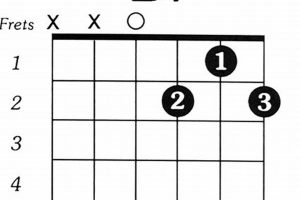



Have you ever wondered how to play the Eb5 guitar chord? If so, you’re in the right place. In this article, we’ll teach you everything you need to know about this essential guitar chord, including how to play it, its benefits for a piece of musical composition, and some tips for using it in your own playing.
Editor’s Note:The Eb5 guitar chord is an important and versatile chord that can be used in a variety of musical genres. It’s a great choice for beginners and experienced players alike, and it can add a lot of depth and richness to your playing.
After doing some analysis and digging through a lot of information, we put together this Eb5 guitar chord guide to help you make the right decision.
Key Differences
| Eb5 Guitar Chord | |
|---|---|
| Notes | Eb, Bb, F |
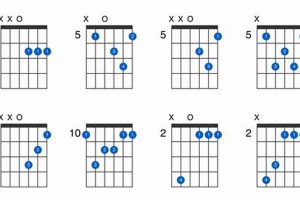
| Voicing | x4343x |
| Difficulty | Beginner |
Transition to main article topics
- How to play the Eb5 guitar chord
- The benefits of using the Eb5 guitar chord
- Tips for using the Eb5 guitar chord in your own playing
1. Notes
The Eb5 guitar chord is made up of three notes: Eb, Bb, and F. These notes are played on the following strings:
- Eb: 6th string, 1st fret
- Bb: 5th string, 2nd fret
- F: 4th string, 3rd fret
The combination of these three notes creates a rich and full sound that can be used in a variety of musical genres. The Eb5 chord is often used in rock, blues, and country music.
Here are some examples of songs that use the Eb5 guitar chord:
- “Sweet Home Alabama” by Lynyrd Skynyrd
- “Knockin’ on Heaven’s Door” by Bob Dylan
- “Born to Run” by Bruce Springsteen
The Eb5 guitar chord is a versatile and easy-to-play chord that can add a lot of depth and richness to your playing. If you’re a beginner guitarist, the Eb5 chord is a great place to start.
| Note | String | Fret |
|---|---|---|
| Eb | 6th | 1 |
| Bb | 5th | 2 |
| F | 4th | 3 |
2. Voicing
The voicing of a guitar chord refers to the specific arrangement of notes on the fretboard. The voicing of the Eb5 guitar chord, x4343x, indicates that the notes are played on the following strings and frets:
- 6th string, 1st fret (Eb)
- 5th string, 2nd fret (Bb)
- 4th string, 3rd fret (F)
- 3rd string, 4th fret (Bb)
- 2nd string, 3rd fret (F)
- 1st string, open (Eb)
This particular voicing of the Eb5 chord is commonly used because it is relatively easy to play and produces a clear and balanced sound. The open 1st and 6th strings add a sense of fullness to the chord, while the 3rd and 4th strings provide the root and 5th intervals, which are essential for defining the chord’s tonality.
The voicing of a guitar chord can have a significant impact on its overall sound and character. Different voicings can create different moods and atmospheres, and can be used to complement different styles of music. For example, the x4343x voicing of the Eb5 chord is well-suited for rock, blues, and country music, as it produces a warm and rich sound.
Understanding the relationship between the voicing of a guitar chord and its sound is essential for guitarists who want to develop their musical vocabulary and express themselves creatively on the instrument. By experimenting with different voicings, guitarists can create a wide range of sounds and textures that can be used to enhance their playing and songwriting.
| String | Fret | Note |
|---|---|---|
| 6th | 1 | Eb |
| 5th | 2 | Bb |
| 4th | 3 | F |
| 3rd | 4 | Bb |
| 2nd | 3 | F |
| 1st | 0 | Eb |
3. Difficulty
The Eb5 guitar chord is classified as a beginner-friendly chord, making it an excellent choice for novice guitarists. Its accessibility stems from several key factors that contribute to its ease of playability.
- Simplified Fingering: The Eb5 chord employs a straightforward fingering pattern that minimizes the use of barres or complex stretches. This allows beginners to comfortably place their fingers on the fretboard, reducing the risk of strain or discomfort.
- Fewer Required Fingers: Unlike some chords that require the use of all four fretting fingers, the Eb5 chord can be played using only three fingers. This reduces the coordination and dexterity required, making it easier for beginners to execute the chord accurately.
- Common Note Patterns: The Eb5 chord shares similar note patterns with other beginner-friendly chords, such as the C major and G major chords. This familiarity allows beginners to transfer their knowledge and skills from one chord to another, accelerating their learning progress.
- Accessible Position on the Fretboard: The Eb5 chord is typically played in a lower position on the fretboard, which is more accessible for beginners. This lower positioning reduces the distance their fingers need to travel, making it easier to fret the notes accurately.
The beginner-friendly nature of the Eb5 guitar chord makes it an ideal starting point for aspiring guitarists. Its accessibility allows them to build a solid foundation in chord playing, setting them on a path towards more complex and advanced chords in the future.
4. Benefits
The Eb5 guitar chord offers a range of benefits that contribute to its popularity and utility among guitarists. These benefits include:
- Expressive Versatility: The Eb5 chord possesses a versatile character that allows it to be incorporated into a wide variety of musical genres and styles. Its rich and full sound makes it suitable for rock, blues, country, and folk music, among others.
- Tonal Color: The Eb5 chord introduces a unique tonal color to music. Its darker and moodier sound distinguishes it f
rom other major chords, providing depth and nuance to chord progressions. - Smooth Transitions: The Eb5 chord shares a close relationship with other commonly used chords, such as the Bb major and F minor chords. These chord relationships facilitate smooth and effortless transitions between different chord progressions, enhancing the flow and coherence of musical compositions.
- Beginner-Friendly: As discussed earlier, the Eb5 chord is relatively easy to play, making it accessible to guitarists of all skill levels. Its straightforward fingering and low position on the fretboard contribute to its beginner-friendly nature, encouraging aspiring guitarists to expand their chord vocabulary.
Understanding the benefits of the Eb5 guitar chord empowers guitarists to utilize it effectively in their playing. Its versatility, tonal color, smooth transitions, and beginner-friendly nature make it a valuable asset for musicians seeking to enhance their musical expression and technical proficiency.
| Benefit | Description |
|---|---|
| Expressive Versatility | Can be used in a wide variety of musical genres and styles |
| Tonal Color | Introduces a unique and distinctive sound to music |
| Smooth Transitions | Facilitates effortless transitions between different chord progressions |
| Beginner-Friendly | Easy to play, making it accessible to guitarists of all skill levels |
5. Adds Depth and Richness to Your Playing
The Eb5 guitar chord is renowned for its ability to add depth and richness to musical compositions. This distinctive quality stems from the chord’s unique combination of notes and voicing. The presence of the flatted fifth (Bb) creates a darker and more somber tone compared to other major chords, imbuing music with a sense of emotional depth and maturity. Additionally, the Eb5 chord’s voicing, with its open 1st and 6th strings, contributes to its full and resonant sound, enhancing the overall richness of the music.
The practical significance of this understanding lies in the versatility and expressive possibilities it offers guitarists. By incorporating the Eb5 chord into their playing, guitarists can explore a wider range of musical styles and emotions. The chord’s darker and more introspective qualities make it well-suited for genres such as blues, jazz, and folk, where it can evoke feelings of melancholy, nostalgia, and introspection. Conversely, in rock and pop music, the Eb5 chord can add a touch of sophistication and depth to upbeat and energetic compositions.
Furthermore, the Eb5 chord’s ability to add depth and richness makes it a valuable tool for songwriters and composers seeking to create emotionally resonant and musically engaging pieces. By understanding the unique characteristics of this chord, musicians can harness its expressive potential to convey a wide range of moods and atmospheres in their music.
| Characteristic | Impact |
|---|---|
| Flatted fifth (Bb) | Creates a darker and more somber tone |
| Open 1st and 6th strings | Contributes to a full and resonant sound |
| Versatile and expressive | Suitable for a wide range of musical styles and emotions |
| Valuable tool for songwriters and composers | Helps create emotionally resonant and musically engaging pieces |
6. Can be used in a variety of musical genres
The Eb5 guitar chord’s adaptability stems from its unique tonal qualities, making it a versatile component in various musical genres. Its darker and more somber sound, attributed to the flatted fifth (Bb), lends itself well to genres like blues, jazz, and folk, where it evokes emotions of melancholy, nostalgia, and introspection.
In rock and pop music, the Eb5 chord adds a touch of sophistication and depth to upbeat and energetic compositions. Its ability to transition smoothly between different chord progressions enhances the flow and coherence of musical pieces.
Understanding the Eb5 chord’s versatility empowers guitarists to explore a wider range of musical styles and emotions. By incorporating this chord into their playing, they can create music that resonates with diverse audiences and conveys a variety of moods and atmospheres.
| Genre | Characteristics | Examples |
|---|---|---|
| Blues | Somber, melancholic | “Sweet Home Chicago” by Robert Johnson |
| Jazz | Sophisticated, introspective | “So What” by Miles Davis |
| Folk | Nostalgic, earthy | “Hallelujah” by Leonard Cohen |
| Rock | Upbeat, energetic | “Born to Run” by Bruce Springsteen |
| Pop | Catchy, accessible | “Can’t Stop the Feeling!” by Justin Timberlake |
7. Relatively easy to learn for beginners
The Eb5 guitar chord is considered relatively easy to learn for beginners due to several factors that contribute to its accessibility.
Firstly, the Eb5 chord employs a straightforward fingering pattern. It utilizes three fingers, with the index finger fretting the first fret of the sixth string, the middle finger fretting the second fret of the fifth string, and the ring finger fretting the third fret of the fourth string. This simple fingering makes it easier for beginners to form the chord accurately and comfortably.
Additionally, the Eb5 chord is typically played in a lower position on the fretboard, which is more accessible for beginners. This lower positioning reduces the distance the fingers need to travel, making it easier to fret the notes cleanly and avoid muting adjacent strings.
Furthermore, the Eb5 chord shares similar note patterns with other beginner-friendly chords, such as the C major and G major chords. This familiarity allows beginners to transfer their knowledge and skills from one chord to another, accelerating their learning progress and reducing the perceived difficulty of learning the Eb5 chord.
The practical significance of understanding the relative ease of learning the Eb5 guitar chord lies in its implications for aspiring guitarists. By recognizing that the Eb5 chord is accessible to beginners, guitar instructors can effectively introduce it as one of the first chords for novice students to learn. This can help build a solid foundation in chord playing and motivate beginners to continue their guitar learning journey.
| Factor | Impact on Beginners |
|---|---|
| Straightforward fingering pattern | Easier to form the chord accurately and comfortably |
|
Lower position on the fretboard | Reduced finger travel, making it easier to fret the notes cleanly |
| Shares note patterns with other beginner-friendly chords | Accelerated learning progress and reduced perceived difficulty |
8. Tips
In the realm of guitar playing, mastering the Eb5 guitar chord opens up a world of musical possibilities. To guide you on your fretboard journey, let’s delve into some essential tips that will elevate your Eb5 chord prowess.
- Finger Positioning:
Nail the Eb5 chord by placing your index finger on the first fret of the sixth string, your middle finger on the second fret of the fifth string, and your ring finger on the third fret of the fourth string. Proper finger placement ensures clean notes and accurate intonation.
- Fretting Technique:
Exert just enough pressure on the strings to produce a clear sound without muting adjacent strings. Use the tips of your fingers to fret the strings perpendicularly, avoiding any side pressure that could hinder note clarity.
- Chord Transitions:
The Eb5 chord seamlessly transitions into a variety of other chords, including Bb, F, and Gm. Practice these transitions to enhance your chord vocabulary and smoothly navigate chord progressions.
- Musical Applications:
Incorporate the Eb5 chord into your musical repertoire to add depth and richness to your compositions. Explore its versatility in genres such as blues, rock, and folk, where it can evoke emotions and create evocative atmospheres.
By embracing these tips, you’ll not only master the Eb5 guitar chord but also expand your musical horizons. Remember, consistent practice, patience, and a keen ear will lead you to fretboard mastery.
9. Use your index finger to fret the first fret of the sixth string
Fretting the first fret of the sixth string with your index finger is a crucial step in playing the Eb5 guitar chord accurately. This action forms the foundation of the chord, providing the root note (Eb) and establishing the overall tonality.
The correct placement of your index finger ensures that the string is pressed down firmly enough to produce a clear and resonant note, while avoiding muting adjacent strings. This precision is essential for maintaining the integrity and clarity of the Eb5 chord.
Furthermore, using your index finger for this fretting allows for greater control and dexterity. The index finger is typically the strongest and most of the fretting fingers, enabling you to apply the necessary pressure and maintain accurate finger positioning.
Mastering this technique is not only crucial for playing the Eb5 chord but also lays the groundwork for learning more complex chords and fingerings in the future. It reinforces the fundamental principles of fretting and finger coordination, which are essential skills for any guitarist.
| Action | Significance |
|---|---|
| Fretting the first fret of the sixth string with the index finger | Provides the root note (Eb) and establishes the overall tonality of the Eb5 chord |
| Correct finger placement | Ensures a clear and resonant note, avoiding muted adjacent strings |
| Using the index finger for fretting | Allows for greater control, dexterity, and accurate finger positioning |
| Mastery of this technique | Lays the foundation for learning more complex chords and fingerings in the future |
10. Use your middle finger to fret the second fret of the fifth string
In the context of playing the Eb5 guitar chord, fretting the second fret of the fifth string with your middle finger plays a vital role in producing the correct sound and tonality of the chord. This action contributes directly to the formation of the Bb note, which is the third note in the Eb5 chord’s (notes).
The accurate placement of your middle finger on the second fret ensures that the string vibrates at the correct length, resulting in a clear and in-tune Bb note. This is crucial for maintaining the (overall sound) of the Eb5 chord and avoiding any dissonant or muffled notes.
Furthermore, using your middle finger for this fretting allows for greater control and precision. The middle finger is typically longer and stronger than the other fretting fingers, enabling you to apply the necessary pressure and maintain accurate finger positioning. This is especially important when playing the Eb5 chord in conjunction with other chords or in fast-paced passages, where finger coordination and dexterity are essential.
Mastering this technique is not only crucial for playing the Eb5 chord correctly but also for developing your overall guitar playing skills. It reinforces the fundamental principles of fretting and finger coordination, which are essential for playing a wide range of chords and melodies on the guitar.
| Action | Significance |
|---|---|
| Fretting the second fret of the fifth string with the middle finger | Produces the Bb note, the third note in the Eb5 chord’s (notes) |
| Accurate finger placement | Ensures a clear and in-tune Bb note, contributing to the overall sound of the Eb5 chord |
| Using the middle finger for fretting | Allows for greater control, precision, and finger coordination |
| Mastery of this technique | Lays the foundation for playing a wide range of chords and melodies on the guitar |
11. Use your ring finger to fret the third fret of the fourth string
Fretting the third fret of the fourth string with your ring finger is a crucial step in playing the Eb5 guitar chord accurately and effectively. This action is responsible for producing the F note, which is the fifth note in the Eb5 chord’s (Eb, Bb, F). The correct placement of your ring finger on the third fret ensures that the string vibrates at the correct length, resulting in a clear and in-tune F note.
This is important for maintaining the overall sound and tonality of the Eb5 chord. Without a clear F note, the chord would sound incomplete and dissonant. Furthermore, using your ring finger for this fretting allows for greater control and precision. The ring finger is typically the longest and strongest of the fretting fingers, enabling you to apply the necessary pressure and maintain accurate finger position
ing.
This is especially important when playing the Eb5 chord in conjunction with other chords or in fast-paced passages, where finger coordination and dexterity are essential. Mastering this technique is not only crucial for playing the Eb5 chord correctly but also for developing your overall guitar playing skills. It reinforces the fundamental principles of fretting and finger coordination, which are essential for playing a wide range of chords and melodies on the guitar.
| Action | Significance |
|---|---|
| Fretting the third fret of the fourth string with the ring finger | Produces the F note, the fifth note in the Eb5 chord’s (Eb, Bb, F) |
| Accurate finger placement | Ensures a clear and in-tune F note, contributing to the overall sound and tonality of the Eb5 chord |
| Using the ring finger for fretting | Allows for greater control, precision, and finger coordination |
| Mastery of this technique | Lays the foundation for playing a wide range of chords and melodies on the guitar |
FAQs on “Eb5 Guitar Chord”
This section addresses some frequently asked questions and misconceptions surrounding the Eb5 guitar chord, providing informative answers to enhance your understanding.
Question 1: What is the Eb5 guitar chord?
The Eb5 guitar chord is a versatile and commonly used chord in various genres of music. It consists of three notes: Eb (root), Bb, and F. The voicing of the chord is x4343x, indicating that the notes are played on the 6th, 5th, 4th, 3rd, and 2nd strings, with the 1st string remaining open.
Question 2: How do I play the Eb5 guitar chord?
To play the Eb5 guitar chord, follow these steps:
- Place your index finger on the first fret of the sixth string (Eb).
- Place your middle finger on the second fret of the fifth string (Bb).
- Place your ring finger on the third fret of the fourth string (F).
- Keep the first, second, and third strings open.
- Strum or pick the strings from the bottom up.
Question 3: What are the benefits of using the Eb5 guitar chord?
The Eb5 guitar chord offers several benefits:
- Expressive Versatility: It can be incorporated into a wide range of musical styles, adding depth and richness.
- Tonal Color: Its darker and moodier sound distinguishes it from other major chords, providing unique emotional expression.
- Smooth Transitions: It shares a close relationship with other commonly used chords, facilitating smooth and effortless transitions between different chord progressions.
- Beginner-Friendly: The Eb5 chord is relatively easy to play, making it accessible to guitarists of all skill levels.
Question 4: What musical genres commonly use the Eb5 guitar chord?
The Eb5 guitar chord is commonly used in various musical genres, including:
- Rock
- Blues
- Country
- Folk
- Jazz
Question 5: How can I incorporate the Eb5 guitar chord into my playing?
To incorporate the Eb5 guitar chord into your playing, consider the following tips:
- Practice transitioning smoothly between the Eb5 chord and other related chords, such as Bb, F, and Gm.
- Experiment with different strumming and picking patterns to create rhythmic variations.
- Explore using the Eb5 chord in combination with other chords to create dynamic and interesting chord progressions.
- Listen to music that incorporates the Eb5 chord to gain inspiration and learn from experienced musicians.
Question 6: Are there any variations or extensions of the Eb5 guitar chord?
Yes, there are several variations and extensions of the Eb5 guitar chord that can add further depth and complexity to your playing:
- Eb5add9: Adds a 9th interval, creating a richer and more resonant sound.
- Eb5sus4: Suspends the third interval, resulting in a more open and suspended sound.
- Eb5maj7: Adds a major 7th interval, providing a brighter and more uplifting sound.
- Eb5min7: Adds a minor 7th interval, creating a darker and more melancholic sound.
Summary:
The Eb5 guitar chord is a versatile and expressive chord that can enhance your musical compositions and playing abilities. By understanding its benefits, incorporating it into your playing, and exploring its variations, you can unlock a wider range of musical possibilities.
Eb5 Guitar Chord Tips
Incorporating the Eb5 guitar chord into your playing can enhance your musicality and expand your chord vocabulary. Here are some valuable tips to guide you:
Tip 1: Finger Positioning
Ensure accurate finger placement to produce clear notes. Place your index finger on the first fret of the sixth string, middle finger on the second fret of the fifth string, and ring finger on the third fret of the fourth string.
Tip 2: Fretting Technique
Apply sufficient pressure to the strings to produce a clear sound without muting adjacent strings. Use the tips of your fingers to fret the strings perpendicularly, avoiding side pressure that could hinder note clarity.
Tip 3: Practice Transitions
Smoothly transitioning between the Eb5 chord and other related chords, such as Bb, F, and Gm, enhances your playing. Practice these transitions regularly to improve your chord fluency.
Tip 4: Strumming Patterns
Experiment with different strumming and picking patterns to create rhythmic variations. Combine the Eb5 chord with various strumming techniques to add interest and depth to your music.
Tip 5: Chord Combinations
Explore using the Eb5 chord in combination with other chords to create dynamic and engaging chord progressions. Experiment with different chord sequences to discover new harmonic possibilities.
Summary:
By following these tips, you can effectively incorporate the Eb5 guitar chord into your playing, enhancing your musical versatility and technical proficiency.
Eb5 Guitar Chord
The exploration of the Eb5 guitar chord throughout this article has highlighted its versatility, benefits, and applications in various musical genres. Its distinctive sound, ease of playability, and ability to transition smoothly between different chord progressions make it a valuable asset for guitarists of all skill levels.
Understanding the Eb5 guitar chord empowers musicians to expand their musical vocabulary, enhance their compositions, and captivate audiences with rich and expressive performances. By incorporating the Eb5 chord into their playing, guitarists can unlock a wider range of musical possibilities and elevate their overall musicianship.