Have you ever wanted to learn how to play the guitar? One of the first things you’ll need to learn is how to construct guitar chords. Chords are the foundation of guitar playing, and they can be used to create a wide variety of sounds and styles.
Editor’s Notes:Learning how to construct guitar chords is an essential skill for any aspiring guitarist. With a little practice, you’ll be able to master this technique and start playing your favorite songs in no time.
In this guide, we’ll teach you everything you need to know about constructing guitar chords. We’ll start with the basics, and then we’ll move on to more advanced techniques. By the end of this guide, you’ll be able to construct any chord you want, and you’ll be well on your way to becoming a great guitarist.
Key Differences:
| Beginner | Intermediate | Advanced | |
|---|---|---|---|
| Knowledge of Music Theory | Basic understanding of notes and intervals | Understanding of scales and chord progressions | Deep understanding of music theory and harmony |
| Chord Construction Techniques | Learning open chords and basic barre chords | Mastering advanced barre chords and movable chord shapes | Exploring complex chord voicings and extended chords |
| Musical Applications | Playing simple songs and strumming patterns | Creating chord progressions and accompanying melodies | Composing and arranging original music |
Main Article Topics:
- The Basics of Guitar Chords
- How to Construct Major and Minor Chords
- Advanced Chord Construction Techniques
- Tips for Learning Guitar Chords
1. Note Selection
In the realm of guitar playing, constructing chords is an art form that hinges upon the judicious selection of notes. Each chord comprises a unique combination of notes that, when played together, produce a harmonious and cohesive sound. Understanding the principles of note selection is paramount for guitarists seeking to master the craft of chord construction.
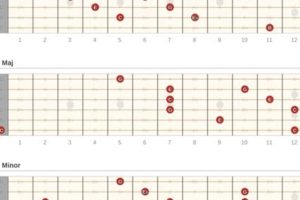
The choice of notes for a chord is guided by several factors, including the desired tonality, the harmonic context, and the overall musical style. Major chords, for instance, are constructed using a combination of the root note, the major third, and the perfect fifth. Minor chords, on the other hand, employ the root note, the minor third, and the perfect fifth. By understanding these fundamental note intervals, guitarists can construct a vast repertoire of chords.
Furthermore, the arrangement of notes within a chord, known as voicing, plays a crucial role in shaping its character. Different voicings can produce distinct timbres and harmonic qualities. For example, a close voicing, where the notes are positioned near each other on the guitar neck, yields a rich and full sound, while a spread voicing, where the notes are more dispersed, creates a more open and airy texture.
In conclusion, note selection is a fundamental aspect of guitar chord construction. By comprehending the principles of note intervals and voicings, guitarists can craft chords that are not only technically sound but also musically expressive. This understanding empowers them to create a diverse range of harmonic colors and textures, unlocking the full potential of the guitar as a melodic and rhythmic instrument.
Table: The Significance of Note Selection in Guitar Chord Construction
| Attribute | Description |
|---|---|
| Tonality | Determines the overall mood and character of the chord (major or minor). |
| Harmonic Context | The relationship between a chord and the surrounding chords in a musical progression. |
| Voicing | The arrangement of notes within a chord, influencing its timbre and harmonic qualities. |
| Musical Style | Different genres of music often employ specific chord voicings and note combinations. |
2. Interval Structure
Interval structure is a fundamental concept in music theory that describes the relationship between two notes in terms of their pitch distance. In the context of guitar chords, understanding interval structure is essential for constructing chords that are harmonious and pleasing to the ear.
Each interval is characterized by its size, which is measured in half steps (also known as semitones). The most common intervals used in guitar chords are the major third (4 half steps), the minor third (3 half steps), the perfect fifth (7 half steps), and the octave (12 half steps). These intervals form the foundation of major and minor chords, which are the building blocks of countless songs across various genres.
For instance, a major chord is constructed using a major third and a perfect fifth. The C major chord, for example, consists of the notes C (root), E (major third), and G (perfect fifth). Understanding the interval structure of this chord allows guitarists to construct it in different positions on the guitar neck, ensuring that the harmonic relationship between the notes remains intact.
Furthermore, understanding interval structure enables guitarists to create variations of chords by altering the intervals. For example, a C minor chord is constructed using a minor third instead of a major third, resulting in a darker and more somber sound. By experimenting with different intervals, guitarists can expand their harmonic vocabulary and create more complex and sophisticated chords.
In conclusion, interval structure plays a vital role in the construction of guitar chords. By understanding the distance between notes and the relationships they form, guitarists can build chords that are not only technically correct but also musically expressive. This knowledge unlocks a world of harmonic possibilities and empowers guitarists to create a diverse range of sounds and textures.
Table: The Significance of Interval Structure in Guitar Chord Construction
| Attribute | Description |
|---|---|
| Harmonic Relationship | Interval structure defines the harmonic relationship between notes in a chord, determining its overall sound and character. |
| Chord Construction | Understanding interval structure is essential for constructing chords in different positions on the guitar neck while maintaining their harmonic integrity. |
| Chord Variations |
Interval structure allows for the creation of chord variations by altering the intervals, expanding harmonic possibilities. |
| Musical Expression | Knowledge of interval structure empowers guitarists to use chords as a means of musical expression, conveying emotions and creating desired atmospheres. |
3. Chord Voicings
In the realm of guitar playing, chord voicings hold immense significance, as they empower guitarists to craft unique and expressive sounds from the same set of notes. Understanding how to arrange notes on the guitar neck is a crucial aspect of constructing guitar chords and expanding one’s musical vocabulary.
- Tonal Variety:
Chord voicings allow guitarists to explore a wide range of tonal variations within a single chord. By altering the order and position of notes on the neck, they can create voicings that are bright and shimmering, warm and mellow, or even dissonant and edgy. This versatility enables guitarists to adapt chords to suit different musical contexts and styles.
- Voicing Inversions:
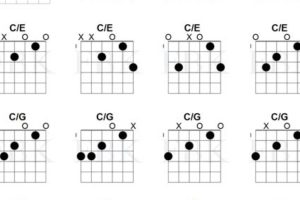
Inversions are a technique used to rearrange the notes of a chord, placing a different note in the bass position. This simple yet effective technique creates new voicings that can add depth and intrigue to chord progressions. Understanding inversions expands a guitarist’s harmonic possibilities and allows for smoother voice leading.
- Harmonic Tensions:
Certain voicings can introduce harmonic tensions that create a sense of anticipation and resolution. By incorporating notes that are slightly dissonant with the root, guitarists can create voicings that add interest and complexity to their playing. Mastering the art of creating and resolving harmonic tensions is a hallmark of skilled guitarists.
- Stylistic Nuances:
Different musical genres often employ specific chord voicings that have become synonymous with their sound. For instance, jazz guitarists frequently use extended voicings that incorporate additional notes beyond the triad, while rock guitarists often favor power chords and barre chords for their powerful and aggressive tones. Understanding the voicings associated with various styles allows guitarists to emulate and create music that fits within those genres.
In conclusion, chord voicings are an integral part of constructing guitar chords, providing guitarists with the tools to create a vast array of sounds and textures. By mastering the art of arranging notes on the guitar neck, guitarists can unlock their creativity and expand their musical horizons, enabling them to express themselves fully through their instrument.
4. Open Chords
Open chords, a fundamental aspect of guitar playing, serve as a cornerstone in the construction of guitar chords. Their simplicity and accessibility make them ideal for beginners, yet they also provide a solid foundation for more advanced techniques.
- Simplicity and Accessibility:
Open chords are constructed using open strings, which are not fretted by the fingers. This simplified approach makes them easier to learn and play, allowing beginners to quickly build a repertoire of basic chords. - Foundation for Barre Chords:
Barre chords, a staple of many guitarists’ technique, are essentially movable open chords. By learning open chords, guitarists develop the hand positioning and finger coordination necessary to master barre chords, expanding their chord vocabulary. - Tonal Variety:
Open chords offer a diverse range of tonal qualities. Major open chords, such as C, G, and D, exude a bright and uplifting sound, while minor open chords, such as Am, Em, and Dm, convey a more somber and introspective mood. - Accompaniment and Strumming:
Open chords are commonly used for accompaniment and strumming patterns. Their open nature allows guitarists to strum freely while maintaining a clear and resonant sound, making them ideal for singer-songwriters and rhythm guitarists.
In conclusion, open chords are not only a gateway into guitar playing but also a versatile foundation for constructing more complex chords. Their simplicity, accessibility, and tonal variety make them an essential part of any guitarist’s arsenal.
5. Barre Chords
In the realm of guitar playing, barre chords stand as a cornerstone technique, enabling guitarists to construct a vast array of chords across the fretboard. Their mastery unlocks a world of musical possibilities, expanding the guitarist’s harmonic vocabulary and technical abilities.
- Extended Range and Versatility:
Barre chords allow guitarists to play chords in different keys and positions, extending their range and versatility. By moving the barre up and down the neck, guitarists can create a multitude of chords without having to memorize individual fingerings for each one. - Complex and Rich Sounds:
Barre chords often incorporate more notes than open chords, resulting in richer and more complex sounds. This tonal variety enhances the guitarist’s ability to create sophisticated and expressive music. - Technical Proficiency:
Mastering barre chords requires precise finger positioning and coordination, improving the guitarist’s overall technical proficiency. The ability to execute barre chords cleanly and accurately is a hallmark of skilled guitarists. - Foundation for Advanced Techniques:
Barre chords serve as a stepping stone to more advanced guitar techniques, such as extended chords, diminished chords, and altered chords. By understanding the principles of barre chords, guitarists gain a solid foundation for exploring these harmonic concepts.
In conclusion, barre chords are an essential component of “how to construct guitar chords.” They empower guitarists to expand their harmonic range, create complex and rich sounds, enhance their technical proficiency, and unlock a world of advanced guitar techniques. Mastering barre chords is a testament to a guitarist’s dedication and opens up countless possibilities for musical expression.
6. Power Chords
In the realm of guitar playing, power chords hold a unique and significant place in the construction of guitar chords. Their distinctive sound and versatility make them a cornerstone of many genres, from rock and metal to punk and grunge.
- Simplified Structure:
Power chords are constructed using only the root, fifth, and octave notes, omitting the third, which gives them their characteristic raw and powerful sound. This simplified structure makes them easier to play, especially for beginners, and allows for quick and effortless transitions between chords. - Tonal Impact and Distortion:
The absence of the third in power chords creates a more aggressive and distorted sound, making them particularly suitable for high-energy music styles. When played with distortion or overdrive, power chords produce a thick an
d saturated tone that cuts through the mix. - Harmonic Versatility:
Despite their simple structure, power chords offer harmonic versatility. By adjusting the root note, guitarists can create power chords in different keys, allowing them to harmonize with a wide range of melodies and scales. This versatility makes power chords a valuable tool for improvisation and songwriting. - Foundation for Soloing:
The simplicity of power chords makes them an ideal foundation for guitar solos. The open strings and lack of complex fingerings provide a clear and uncluttered sonic backdrop, allowing guitarists to focus on melodic improvisation and lead lines without harmonic clashes.
In conclusion, power chords are an integral part of “how to construct guitar chords.” Their simplified structure, tonal impact, harmonic versatility, and suitability for soloing make them a powerful tool for guitarists in various genres. Mastering power chords not only enhances one’s technical abilities but also opens up a world of creative possibilities in guitar playing.
7. Major Chords
In the realm of music theory and guitar playing, major chords stand as a cornerstone of harmonic construction. Their bright and uplifting sound has made them a staple in countless genres, from pop and rock to country and blues.
- Tonal Characteristics:
Major chords are characterized by their bright and cheerful sound, which is attributed to the intervallic relationship between their notes. The major third interval, which spans four half steps, creates a sense of optimism and energy. - Construction:
Major chords are constructed using a root note, a major third, and a perfect fifth. For example, the C major chord consists of the notes C (root), E (major third), and G (perfect fifth). - Emotional Impact:
Major chords often evoke feelings of happiness, joy, and triumph. Their uplifting nature makes them ideal for use in celebratory or motivational contexts. - Harmonic Function:
In traditional Western music theory, major chords typically serve as the tonic or “home” chord. They provide a sense of stability and resolution, making them essential for creating a sense of forward motion and harmonic progression.
In conclusion, major chords play a vital role in “how to construct guitar chords.” Their bright and uplifting sound, coupled with their simple construction and versatile harmonic function, make them a fundamental building block for guitarists of all levels. Understanding and mastering major chords is essential for creating a wide range of musical styles and expressing a diverse spectrum of emotions.
8. Minor Chords
In the realm of guitar playing and music theory, minor chords occupy a significant place, contributing a darker and more somber sound to the harmonic landscape. Their construction and usage are integral to understanding “how to construct guitar chords” and expanding one’s musical vocabulary.
Minor chords are constructed using a root note, a minor third, and a perfect fifth. The minor third interval, spanning three half steps, imparts a sense of melancholy and introspection to the chord’s overall character. This distinct sound distinguishes minor chords from their major counterparts, which utilize a major third interval, resulting in a brighter and more uplifting tonality.
The incorporation of minor chords into guitar playing opens up a wide range of expressive possibilities. They are commonly employed to create a sense of sadness, nostalgia, or contemplation in music. Minor chords can evoke a range of emotions, from gentle pensiveness to profound sorrow, adding depth and nuance to musical compositions.
Mastering the construction and usage of minor chords is essential for guitarists seeking to expand their harmonic knowledge and emotional expressiveness. By incorporating minor chords into their playing, guitarists can access a broader spectrum of musical styles and effectively convey a diverse array of feelings and moods through their music.
Table: The Significance of Minor Chords in Guitar Playing
| Attribute | Description |
|---|---|
| Emotional Expression: | Minor chords convey a range of emotions, from sadness and nostalgia to contemplation and introspection. |
| Harmonic Contrast: | The contrast between major and minor chords creates harmonic tension and resolution, adding depth and interest to musical compositions. |
| Genre Versatility: | Minor chords are essential for playing a wide range of musical genres, including blues, rock, and folk, among others. |
| Technical Proficiency: | Learning to construct and play minor chords improves guitarists’ technical abilities and finger coordination. |
9. Seventh Chords
The incorporation of seventh chords into guitar playing opens up a realm of harmonic possibilities, adding depth and complexity to musical compositions. Understanding their construction and usage is a crucial aspect of “how to construct guitar chords,” as they expand a guitarist’s harmonic vocabulary and expressive range.
- Enhanced Harmonic Texture:
Seventh chords introduce a seventh note, typically a major or minor seventh, to the basic triad structure of a chord. This additional note creates a richer and more complex harmonic texture, enhancing the overall sound of the chord. - Emotional Expression:
Seventh chords possess a distinct emotional quality that can convey a wide range of feelings and moods. Major seventh chords often evoke a sense of sophistication and elegance, while minor seventh chords can create a more introspective and somber atmosphere. - Harmonic Tension and Resolution:
The presence of the seventh note in a chord introduces a sense of harmonic tension, which can be resolved by moving to a more stable chord. This interplay between tension and resolution adds depth and interest to chord progressions. - Genre Versatility:
Seventh chords are commonly employed in various musical genres, including jazz, blues, and rock. Their versatility makes them a valuable tool for guitarists seeking to expand their stylistic range and explore different harmonic approaches.
Mastering the construction and usage of seventh chords empowers guitarists to create more sophisticated and expressive music. By incorporating these chords into their playing, they can access a broader harmonic palette and effectively convey a diverse array of emotions and moods through their music.
10. Extended Chords
In the realm of guitar playing and music theory, extended chords emerge as a fascinating realm of harmonic exploration, extending beyond the traditional
triad and seventh chord structures. Understanding their construction and usage is integral to “how to construct guitar chords,” opening up new avenues for creative expression and harmonic sophistication.
- Enhancing Harmonic Complexity:
Extended chords introduce additional notes beyond the seventh, such as the ninth, eleventh, and thirteenth, creating a richer and more complex harmonic texture. This expanded harmonic palette allows guitarists to explore new and innovative chord voicings, adding depth and interest to their playing. - Tonal Nuances and Coloration:
The incorporation of extended notes provides guitarists with a broader range of tonal nuances and colors to work with. Different extended chords evoke distinct emotional responses and create unique harmonic atmospheres, enabling guitarists to convey a wider spectrum of emotions and moods through their music. - Harmonic Tension and Release:
The interplay between extended notes and the root chord structure can create harmonic tension and release, adding a sense of movement and dynamism to chord progressions. Resolving extended chords to more stable and consonant chords can provide a satisfying sense of resolution and closure. - Genre Versatility and Stylistic Exploration:
Extended chords are commonly employed in jazz, fusion, and contemporary music styles. Mastering their construction and usage allows guitarists to explore and emulate the harmonic language of these genres, expanding their stylistic range and versatility as musicians.
In conclusion, extended chords offer guitarists a powerful tool for harmonic exploration and creative expression. By venturing beyond the traditional chord structures, guitarists can unlock a world of harmonic possibilities, adding depth, complexity, and emotional resonance to their music. Embracing extended chords empowers guitarists to push the boundaries of their playing and expand their musical vocabulary, enriching their compositions and performances.
11. Inversions
In the realm of “how to construct guitar chords,” inversions play a significant role in expanding harmonic possibilities and enriching musical compositions. By rearranging the notes of a chord, guitarists can create distinct voicings that add depth, variety, and expressive nuance to their playing.
- Tonal Variation:
Inversions allow guitarists to alter the tonal quality of a chord without changing its harmonic structure. By placing different notes in the bass, guitarists can create voicings that emphasize specific intervals, resulting in a wide range of tonal variations. - Harmonic Movement:
Inversions can be used to create a sense of harmonic movement and progression within chord sequences. By moving the bass note up or down stepwise, guitarists can create smooth and logical voice leading, enhancing the overall flow and coherence of their music. - Voice Leading and Part-Writing:
Understanding inversions is essential for effective voice leading and part-writing in guitar compositions. By carefully arranging the notes of chords in different inversions, guitarists can ensure that each voice moves smoothly and independently, avoiding awkward voice crossings or parallel fifths. - Stylistic Considerations:
Inversions are often employed in specific musical styles and genres. For example, in jazz guitar, inversions are used extensively to create sophisticated and harmonically rich voicings. Similarly, in classical guitar, inversions are used to enhance the melodic and contrapuntal elements of the music.
In conclusion, inversions are an integral aspect of “how to construct guitar chords.” They provide guitarists with a powerful tool to explore tonal variation, create harmonic movement, enhance voice leading, and incorporate stylistic nuances into their playing. Mastering the art of inversions empowers guitarists to expand their harmonic vocabulary, create more expressive and sophisticated music, and elevate their overall musicianship.
12. Chord Progressions
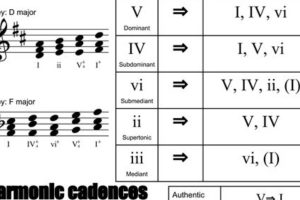
In the realm of music theory and “how to construct guitar chords,” chord progressions hold immense significance. They are sequences of chords that, when played in succession, create a sense of musical movement and direction. Understanding how to construct and utilize chord progressions is fundamental for guitarists seeking to create engaging and expressive music.
Chord progressions serve several crucial purposes:
- Harmonic Framework: Chord progressions provide a harmonic framework for melodies and solos, giving them structure and context.
- Tonal Center: They establish and reinforce the tonal center of a piece of music, creating a sense of stability.
- Emotional Impact: Different chord progressions can evoke distinct emotions and moods, ranging from happiness and excitement to sadness and contemplation.
- Musical Tension and Release: Chord progressions can create a sense of tension and release, adding depth and interest to musical compositions.
Constructing effective chord progressions requires an understanding of:
- Chord Theory: The construction and relationships between different chords.
- Circle of Fifths: The organization of chords in a cyclical pattern based on their fifth intervals.
- Common Chord Progressions: Familiar and widely used chord sequences that serve as a foundation for many musical styles.
- Voice Leading: The smooth and logical movement of individual voices within a chord progression.
Mastering chord progressions empowers guitarists to create a vast repertoire of harmonic possibilities. By combining different chords and progressions, they can craft unique and engaging musical compositions that captivate listeners and express a wide range of emotions and ideas.
Here is a practical example of how chord progressions are used in “how to construct guitar chords”:
The popular chord progression of C – G – Am – F, known as the “4-chord song,” is a simple yet effective example of how chord progressions create musical movement. The progression moves through different chords, creating a sense of harmonic tension and release that is both pleasing to the ear and easy to play. This progression is commonly used in various musical genres, from folk and pop to rock and blues.
Understanding and utilizing chord progressions is an essential aspect of “how to construct guitar chords.” It enables guitarists to create musically coherent and expressive pieces that resonate with audiences. By mastering the art of chord progressions, guitarists can unlock their creative potential and take their playing to new heights.
FAQs about “how to construct guitar chords”
Whether you’re a beginner or an experienced guitarist, understanding how to construct chords is essential for creating beautiful and expressive music. Here are answers to some frequently asked questions about guitar chord construction:
Question 1: What is the most important thing to consider when constructing a guitar chord?
Answer: The most important thing to consider when constructing a guitar chord is the relati
onship between the notes in the chord. Chords are built on intervals, which are the spaces between notes. The quality of a chord (major, minor, etc.) is determined by the specific intervals used.
Question 2: What are the basic types of guitar chords?
Answer: The three basic types of guitar chords are major, minor, and seventh chords. Major chords have a bright and uplifting sound, while minor chords have a darker and more somber sound. Seventh chords add a more complex and sophisticated sound to a chord.
Question 3: How do I construct a major chord?
Answer: To construct a major chord, start with the root note. Then, add the major third (four half steps above the root) and the perfect fifth (seven half steps above the root). For example, a C major chord is constructed using the notes C, E, and G.
Question 4: How do I construct a minor chord?
Answer: To construct a minor chord, start with the root note. Then, add the minor third (three half steps above the root) and the perfect fifth (seven half steps above the root). For example, a C minor chord is constructed using the notes C, Eb, and G.
Question 5: How do I construct a seventh chord?
Answer: To construct a seventh chord, start with a major or minor chord. Then, add the seventh (eleven half steps above the root). For example, a C major seventh chord is constructed using the notes C, E, G, and B.
Question 6: How can I improve my chord construction skills?
Answer: The best way to improve your chord construction skills is to practice regularly. Experiment with different chords and voicings. Listen to music and try to identify the chords that are being played. With time and practice, you will become more proficient at constructing chords.
Summary: Constructing guitar chords is a fundamental skill for any guitarist. By understanding the basic principles of chord construction, you can build a strong foundation for your playing. With practice and dedication, you can master the art of chord construction and create beautiful and expressive music.
Transition to the next article section: Now that you have a basic understanding of how to construct guitar chords, you can start learning how to play them. In the next section, we will discuss the different ways to strum and fingerpick guitar chords.
Tips for Constructing Guitar Chords
Mastering the construction of guitar chords is a crucial step in a guitarist’s journey. Here are some valuable tips to enhance your chord-building skills:
Tip 1: Understand the Theory Behind Chords
Grasp the fundamental concepts of music theory, including intervals, scales, and chord structures. This theoretical knowledge will provide a solid foundation for constructing chords accurately.
Tip 2: Practice Regularly
Regular practice is essential for developing muscle memory and improving finger coordination. Dedicate time each day to practicing various chord shapes and transitions.
Tip 3: Use a Chord Chart or App
Refer to a comprehensive chord chart or download a mobile app that provides diagrams and fingerings for different chords. These resources can be helpful for beginners and serve as a quick reference.
Tip 4: Analyze Existing Chords
Study and analyze the construction of chords in songs you enjoy. By breaking down the chord shapes, you can gain insights into their composition and apply them to your own playing.
Tip 5: Experiment with Different Voicings
Explore various voicings of the same chord. Experiment with different note arrangements and inversions to discover new tonal possibilities and enhance the richness of your chord playing.
Tip 6: Use a Metronome
Practice changing chords with a metronome. This will help you develop a consistent tempo and improve your overall timing and rhythm.
Tip 7: Record Yourself
Record your chord playing and listen back to identify areas for improvement. This self-assessment technique can be highly beneficial for refining your technique and identifying any inconsistencies.
Tip 8: Seek Guidance from Others
Consider seeking guidance from a guitar teacher or experienced guitarist. They can provide personalized feedback, demonstrate proper techniques, and help you overcome specific challenges.
In conclusion, constructing guitar chords effectively requires a combination of theoretical knowledge, regular practice, and a willingness to experiment and refine your skills. By incorporating these tips into your practice routine, you can elevate your chord-building abilities and expand your musical capabilities.
Conclusion
Understanding “how to construct guitar chords” is a fundamental skill that opens up a world of musical possibilities for guitarists. By mastering the principles of chord construction, guitarists can create a vast repertoire of chords, explore different voicings and styles, and express themselves fully through their music.
The journey of learning how to construct guitar chords is an ongoing one. With dedication, practice, and a willingness to experiment, guitarists can continuously expand their harmonic knowledge, enhance their technical proficiency, and unlock new levels of musical creativity. The guitar is a versatile and expressive instrument, and the ability to construct chords is the key to unlocking its full potential. Embrace the learning process, explore different chord voicings and progressions, and let your guitar playing soar to new heights.