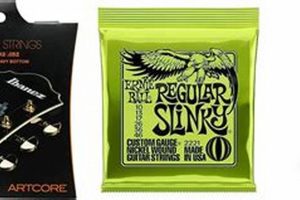
Are you clueless about guitar strings gauges? Are you struggling to understand the impact of string gauges on your guitar’s tone and playability? Fret not! We’ve prepared a comprehensive guide to guitar strings gauge charts to help you make informed decisions about your guitar strings.
Editor’s Note:Understanding guitar strings gauges is essential for guitarists of all levels – whether you’re a beginner just starting out or a seasoned pro looking to fine-tune your sound. Our in-depth guitar strings gauge chart will help you choose the best strings for your playing style and guitar.
After analyzing countless guitar strings and consulting with experienced guitarists, we’ve put together this guitar strings gauge chart guide to help you make the right decision.
The following table outlines the key differences between the most common guitar strings gauges:
| Gauge | Thickness (inches) | Tension (lbs) | Tone | Playability |
|---|---|---|---|---|
| Extra Light (9-42) | 0.009 – 0.042 | Low | Bright, twangy | Easy to bend |
| Light (10-47) | 0.010 – 0.047 | Medium | Balanced, versatile | Moderate bendability |
| Medium (11-52) | 0.011 – 0.052 | High | Warm, full | More difficult to bend |
| Heavy (12-56) | 0.012 – 0.056 | Very High | Heavy, powerful | Hard to bend |
Now that you have a better understanding of guitar strings gauges, you can start experimenting with different gauges to find the ones that best suit your playing style and guitar.
1. String Thickness
String thickness, measured in inches, is a crucial factor in determining the tension, tone, and playability of guitar strings. Thicker strings have higher tension and produce a warmer, fuller tone, while thinner strings have lower tension and produce a brighter, twangier tone. Thicker strings are also more difficult to bend, while thinner strings are easier to bend.
- Tension: Thicker strings have higher tension, which means they are more resistant to stretching. This can be beneficial for certain playing styles, such as heavy strumming or down-tuning, as it can help to keep the strings in tune. However, higher tension can also make the strings more difficult to bend, which can be a disadvantage for certain lead guitar techniques.
- Tone: Thicker strings produce a warmer, fuller tone, while thinner strings produce a brighter, twangier tone. This is because thicker strings have a larger mass, which results in a lower resonant frequency. The lower resonant frequency produces a warmer, fuller sound, while the higher resonant frequency of thinner strings produces a brighter, twangier sound.
- Playability: Thicker strings are more difficult to bend, while thinner strings are easier to bend. This is because thicker strings have a higher moment of inertia, which means they require more force to bend. This can be a disadvantage for certain lead guitar techniques, such as bending and vibrato, as it can make it more difficult to achieve the desired pitch changes.
When choosing the right string thickness for your guitar, it is important to consider your playing style, the type of music you play, and the scale length of your guitar. If you are unsure which string thickness is right for you, it is always a good idea to consult with a guitar teacher or experienced guitarist.
2. Tension
Tension is a crucial aspect of guitar strings gauge charts as it directly affects the string’s resistance to stretching, which in turn impacts the string’s pitch, tone, and playability. Understanding the relationship between tension and string gauge is essential for guitarists to make informed decisions about their string choices.
- String Pitch and Tension: String tension is directly proportional to the string’s pitch. Higher tension strings produce a higher pitch, while lower tension strings produce a lower pitch. This is because the increased tension increases the string’s stiffness, which in turn increases the frequency of vibration.
- String Tone and Tension: String tension also affects the string’s tone. Higher tension strings produce a brighter, more metallic tone, while lower tension strings produce a warmer, more mellow tone. This is because the increased tension increases the string’s stiffness, which in turn increases the high-frequency content of the string’s sound.
- String Playability and Tension: String tension also affects the string’s playability. Higher tension strings are more difficult to bend and stretch, while lower tension strings are easier to bend and stretch. This is because the increased tension increases the string’s stiffness, which in turn makes it more difficult to deform.
- Guitar Setup and Tension: The tension of the strings must be considered in the overall setup of the guitar. The guitar’s neck relief, bridge height, and intonation must be adjusted to accommodate the string tension. Improper setup can lead to buzzing, intonation problems, and other issues.
By understanding the relationship between tension and string gauge, guitarists can choose the right strings for their playing style and the desired sound. For example, a guitarist who prefers a bright, metallic tone and easy playability may opt for a set of high-tension strings. Conversely, a guitarist who prefers a warm, mellow tone and easier bending may opt for a set of low-tension strings.
3. Tone

The relationship between string gauge and tone is a fundamental concept in guitar playing. Thicker strings produce warmer tones, while thinner strings sound brighter. This is due to the fact that thicker strings have a larger mass, which results in a lower resonant frequency. The lower resonant frequency produces a warmer, fuller sound, while the higher resonant frequency of thinner strings produces a brighter, twangier sound.
The thickness of the strings is measured in thousandths of an inch. The most common string gauges for electric guitar are 9-42, 10-46, and 11-52. The first number in the gauge refers to the thickness of the thinnest string, and the second number refers to the thickness of the thickest string. Heavier string gauges (e.g., 12-56, 13-56) are also available, but they are less common.
The choice of string gauge is a matter of personal preference. Some gu
itarists prefer the warmer tone of thicker strings, while others prefer the brighter tone of thinner strings. Ultimately, the best way to find the right string gauge for your guitar is to experiment with different gauges and see what you like best.
Here is a table summarizing the key differences between thicker and thinner strings:
| String Gauge | Tone | Playability |
|---|---|---|
| Thicker | Warmer | More difficult to bend |
| Thinner | Brighter | Easier to bend |
It is important to note that the relationship between string gauge and tone is not the only factor that affects the sound of your guitar. Other factors, such as the type of guitar, the type of strings, and the way you play the guitar, also play a role.
4. Playability

The playability of guitar strings is directly related to their gauge, with thinner strings being easier to bend and thicker strings providing more sustain. This relationship is a key consideration when choosing the right strings for your playing style and the desired sound.
String bending is a common technique used to add expression and emotion to guitar playing. Thinner strings are easier to bend because they have less tension and require less force to deform. This makes them ideal for lead guitarists and soloists who frequently use bending techniques.
Sustain is the length of time a note continues to ring after it is played. Thicker strings provide more sustain because they have more mass and therefore vibrate for a longer period of time. This makes them ideal for rhythm guitarists and players who want a fuller, richer sound.
The following table summarizes the key differences between thinner and thicker strings in terms of playability and sustain:
| String Gauge | Playability | Sustain |
|---|---|---|
| Thinner | Easier to bend | Less sustain |
| Thicker | More difficult to bend | More sustain |
Ultimately, the best way to find the right string gauge for your guitar is to experiment with different gauges and see what works best for your playing style and the desired sound.
5. Guitar Scale Length
The connection between guitar scale length and string gauge is crucial for achieving optimal tension and playability on the instrument. Scale length refers to the distance between the nut and the bridge on a guitar, and it directly influences the tension of the strings.
- Tonal Impact: Longer scale lengths result in higher string tension, which produces a brighter and more articulate tone. Thicker strings are required to maintain the desired tension on longer scale lengths, as thinner strings would be too loose and produce a dull and lifeless sound.
- Playability Considerations: Thicker strings have higher tension, making them more difficult to bend and fret. However, they offer improved sustain and stability, particularly for aggressive playing styles and low tunings. On longer scale lengths, thicker strings provide the necessary resistance to prevent excessive string buzz and maintain intonation.
- String Choice and Compatibility: When selecting strings for a guitar with a longer scale length, it is essential to choose a gauge that is appropriate for the instrument’s scale. Using strings that are too thin for the scale length can result in insufficient tension, poor intonation, and a lack of clarity in tone. Conversely, strings that are too thick can create excessive tension, making the guitar difficult to play and potentially causing damage to the neck.
- Scale Length and String Tension: The relationship between scale length and string tension is inversely proportional. As the scale length increases, the tension of the same string gauge decreases. This means that for a given string gauge, a longer scale length will produce lower tension, while a shorter scale length will produce higher tension.
Understanding the connection between guitar scale length and string gauge allows guitarists to make informed decisions when choosing strings for their instruments. By selecting the appropriate string gauge for the scale length, players can optimize the tension, tone, and playability of their guitars, ultimately enhancing their musical expression and enjoyment.
6. Guitar Tuning

The relationship between guitar tuning and string gauge is crucial for achieving optimal intonation and sound quality. Different tunings exert varying amounts of tension on the strings, necessitating specific string gauges to maintain proper pitch and avoid intonation issues.
- Standard Tuning and String Gauges: Standard tuning (E-A-D-G-B-E) is the most common tuning for guitars, and it typically uses a set of strings with gauges ranging from .010 to .046 inches. These gauges provide a balanced tension that allows for comfortable playing, clear intonation, and a versatile tonal range.
- Alternate Tunings and String Gauge Adjustments: When using alternate tunings, such as drop tunings (e.g., Drop D) or open tunings (e.g., Open G), the string tensions change, requiring adjustments to the string gauges. For instance, in Drop D tuning (D-A-D-G-B-E), the thicker low E string is replaced with a thinner D string, compensating for the reduced tension and maintaining proper intonation.
- String Tension and Intonation: The string gauge directly influences the string tension, which is a key factor in achieving accurate intonation. Thinner strings have lower tension and produce sharp notes if used in tunings that require higher tension. Conversely, thicker strings have higher tension and produce flat notes if used in tunings that require lower tension.
- Tonal Impact of String Gauge and Tuning: String gauge and tuning also affect the tonal characteristics of the guitar. Thicker strings produce a warmer, fuller sound, while thinner strings produce a brighter, more articulate sound. Choosing the appropriate string gauge for a particular tuning ensures that the guitar’s tone complements the musical style and desired sound.
Understanding the connection between guitar tuning and string gauge empowers guitarists to make informed decisions when selecting strings for their instruments. By matching the string gauges to the intended tuning, players can optimize the intonation, tone, and overall playability of their guitars, enhancing their musical expression and enjoyment.
7. Playing Style

The choice of guitar string gauge is closely intertwined with one’s playing style. Understanding the interplay between string gauge and playing style empowers guitarists to select the strings that best complement their techniques and musical aspirati
ons. Heavier strings excel in aggressive playing styles, while lighter strings are more suited for delicate fingerpicking.
- Aggressive Playing Styles and Heavier Strings: Heavy strings, with their higher tension and thicker diameter, provide the stability and durability required for aggressive playing styles such as hard rock, metal, and heavy blues. They can withstand the forceful strumming, palm muting, and bending techniques commonly employed in these genres, producing a powerful and cutting tone.
- Delicate Fingerpicking and Lighter Strings: Lighter strings, with their lower tension and thinner diameter, offer the sensitivity and playability ideal for delicate fingerpicking styles such as folk, classical, and acoustic singer-songwriter. They allow for intricate finger movements, smooth transitions, and clear articulation, producing a nuanced and expressive sound.
- Tonal Considerations: Heavier strings generally produce a warmer, fuller tone due to their increased mass and lower resonant frequency. Lighter strings, on the other hand, produce a brighter, more articulate tone due to their reduced mass and higher resonant frequency. These tonal differences further align with the demands of aggressive and delicate playing styles, respectively.
- Playability and String Gauge: Heavier strings require more force to bend and fret, making them less suitable for techniques that involve frequent string manipulation. Lighter strings, with their reduced tension, are easier to bend and fret, allowing for greater dexterity and fluidity in fingerpicking and lead guitar playing.
By aligning string gauge with playing style, guitarists can optimize their guitars’ performance, enhance their playing techniques, and achieve the desired sonic characteristics. The “guitar strings gauge chart” provides a comprehensive reference for selecting the appropriate string gauge based on factors such as playing style, scale length, and tuning, empowering guitarists to make informed decisions that elevate their musical expression.
8. String Material
In the context of guitar strings gauge charts, understanding the impact of string material is crucial for guitarists seeking to optimize their instrument’s sound and performance. String material directly influences tone, durability, and playability, offering distinct advantages depending on the player’s needs and preferences.
- Tonal Characteristics: Nickel-plated strings are renowned for their bright, crisp tone, making them a popular choice for genres such as rock, pop, and country. Stainless steel strings, on the other hand, produce a warmer, more mellow sound, favored in blues, jazz, and heavier rock styles.
- Durability and Longevity: Stainless steel strings possess exceptional durability, resisting corrosion and wear more effectively than nickel-plated strings. They are ideal for players who frequently bend strings or use aggressive playing techniques, as they maintain their intonation and tone over extended periods.
- Magnetic Properties: Nickel-plated strings are more magnetic than stainless steel strings, resulting in a stronger signal output when used with electric guitar pickups. This characteristic enhances sustain and clarity, making nickel-plated strings a preferred choice for lead guitarists and soloists.
- Playability and Feel: Nickel-plated strings generally feel smoother and more pliable under the fingers, making them easier to bend and fret. Stainless steel strings, with their increased stiffness, require slightly more force to play but offer improved tuning stability.
By considering the interplay between string material and gauge, guitarists can make informed decisions that align with their desired tone, durability, and playing style. “Guitar strings gauge charts” serve as invaluable resources in this regard, providing comprehensive information on the various string materials available and their corresponding gauges, empowering guitarists to optimize their instrument’s performance and achieve their musical aspirations.
9. Coating
Within the context of guitar strings gauge charts, understanding the impact of string coating is crucial for guitarists seeking to optimize the longevity and playability of their strings. Coated strings offer distinct advantages, making them a valuable consideration for players of all levels and genres.
- Enhanced Longevity: Coated strings feature a thin layer of protective material, typically polytetrafluoroethylene (PTFE) or similar compounds, which acts as a barrier against corrosion and wear. This coating significantly extends the lifespan of the strings, reducing the frequency of string changes and saving guitarists time and money.
- Reduced Finger Squeaks: Uncoated strings often produce an unpleasant squeaking sound when sliding or bending, which can be distracting and hinder smooth playing. Coated strings effectively eliminate this issue by reducing friction between the strings and the fingers. This allows for effortless string manipulation and enhances the overall playing experience.
- Tonal Impact: While some guitarists believe that coated strings may slightly alter the tone of their instrument, modern coating techniques have been refined to minimize any noticeable tonal differences. Coated strings generally preserve the natural sound of the strings while providing the added benefits of longevity and reduced finger squeaks.
- Compatibility and Availability: Coated strings are available in a wide range of gauges, allowing guitarists to choose the appropriate thickness for their playing style and guitar setup. Compatibility with various string types, including electric, acoustic, and bass strings, makes coated strings a versatile choice for players of all genres.
By incorporating information about coated strings into guitar strings gauge charts, guitarists can make informed decisions that not only address string gauge but also consider factors such as longevity and playability. Coated strings offer a unique combination of benefits, making them an excellent choice for players seeking to enhance their guitar playing experience.
FAQs on Guitar Strings Gauge Charts
Understanding guitar strings gauge charts is crucial for guitarists, but certain questions and misconceptions often arise. This FAQ section addresses six common concerns to provide informative answers and clarify any confusion.
Question 1: How do I choose the right string gauge for my guitar?
The appropriate string gauge depends on factors such as guitar scale length, tuning, playing style, and personal preference. Guitar strings gauge charts provide a comprehensive overview of different gauges and their characteristics, helping guitarists make informed decisions based on their specific needs.
Question 2: Do thicker strings always produce a warmer tone?
Yes, generally thicker strings produce a warmer, fuller tone due to their increased mass and lower resonant frequency. However, the overall tone is also influenced by string material, guitar construction, and playing technique.
Question 3: Can I use any string gauge on my guitar?
While it’s possible to experiment with different gauges, using strings that are too thick or too
thin for your guitar’s scale length and tuning can lead to intonation issues, excessive tension, or poor playability. Refer to guitar strings gauge charts and consider consulting a guitar technician for guidance.
Question 4: Do coated strings affect the tone of my guitar?
Modern coated strings are designed to minimize tonal impact while providing benefits such as extended longevity and reduced finger squeaks. However, some players may perceive subtle differences in brightness or sustain, depending on the coating material and string construction.
Question 5: How often should I change my guitar strings?
String lifespan varies based on playing frequency, string material, and environmental factors. Regularly inspect your strings for signs of wear, corrosion, or intonation issues. Coated strings generally last longer than uncoated strings.
Question 6: Can guitar strings gauge charts guarantee the perfect sound for my guitar?
Guitar strings gauge charts serve as valuable guides, but the “perfect” sound is subjective and depends on personal preferences, guitar characteristics, and playing style. Experiment with different gauges and string materials to find the combination that best suits your musical needs and aspirations.
Remember, understanding guitar strings gauge charts is an ongoing journey, and consulting with experienced guitarists, guitar technicians, and online resources can further enhance your knowledge and decision-making process.
Transition to the next article section: Further Exploration of Guitar Strings
Tips for Utilizing Guitar Strings Gauge Charts
Mastering the art of selecting the right guitar strings for your instrument requires careful consideration of various factors. Guitar strings gauge charts serve as invaluable resources, but to fully harness their potential, follow these essential tips:
Tip 1: Determine Your Guitar’s Scale Length: The scale length, measured from the nut to the bridge, significantly influences string tension. Use a measuring tape to accurately determine the scale length and refer to the guitar strings gauge chart to select gauges that correspond to your guitar’s specific dimensions.
Tip 2: Consider Your Tuning Preferences: Different tunings exert varying tension on the strings. If you frequently employ alternate tunings, such as drop tunings or open tunings, consult the guitar strings gauge chart to identify the appropriate gauges for each tuning to ensure optimal intonation.
Tip 3: Match Gauge to Your Playing Style: Your playing style directly impacts the ideal string gauge. Heavier strings offer greater durability and sustain, making them suitable for aggressive playing styles like hard rock and metal. Conversely, lighter strings enhance playability and are preferred for delicate fingerpicking and lead guitar techniques.
Tip 4: Experiment with Different Materials: String material, such as nickel-plated or stainless steel, affects tone and durability. Nickel-plated strings produce a brighter tone, while stainless steel strings deliver a warmer sound and enhanced longevity. Experiment with different materials to discover the combination that complements your musical preferences and playing style.
Tip 5: Explore Coated Strings: Coated strings feature a protective layer that extends their lifespan and reduces finger squeaks. While they may subtly alter the tone, modern coated strings minimize these effects while providing the benefits of longevity and enhanced playability.
By incorporating these tips into your string selection process, you’ll be able to leverage the power of guitar strings gauge charts to make informed decisions that optimize the sound, playability, and overall performance of your guitar.
Conclusion
Guitar strings gauge charts unveil a world of possibilities for guitarists seeking to enhance their playing experience. By understanding the intricate relationship between string gauge and factors like scale length, tuning, playing style, material, and coating, guitarists can make informed decisions that optimize the sound, playability, and longevity of their instruments.
Remember, the journey to finding the perfect strings is an ongoing process of exploration and refinement. Experiment with different gauges and materials, consult with experienced guitarists and technicians, and utilize guitar strings gauge charts as a valuable resource. By embracing the knowledge and insights provided in this article, you’ll be well-equipped to navigate the world of guitar strings and elevate your musical expression to new heights.