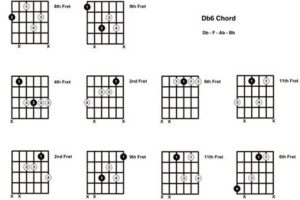
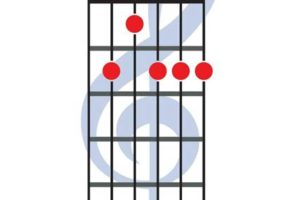
What are guitar chord voicings? Simply put, they are different ways of playing the same chord. By changing the arrangement of the notes on the fretboard, you can create different voicings that can add variety and interest to your playing.
Editor’s Note: Guitar chord voicings are an essential part of any guitarist’s toolkit. They can help you create more interesting and complex chord progressions, and they can also be used to add color and texture to your solos.
In this guide, we’ll explore the different types of guitar chord voicings and show you how to use them in your own playing. We’ll also provide some tips on how to create your own voicings.
Key Differences Between Guitar Chord Voicings
There are a few key differences between different guitar chord voicings. These include:
| Characteristic | Description |
|---|---|
| Inversion | The inversion of a chord refers to which note is in the bass. For example, a C major chord in root position has the note C in the bass. However, you can also play a C major chord in first inversion, with the note E in the bass, or second inversion, with the note G in the bass. |
| Voicing | The voicing of a chord refers to the specific arrangement of the notes on the fretboard. For example, there are many different voicings of the C major chord, each with its own unique sound. |
| Extension | An extension is a note that is added to a chord beyond the root, third, and fifth. For example, a C major 7 chord includes the note B, which is the seventh note of the C major scale. |
How to Use Guitar Chord Voicings
Guitar chord voicings can be used in a variety of ways to add interest and variety to your playing. Here are a few tips on how to use them:
- Use different voicings of the same chord to create a sense of movement and progression. For example, you could start with a C major chord in root position, then move to a C major chord in first inversion, and then to a C major chord in second inversion.
- Use voicings that include extensions to add color and texture to your chords. For example, you could use a C major 7 chord to add a jazzy flavor to your playing.
- Use voicings to create interesting bass lines. For example, you could use a C major chord with a low G note in the bass to create a walking bass line.
How to Create Your Own Guitar Chord Voicings
In addition to using the voicings that we’ve provided, you can also create your own. Here are a few tips on how to do it:
- Start with a basic chord shape. For example, you could start with the C major chord shape.
- Experiment with moving the notes around on the fretboard. For example, you could try moving the root note up or down an octave.
- Add extensions to the chord. For example, you could add the note B to create a C major 7 chord.
Conclusion
Guitar chord voicings are a powerful tool that can help you add interest and variety to your playing. By understanding the different types of voicings and how to use them, you can create more complex and sophisticated chord progressions.
1. Inversions
Inversions play a significant role in guitar chord voicings by altering the harmonic character and creating a sense of movement and progression. When the bass note of a chord is changed, it creates a different inversion, resulting in a unique sound and feel.
For example, the C major chord in root position has the note C as the bass note. However, by inverting the chord, we can create first inversion (C/E) with E as the bass note, and second inversion (C/G) with G as the bass note. Each inversion has its own distinct sound and can be used to create different harmonic effects.
Inversions are commonly used in guitar voicings to add interest and variety to chord progressions. By alternating between different inversions of the same chord, guitarists can create a sense of movement and progression, as well as avoid monotony.
Additionally, inversions can be used to create specific harmonic effects. For instance, using a first inversion chord can create a more open and spacious sound, while a second inversion chord can add a sense of tension and anticipation.
Understanding inversions and how to use them effectively is essential for guitarists who want to expand their harmonic vocabulary and create more sophisticated and interesting chord voicings.
| Inversion | Bass Note | Sound | Effect |
|---|---|---|---|
| Root Position | Root | Strong and stable | Provides a solid foundation for the chord |
| First Inversion | Third | Open and spacious | Creates a sense of movement and progression |
| Second Inversion | Fifth | Unstable and anticipatory | Adds tension and anticipation to the chord |
2. Extensions
In the realm of guitar chord voicings, extensions play a pivotal role in expanding harmonic possibilities and enriching the sonic landscape. Extensions refer to notes added beyond the basic triad, which consists of the root, third, and fifth intervals. By incorporating extensions, guitarists can create chords with greater depth, complexity, and expressive range.
- Seventh chords: Adding a seventh interval to a triad results in a seventh chord, such as the Cmaj7 or C7. Seventh chords introduce a dissonant element that adds tension and interest to the harmony.
- Ninth chords: Extending further, ninth chords include an additional ninth interval, such as the Cmaj9 or C9. Ninth chords provide a rich and resonant sound, often used in jazz and fusion styles.
- Eleventh chords: Incorporating an eleventh interval creates eleventh chords, such as the Cmaj11 or C11. Eleventh chords offer a sophisticated and harmonically intricate sound, adding color and depth to chord progressions.
- Thirteenth chords: The addition of a thirteenth interval results in thirteenth chords, such as the Cmaj13 or C13. Thirteenth chords provide a spacious and extended harmonic structure, commonly found in contemporary and avant-garde music.
Extensions not only enhance the harmonic content of chords but also provide guitarists with greater flexibility in creating unique and expressive voicings. By experimenting with different combinations of extensions, guitarists can tailor chords to specific musical contexts and styles, adding a personal touch to their.
3. Dispersions
In the realm of guitar chord voicings, dispersions play a vital role in shaping the overall sound and character of the chords. Dispersions refer to the technique of spreading out the notes of a chord across the fretboard, creating a more open and spacious sound.
- Tonal Color and Texture: Dispersing the notes of a chord alters its tonal color and texture. By creating greater distance between the notes, dispersions introduce a sense of airiness and clarity, allowing each note to resonate more freely. This technique is particularly effective in creating lush and ambient soundscapes.
- Voicing Inversions: Dispersions are closely linked to voicing inversions. By spreading out the notes of a chord, guitarists can create different inversions without changing the root note. This allows for greater flexibility in voice leading and harmonic movement, enabling smoother transitions between chords.
- Fingerboard Accessibility: Dispersions can improve fingerboard accessibility, making it easier to play complex chords and voicings. By spreading out the notes, guitarists can avoid awkward fingerings and create voicings that are more ergonomic and comfortable to play.
- Improvisation and Soloing: Dispersions provide a solid foundation for improvisation and soloing. The open and spacious nature of dispersed chords allows guitarists to explore different melodic lines and improvisational ideas more freely, creating a more dynamic and expressive performance.
In summary, dispersions are a fundamental aspect of guitar chord voicings, offering guitarists a powerful tool to shape the sound, texture, and playability of their chords. By understanding and mastering the art of dispersions, guitarists can expand their harmonic vocabulary, enhance their technical abilities, and create more captivating and expressive music.
4. Embellishments
In the realm of guitar chord voicings, embellishments play a vital role in adding color, character, and interest to the overall sound. Embellishments refer to the practice of adding decorative notes or flourishes to a chord, beyond the basic. These embellishments can range from simple grace notes to more complex melodic fragments, and they serve to enhance the expressive potential of guitar chords.
One of the primary functions of embellishments is to create a sense of movement and fluidity within chord progressions. By adding grace notes, hammer-ons, pull-offs, or slides, guitarists can create a more dynamic and engaging soundscape. Embellishments can also be used to highlight specific notes within a chord, or to create tension and release, adding depth and interest to the music.
Furthermore, embellishments can be employed to create unique and personal interpretations of standard chords. By experimenting with different embellishments, guitarists can develop their own signature sound and style. Embellishments can also be used to adapt chords to different musical contexts, such as adding a jazzy flair to a blues progression or incorporating classical elements into a rock song.
In summary, embellishments are an essential component of guitar chord voicings, providing guitarists with a powerful tool to enhance the sound, character, and expressiveness of their playing. By mastering the art of embellishments, guitarists can create more dynamic, engaging, and personal interpretations of their music.
| Embellishment Technique | Description | Effect |
|---|---|---|
| Grace notes | Brief notes played before the main chord | Adds a sense of movement and fluidity |
| Hammer-ons | Notes played by hammering on the fret | Creates a percussive effect and adds emphasis |
| Pull-offs | Notes played by pulling off the fret | Creates a smooth and legato sound |
| Slides | Notes played by sliding from one fret to another | Adds a sense of tension and release |
5. Open voicings
In the realm of guitar chord voicings, open voicings hold a significant place, characterized by wider intervals between the constituent notes. This distinct approach to voicing chords offers a range of sonic and technical advantages that make it a valuable tool for guitarists.
One of the primary advantages of open voicings is their clarity and articulation. The wider intervals between the notes allow each note to resonate more freely, resulting in a sound that is both clear and distinct. This clarity is particularly beneficial in dense musical arrangements, where open voicings can help poszczeglnych nut poszczeglnych nut poszczeglnych nut poszczeglnych notes from becoming muddy or obscured.
Open voicings also offer greater flexibility and adaptability. The wider intervals provide more space for guitarists to add embellishments, such as grace notes, hammer-ons, and pull-offs, without creating dissonance or cluttering the sound. This flexibility makes open voicings well-suited for improvisation and soloing, as they allow guitarists to explore melodic ideas more freely.
Furthermore, open voicings can create a sense of spaciousness and depth in the music. The wider intervals create a more open and airy soundscape, which can be particularly effective in arpeggiated passages or when playing over sustained notes. This spaciousness can also be used to create a more atmospheric or ambient sound.
In summary, open voicings are an essential component of guitar chord voicings, offering guitarists a range of sonic and technical advantages. Their clarity, flexibility, and ability to create a sense of spaciousness make them a valuable tool for a wide variety of musical styles and techniques.
Table: Key Characteristics of Open Voicings
| Characteristic | Description |
|---|---|
| Clarity and Articulation | Wider intervals allow each note to resonate more freely, resulting in a clear and distinct sound. |
| Flexibility and Adaptability | Wider intervals provide more space for embellishments and melodic exploration, making them well-suited for improvisation and soloing. |
| Spaciousness and Depth | Wider intervals create a more open and airy soundscape, which can be effective in arpeggiated passages or when playing over sustained notes. |
6. Closed voicings
In the realm of guitar chord voicings, closed voicings present a contrasting approach to open voicings, characterized by narrower intervals between the constituent notes. This distinct voicing technique offers a unique set of sonic and technical attributes that make it an essential part of a guitarist’s toolkit.
One of the primary advantages of closed voicings is their compact and focused sound. The narrower intervals between the notes result in a more concentrated and intense sound, which can be particularly effective in creating a sense of power and drive in the music. Closed voicings are o
ften used in rock, blues, and funk styles, where a strong and punchy sound is desired.
Another advantage of closed voicings is their ease of execution. The narrower intervals make it easier to fret the chords, which can be beneficial for guitarists with smaller hands or less experience. Closed voicings can also be played more quickly and fluidly, making them well-suited for fast-paced or syncopated rhythms.
Furthermore, closed voicings can create a sense of intimacy and warmth in the music. The closer proximity of the notes creates a more cohesive and blended sound, which can be particularly effective in ballads, love songs, or other pieces where a warm and inviting atmosphere is desired.
In summary, closed voicings are an essential component of guitar chord voicings, offering guitarists a range of sonic and technical advantages. Their compact and focused sound, ease of execution, and ability to create a sense of intimacy make them a valuable tool for a wide variety of musical styles and techniques.
Table: Key Characteristics of Closed Voicings
| Characteristic | Description |
|---|---|
| Compact and Focused Sound | Narrower intervals result in a more concentrated and intense sound, creating a sense of power and drive. |
| Ease of Execution | Narrower intervals make it easier to fret the chords, benefiting guitarists with smaller hands or less experience. |
| Intimacy and Warmth | Closer proximity of the notes creates a more cohesive and blended sound, suitable for ballads and love songs. |
7. Triads
In the realm of guitar chord voicings, triads hold a fundamental position as the building blocks of countless harmonic progressions and musical compositions. These three-note chords, consisting of a root, third, and fifth, serve as the foundation for a vast array of more complex and extended voicings.
- Tonal Center and Harmonic Framework: Triads establish the tonal center and provide the harmonic framework for a piece of music. The root of the triad determines the key, while the third and fifth intervals define the major or minor quality of the chord.
- Simple and Versatile: Triads are relatively simple to play and can be easily moved around the fretboard, making them highly versatile. This simplicity allows guitarists to quickly and effectively create chord progressions and harmonic movement.
- Foundation for Complex Voicings: Triads form the basis for more complex chord voicings, such as seventh chords, ninth chords, and extended chords. By adding additional notes to a triad, guitarists can create richer and more sophisticated harmonies.
- Essential for Improvisation and Soloing: Triads are essential for improvisation and soloing, as they provide a solid harmonic foundation over which guitarists can explore melodic ideas and create spontaneous solos.
In conclusion, triads are the cornerstone of guitar chord voicings, providing a simple yet versatile foundation for constructing countless harmonic progressions and musical compositions. Their role in establishing tonal centers, creating harmonic frameworks, and serving as the building blocks for more complex voicings makes them an indispensable tool for guitarists of all levels.
8. Seventh chords
In the realm of guitar chord voicings, seventh chords occupy a prominent position, expanding harmonic possibilities and adding depth to musical compositions. These four-note chords, comprising a root, third, fifth, and seventh, play a crucial role in creating sophisticated and expressive harmonies.
- Enriched Harmonic Content: Seventh chords introduce a dissonant element by adding the seventh interval to the basic triad. This dissonance creates tension and richness, adding depth and character to chord progressions.
- Tonal Ambiguity and Resolution: The presence of the seventh interval can create tonal ambiguity, making it uncertain whether the chord is major or minor. This ambiguity can be resolved by the subsequent chord in the progression, creating a sense of movement and harmonic direction.
- Diverse Voicing Options: Seventh chords offer a wide range of voicing possibilities, from close voicings with the notes clustered together to open voicings with greater spacing between the notes. These different voicings can drastically alter the overall sound and character of the chord.
- Improvisation and Soloing: Seventh chords provide a fertile ground for improvisation and soloing. The dissonant nature of the seventh interval allows guitarists to explore more adventurous and outside-the-box melodic ideas, creating unique and expressive solos.
In conclusion, seventh chords are an integral part of guitar chord voicings, offering guitarists a powerful tool to enhance the harmonic content, create tonal ambiguity, explore diverse voicing options, and facilitate improvisation and soloing. Their ability to add depth, richness, and expressiveness to musical compositions makes them a cornerstone of countless genres and styles.
9. Ninth chords
In the realm of guitar chord voicings, ninth chords emerge as a vital component, expanding the harmonic palette and enriching musical compositions with their complex and expressive nature. These five-note chords, consisting of a root, third, fifth, seventh, and ninth, introduce a new level of sophistication and depth.
The addition of the ninth interval to the basic seventh chord creates a more dissonant and extended sound, adding tension and intrigue to chord progressions. Ninth chords can be major or minor, further expanding their harmonic possibilities. By incorporating ninth chords into their playing, guitarists can create a more sophisticated and nuanced harmonic landscape.
Ninth chords offer a wide range of voicing options, allowing guitarists to tailor the sound of the chord to suit the context and mood of the music. From close voicings with the notes clustered together to open voicings with greater spacing between the notes, the voicing of a ninth chord can dramatically alter its character.
In jazz, ninth chords are particularly prevalent, contributing to the genre’s characteristically rich and complex harmonic language. However, ninth chords are also used effectively in other genres, including rock, blues, and fusion, adding depth and sophistication to chord progressions and soloing.
Understanding the construction and application of ninth chords is essential for guitarists seeking to expand their harmonic knowledge and vocabulary. By incorporating ninth chords into their playing, guitarists can elevate their musical compositions and performances, adding a new dimension of depth and expression.
| Characteristic | Description |
|---|---|
| Harmonic Enrichment | Ninth chords add a more dissonant and extended sound to chord progressions, creating tension and intrigue. |
| Tonal Ambiguity |
The presence of the ninth interv al can create tonal ambiguity, making it uncertain whether the chord is major or minor. |
| Diverse Voicing Options | Ninth chords offer a wide range of voicing possibilities, allowing guitarists to tailor the sound of the chord to suit the context. |
| Improvisation and Soloing | Ninth chords provide a fertile ground for improvisation and soloing, offering guitarists a rich harmonic palette to explore. |
10. Eleventh chords
In the realm of guitar chord voicings, eleventh chords emerge as a sophisticated harmonic tool, expanding the sonic possibilities and adding depth and complexity to musical compositions. These six-note chords, comprising a root, third, fifth, seventh, ninth, and eleventh, introduce a rich and extended harmonic palette.
The addition of the eleventh interval to the basic ninth chord creates an even more dissonant and harmonically intricate sound. Eleventh chords can be major, minor, or altered, further enhancing their versatility and expressive range. By incorporating eleventh chords into their playing, guitarists can create a highly sophisticated and nuanced harmonic landscape.
Eleventh chords offer a wide range of voicing options, allowing guitarists to tailor the sound of the chord to suit the context and mood of the music. From close voicings with the notes clustered together to open voicings with greater spacing between the notes, the voicing of an eleventh chord can dramatically alter its character.
In jazz, eleventh chords are particularly prevalent, contributing to the genre’s characteristically rich and complex harmonic language. However, eleventh chords are also used effectively in other genres, including rock, blues, and fusion, adding depth and sophistication to chord progressions and soloing.
Understanding the construction and application of eleventh chords is essential for guitarists seeking to expand their harmonic knowledge and vocabulary. By incorporating eleventh chords into their playing, guitarists can elevate their musical compositions and performances, adding a new dimension of depth and expression.
| Characteristic | Description |
|---|---|
| Harmonic Enrichment | Eleventh chords add a highly dissonant and harmonically intricate sound to chord progressions, creating tension and intrigue. |
| Tonal Ambiguity | The presence of the eleventh interval can create tonal ambiguity, making it uncertain whether the chord is major, minor, or altered. |
| Diverse Voicing Options | Eleventh chords offer a wide range of voicing possibilities, allowing guitarists to tailor the sound of the chord to suit the context. |
| Improvisation and Soloing | Eleventh chords provide a fertile ground for improvisation and soloing, offering guitarists a rich harmonic palette to explore. |
Guitar Chord Voicings FAQs
This section addresses frequently asked questions (FAQs) related to guitar chord voicings, providing clear and informative answers to common concerns and misconceptions.
Question 1: What are guitar chord voicings?
Answer: Guitar chord voicings refer to the specific arrangement of notes on the fretboard when playing a chord. By changing the voicing, guitarists can create different sounds and textures, adding variety and interest to their playing.
Question 2: Why are guitar chord voicings important?
Answer: Chord voicings play a vital role in shaping the overall sound and character of a guitar performance. They allow guitarists to create more complex and sophisticated harmonic progressions, enhance the expressiveness of their playing, and adapt chords to different musical contexts.
Question 3: How do I create different guitar chord voicings?
Answer: Creating different chord voicings involves experimenting with the arrangement of notes on the fretboard. Guitarists can move notes around, add or remove extensions, and explore various inversions to create unique and personalized voicings.
Question 4: What are some common types of guitar chord voicings?
Answer: Common types of guitar chord voicings include open voicings, closed voicings, drop voicings, and extended voicings. Each type offers distinct sonic characteristics and can be used to achieve specific musical effects.
Question 5: How can I improve my guitar chord voicing skills?
Answer: Improving chord voicing skills requires practice and experimentation. Guitarists can study different voicings, listen to recordings of professional players, and experiment with creating their voicings to develop their own unique style and enhance their musical vocabulary.
Question 6: What are some resources for learning more about guitar chord voicings?
Answer: There are numerous resources available to learn more about guitar chord voicings, including books, online tutorials, and workshops. Guitarists can also seek guidance from experienced players or teachers to deepen their understanding and expand their repertoire of voicings.
Summary: Understanding and mastering guitar chord voicings is essential for guitarists seeking to enhance their harmonic knowledge, expand their creative potential, and elevate their musical performances.
Transition: Explore the next article section for further insights into the world of guitar chord voicings, including advanced techniques, creative applications, and practical exercises to enhance your skills.
Tips for Mastering Guitar Chord Voicings
In the realm of guitar playing, mastering chord voicings is a crucial skill that unlocks a vast sonic landscape and elevates musical expression. Here are some essential tips to guide guitarists on their journey toward voicing mastery:
Tip 1: Understand the Basics
Begin by grasping the fundamental concepts of chord construction, including intervals, inversions, and extensions. This knowledge provides a solid foundation for exploring and comprehending different voicings.
Tip 2: Experiment with Inversions
Experimenting with inversions involves changing the order of notes within a chord, resulting in unique voicings. This technique adds variety and interest to chord progressions, avoiding monotony.
Tip 3: Incorporate Extensions
Adding extensions to basic chords, such as 7ths, 9ths, 11ths, and 13ths, enriches the harmonic content. Extensions create more complex and sophisticated voicings, expanding the guitarist’s harmonic vocabulary.
Tip 4: Explore Open and Closed Voicings
Open voicings spread out the notes of a chord across the fretboard, creating a spacious and airy sound. Conversely, closed voicings keep the notes close together, resulting in a compact and intense sound. Understanding the differences between these voicings allows guitarists to tailor their sound to the desired effect.
Tip 5: Practice Regularly
Regular practice is essential for developing muscle memory and improving finger coordination. Dedicate time to practicing different voicings, experimenting with various combinations and transitions. Consistent practice enhances fluency and dexterity.
Tip 6: Listen to Reco
rdings
Listening to recordings of proficient guitarists provides valuable insights into effective chord voicing techniques. Analyze how professional players approach voicings, incorporating their ideas into your own playing.
Tip 7: Experiment with Different Guitars
Exploring different guitars with varying neck shapes, string gauges, and pickup configurations can influence the sound and feel of chord voicings. Experimenting with different guitars helps guitarists discover new voicing possibilities and expand their sonic palette.
Tip 8: Seek Guidance
Consider seeking guidance from an experienced guitar instructor or mentor. They can provide personalized feedback, suggest exercises, and help guitarists overcome technical challenges, accelerating their progress in mastering chord voicings.
Conclusion
Mastering guitar chord voicings is a rewarding endeavor that unlocks a world of sonic possibilities. By embracing these tips, guitarists can enhance their harmonic knowledge, elevate their playing, and create captivating and expressive music.
Conclusion
Throughout this comprehensive exploration, we have delved into the multifaceted realm of guitar chord voicings, uncovering their profound impact on the sonic tapestry of music. By understanding the intricacies of inversions, extensions, and various voicing techniques, guitarists unlock a universe of harmonic possibilities.
Mastering guitar chord voicings empowers players to transcend the boundaries of conventional harmony, creating captivating and expressive performances. From adding depth and richness to chord progressions, to shaping the overall mood and atmosphere of a piece, chord voicings are an indispensable tool in the hands of any guitarist.
As we conclude, let us reiterate the significance of embracing experimentation and continuous learning in the pursuit of chord voicing mastery. By dedicating time to practice, exploring new voicings, and seeking inspiration from accomplished guitarists, players can refine their skills and elevate their music to new heights.
Guitar chord voicings are not merely a technical exercise but an art form that allows guitarists to express their creativity, connect with their audience, and leave an enduring mark on the world of music.