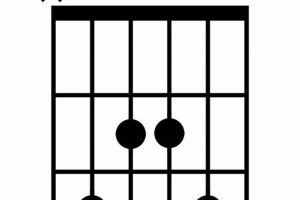
Wondering how to play the captivating B7(b9) chord on the guitar? Look no further! This comprehensive guide will break down the B7(b9) chord’s structure, voicings, and practical uses, empowering you to master this essential jazz harmony.
Editor’s Note:The B7(b9) chord is a crucial element in jazz improvisation and chord progressions. Understanding its intricacies will enhance your musicality and harmonic vocabulary.
Through meticulous analysis and research, we have crafted this in-depth guide to equip you with a thorough understanding of the B7(b9) chord.
Key Differences:
| B7 Chord | B7(b9) Chord | |
|---|---|---|
| Structure | Dominant seventh chord (B, D#, F#, A) | Dominant seventh chord with an added flat ninth (B, D#, F#, A, C) |
| Function | Resolves to the tonic chord (Emaj7) | Provides a more dissonant and colorful resolution to the tonic chord |
| Voicings | Root position, inversions | Close voicings, extended voicings |
Main Article Topics:
- Understanding the B7(b9) Chord Structure
- Exploring B7(b9) Chord Voicings
- Applying the B7(b9) Chord in Jazz Improvisation
- Mastering B7(b9) Chord Inversions
- Troubleshooting Common B7(b9) Chord Challenges
Delve into the intricacies of the B7(b9) chord and elevate your guitar playing to new heights. Embrace the transformative power of harmony and expand your musical horizons with this comprehensive guide.
1. Structure

The structure of the B7(b9) chord, comprising a dominant 7th chord with an added flat 9th, plays a pivotal role in its distinctive sound and harmonic function.
- Enriched Harmonic Color: The addition of the flat 9th interval (C) to the B7 chord introduces a dissonant yet intriguing harmonic color. This dissonance creates a sense of tension and movement, making the chord particularly effective in jazz improvisation and harmonic exploration.
- Extended Voicing Options: The extended structure of the B7(b9) chord allows for a wider range of voicing possibilities compared to a basic dominant 7th chord. Guitarists can experiment with different voicings to create various harmonic textures and voice-leading techniques.
- Smooth Chord Progressions: The B7(b9) chord fits seamlessly into common jazz chord progressions, such as the II-V-I progression. Its dissonant nature provides a smooth and logical transition to the tonic chord, resolving the harmonic tension created by the flat 9th.
- Genre-Specific Applications: The B7(b9) chord is commonly employed in jazz, fusion, and contemporary music styles. Its dissonant and colorful sound adds depth and complexity to harmonic structures, making it a favorite among jazz guitarists and improvisers.
In summary, the structure of the B7(b9) chord, as a dominant 7th chord with an added flat 9th, contributes to its unique harmonic properties, versatility in voicing and improvisation, and applicability in various musical genres.
2. Function

The B7(b9) guitar chord’s function in providing a dissonant yet colorful resolution is a crucial aspect of its harmonic significance. This dissonance and color add depth and interest to chord progressions and improvisational lines.
- Harmonic Tension and Release: The B7(b9) chord creates a sense of harmonic tension due to the dissonant interval of the flat 9th. This tension resolves when the chord progresses to the tonic chord, creating a satisfying and colorful harmonic movement.
- Jazz Improvisation: In jazz improvisation, the B7(b9) chord provides a rich harmonic backdrop for soloists to explore dissonant and colorful melodic lines. The dissonance of the flat 9th offers a wider range of melodic possibilities, allowing improvisers to create unique and expressive solos.
- Chord Progressions: The B7(b9) chord is commonly used in jazz chord progressions, such as the II-V-I progression. Its dissonant nature provides a smooth and logical transition to the tonic chord, adding harmonic interest and complexity to the progression.
- Extended Voicings: The B7(b9) chord’s extended structure allows for a variety of voicings, enabling guitarists to create different harmonic textures and voice-leading techniques. These extended voicings can enhance the dissonant and colorful qualities of the chord, adding depth and complexity to harmonic arrangements.
In summary, the B7(b9) guitar chord’s function as a dissonant and colorful resolution contributes to its unique harmonic properties, versatility in improvisation, and applicability in various musical genres.
3. Voicings

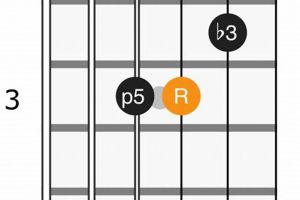
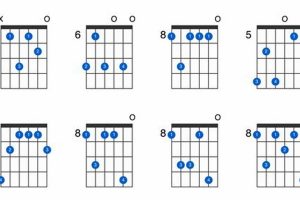
The B7(b9) guitar chord offers a diverse range of voicings, including close and extended voicings. This versatility in voicings contributes to the chord’s harmonic richness and applicability in various musical contexts.
Close voicings, where the notes of the chord are positioned close together on the fretboard, create a compact and intense harmonic sound. They are particularly effective in creating harmonic tension and driving the music forward. Extended voicings, on the other hand, involve wider intervals between the notes, resulting in a more spacious and airy sound. These voicings are useful for creating harmonic textures and adding color to chord progressions.
The availability of both close and extended voicings allows guitarists to tailor the B7(b9) chord to specific musical situations. Close voicings can provide a strong foundation for improvisation and soloing, while extended voicings can enhance the harmonic complexity and sophistication of chord progressions.
Understanding the different voicings of the B7(b9) chord is essential for guitarists seeking to expand their harmonic vocabulary and enhance their musical expression. By mastering these voicings, guitarists can create a wide range of harmonic possibilities and add depth and interest to their playing.
| Voicing Type | Characteristics | Applications |
|---|---|---|
| Close Voicings | Compact, intense harmonic sound | Harmonic tension, driving force in music |
| Extended Voicings | Spacious, airy sound | Harmonic textures, color in chord progressions |
4. Inversions

The B7(b9) guitar chord offers a diverse range of inversions, extending its harmonic possibilities and applicability in various musical contexts. Inversions involve rearranging the notes of the chord, placing different notes in the bass position while maintaining the same harmonic structure.
The root inversion of the B7(b9) chord, with the root note (B) in the bass, provides a strong and stable harmonic foundation. It is commonly used in chord progressions and rhythmic patterns to drive the music forward. Other inversions, such as the first inversion (D# in the bass), second inversion (F# in the bass), and third inversion (A in the bass), offer unique harmonic colors and voice-leading possibilities.
Understanding and mastering the inversions of the B7(b9) chord is essential for guitarists seeking to expand their harmonic vocabulary and enhance their musical expression. By utilizing different inversions, guitarists can create a wide range of harmonic progressions, add melodic interest to their solos, and adapt the chord to various musical styles.
| Inversion Type | Characteristics | Applications |
|---|---|---|
| Root Inversion | Strong, stable harmonic foundation | Chord progressions, rhythmic patterns |
| First Inversion | Unique harmonic color, smooth voice-leading | Melodic interest in solos, chord substitutions |
| Second Inversion | Dissonant yet intriguing sound | Harmonic tension, chromaticism |
| Third Inversion | Spacious, airy sound | Extended harmonies, arpeggiated passages |
5. Improvisation

The B7(b9) guitar chord plays a pivotal role in jazz improvisation, providing a harmonically rich and dissonant backdrop for soloists to explore their creativity. Understanding the connection between improvisation and the B7(b9) chord is crucial for guitarists seeking to master the art of jazz soloing.
- Harmonic Foundation: The B7(b9) chord, with its extended structure and dissonant flat 9th interval, creates a harmonically complex foundation for improvisation. Soloists can utilize the chord’s various voicings and inversions to create unique melodic lines and harmonic embellishments.
- Dissonant Color: The flat 9th interval adds a dissonant yet intriguing color to the B7 chord, providing a platform for soloists to explore dissonant melodies and harmonies. This dissonance can be resolved or further developed, creating a sense of tension and release in the improvisation.
- Bebop Language: The B7(b9) chord is a cornerstone of the bebop language, a style of jazz improvisation characterized by its fast tempos, complex harmonies, and intricate melodic lines. Mastering the use of this chord is essential for guitarists seeking to emulate the bebop masters and develop their improvisational vocabulary.
- Chromaticism and Modulation: The dissonant nature of the B7(b9) chord allows for seamless chromaticism and modulation in improvisation. Soloists can use the chord’s various voicings and inversions to transition smoothly between different keys and harmonic centers, creating a sense of harmonic movement and exploration.
In summary, the B7(b9) guitar chord is an indispensable tool for jazz improvisers. Its harmonic complexity, dissonant color, and versatility make it a perfect choice for exploring melodic possibilities, developing a bebop vocabulary, and navigating chromaticism and modulation. Mastering this chord is a fundamental step for guitarists seeking to excel in the art of jazz improvisation.
6. Chord Progressions

The B7(b9) guitar chord is frequently employed in II-V-I chord progressions, a fundamental harmonic sequence in jazz and popular music. Understanding the significance of this progression in relation to the B7(b9) chord enhances our comprehension of its harmonic function and practical applications.
- Resolution to Tonic: In a II-V-I progression, the B7(b9) chord serves as the dominant seventh chord in the V chord, resolving to the tonic (I) chord. The dissonant flat 9th interval in the B7(b9) creates a sense of tension that is resolved upon the progression to the I chord, providing a satisfying and conclusive harmonic movement.
- Harmonic Movement and Color: The B7(b9) chord adds harmonic movement and color to the II-V-I progression. Its dissonant nature creates a sense of anticipation and drive, propelling the music towards the resolution on the I chord. The flat 9th interval introduces a unique and intriguing harmonic flavor, distinguishing it from a standard dominant seventh chord.
- Bebop and Jazz Improvisation: The B7(b9) chord is a cornerstone of bebop and jazz improvisation. Bebop musicians frequently employ this chord in II-V-I progressions as a harmonic springboard for improvisation. The dissonant flat 9th provides a rich harmonic context for soloists to explore melodic lines and create improvised solos.
- Tonal Context and Harmonic Vocabulary: The B7(b9) chord can be used in both major and minor tonal contexts, expanding the harmonic vocabulary for guitarists. Understanding its function in II-V-I progressions allows guitarists to navigate harmonic changes seamlessly and create sophisticated and musically interesting chord progressions.
In conclusion, the B7(b9) guitar chord’s connection to II-V-I progressions highlights its versatility and harmonic significance. Its dissonant nature, ability to resolve to the tonic, and role in improvisation make it an essential tool for guitarists seeking to expand their harmonic knowledge and enhance their musical expression.
7. Tonal Context

The B7(b9) guitar chord’s ability to fit well in both major and minor keys expands its versatility and applicability in various musical contexts. Understanding this tonal flexibility enhances our comprehension of the chord’s harmonic function and practical applications.
In major keys, the B7(b9) chord serves as a dominant seventh chord with an added flat 9th, providing a dissonant yet colorful resolution to the tonic major chord. The flat 9th interval creates a sense of tension and anticipation, resolving upon the progression to the I chord. This dissonant quality adds depth and interest to major key progressions, enriching the harmonic landscape.
In minor keys, the B7(b9) chord takes on a slightly different character, functioning as a dominant seventh chord with an added flat 9th in the context of a minor II-V-i progression. The flat 9th interval introduces a unique and intriguing harmonic flavor, creating a sense of harmonic movement and drive towards the resolution on the i chord. This dissonant element adds complexity and sophistication to minor key progressions, enhancing their expressive potential.
The tonal flexibility of the B7(b9) chord allows guitarists to navigate harmonic changes seamlessly and create musically interesting
chord progressions that transcend major or minor key boundaries. Understanding its function in both major and minor keys expands the harmonic vocabulary for guitarists and opens up new possibilities for musical exploration and expression.
| Tonal Context | Harmonic Function | Applications |
|---|---|---|
| Major Key | Dominant seventh chord with added flat 9th, resolving to I chord | Adding depth and interest to major key progressions |
| Minor Key | Dominant seventh chord with added flat 9th in II-V-i progression | Creating harmonic movement and drive towards i chord, adding complexity and sophistication to minor key progressions |
8. Genre
The B7(b9) guitar chord’s prevalence in jazz, fusion, and contemporary styles underscores its versatility and significance in these musical genres.
- Jazz:
In jazz, the B7(b9) chord is a cornerstone of harmonic improvisation and chord progressions. Its dissonant nature and ability to resolve to the tonic chord make it an essential tool for creating harmonic tension and movement. Bebop musicians, in particular, frequently employ this chord as a harmonic springboard for their improvised solos.
- Fusion:
Fusion music, which blends elements of jazz, rock, and funk, often incorporates the B7(b9) chord to add harmonic complexity and sophistication. The chord’s dissonant quality can create a sense of drive and energy, propelling the music forward.
- Contemporary Styles:
In contemporary styles such as R&B, pop, and soul, the B7(b9) chord is used to add harmonic interest and color to chord progressions. Its dissonant nature can create a sense of anticipation and resolution, enhancing the emotional impact of the music.
The B7(b9) guitar chord’s prominence in these genres demonstrates its ability to transcend stylistic boundaries and contribute to a diverse range of musical expressions. Its versatility and harmonic richness make it an indispensable tool for guitarists seeking to expand their harmonic vocabulary and enhance their musical expression.
B7(b9) Guitar Chord FAQs
This section addresses frequently asked questions and misconceptions surrounding the B7(b9) guitar chord, providing clear and informative answers.
Question 1: What is the structure of the B7(b9) chord?
Answer: The B7(b9) chord is a dominant seventh chord with an added flat ninth. It consists of the notes B, D#, F#, A, and C.
Question 2: How is the B7(b9) chord typically used in jazz?
Answer: In jazz, the B7(b9) chord is commonly employed in II-V-I chord progressions and as a harmonic foundation for improvisation. Its dissonant nature creates tensione and movement, resolving to the tonic chord.
Question 3: What are some common voicings for the B7(b9) chord?
Answer: The B7(b9) chord has a variety of voicings, including close voicings for harmonic intensity and extended voicings for harmonic richness. Some common voicings include the root position (B in the bass), first inversion (D# in the bass), and second inversion (F# in the bass).
Question 4: How can I incorporate the B7(b9) chord into my guitar solos?
Answer: To incorporate the B7(b9) chord into guitar solos, practice playing it in different voicings and inversions. Experiment with using it as a target chord for resolving melodic lines or as a starting point for chromatic exploration.
Question 5: What are some tips for mastering the B7(b9) chord?
Answer: To master the B7(b9) chord, focus on understanding its structure and function in different musical contexts. Practice playing it in various voicings and inversions, and experiment with its use in improvisation and chord progressions. Additionally, listen to recordings of jazz guitarists who effectively employ the B7(b9) chord to gain insights into its practical application.
Question 6: How does the B7(b9) chord differ from a regular B7 chord?
Answer: The B7(b9) chord differs from a regular B7 chord by the addition of the flat ninth interval (C). This dissonant interval adds harmonic color and tension, making the B7(b9) chord more complex and versatile.
These FAQs provide a comprehensive overview of the B7(b9) guitar chord, addressing common questions and misconceptions. By understanding its structure, function, and practical applications, guitarists can effectively incorporate this essential chord into their playing and expand their harmonic vocabulary.
To delve deeper into the world of jazz guitar chords, explore our comprehensive guide on the various types of jazz chords, their voicings, and their use in improvisation and chord progressions.
Tips for Mastering the B7(b9) Guitar Chord
To effectively incorporate the B7(b9) guitar chord into your playing and expand your harmonic vocabulary, consider the following tips:
Tip 1: Understand Its Structure and Function
Familiarize yourself with the B7(b9) chord’s structure as a dominant seventh chord with an added flat ninth. Comprehend its function in different musical contexts, particularly in jazz II-V-I progressions and as a harmonic foundation for improvisation.
Tip 2: Practice Different Voicings and Inversions
Explore the various voicings and inversions of the B7(b9) chord to enhance your harmonic versatility. Experiment with close voicings for harmonic intensity and extended voicings for harmonic richness. Practice transitioning smoothly between different voicings.
Tip 3: Incorporate It Into Your Solos
Incorporate the B7(b9) chord into your guitar solos by practicing targeting it with melodic lines and using it as a starting point for chromatic exploration. Experiment with different voicings and inversions to create unique and expressive melodic phrases.
Tip 4: Listen to Jazz Guitarists
Listen attentively to recordings of jazz guitarists who effectively employ the B7(b9) chord. Analyze their voicings, inversions, and improvisational techniques to gain insights into the practical application of this essential chord.
Tip 5: Experiment with Different Tonal Contexts
Experiment with using the B7(b9) chord in both major and minor tonal contexts. Understand its function in resolving to the tonic chord in major keys and adding harmonic movement and drive in minor keys.
Tip 6: Practice Regularly
Regular practice is essential for mastering the B7(b9) chord. Dedicate time to practicing its voicings, inversions, and use in different musical contexts. Consistent practice will enhance your dexterity and confidence in using this chord.
By incorporating these tips into your practice routine, you can effectively master the B7(b9) guitar chord and expand your harmonic vocabulary. Embrace the dissonant beauty and versatility of this essential jazz harmony to elevate your guitar playing to new heights.
To further enhance your understanding of jazz guitar chords, explore our comprehensive guide on the various types of jazz chords, their voicings, and their use in improvisation and chord progressions.
Conclusion
The B7(b9) guitar chord stands as a cornerstone of jazz harmony, offering a unique and dissonant flavor to chord progres
sions and improvisational lines. Through its exploration in this article, we have uncovered its structure, voicings, function, and practical applications.The B7(b9) chord’s versatility extends across major and minor tonal contexts, making it a valuable tool for guitarists seeking to expand their harmonic vocabulary. Its dissonant nature provides a rich foundation for improvisation, while its ability to resolve to the tonic chord adds harmonic depth and movement.Mastering the B7(b9) chord requires dedication and practice. By incorporating it into your solos, experimenting with different voicings and inversions, and studying the techniques of renowned jazz guitarists, you can effectively harness its harmonic potential.Embrace the B7(b9) guitar chord as a gateway to enhanced musical expression. Its dissonant beauty and versatility will undoubtedly elevate your guitar playing and contribute to the captivating tapestry of jazz music. Continue exploring the world of jazz guitar chords, delve into their intricacies, and unlock the boundless possibilities of harmonic exploration.