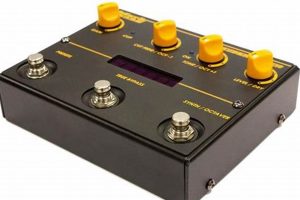
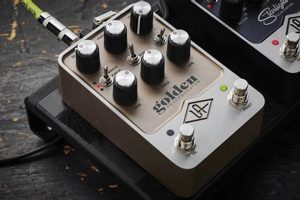
Are you looking to add some extra depth and dimension to your guitar playing? If so, then you need a guitar modulation pedal.
Editor’s Note:Guitar modulation pedals are essential tools for any guitarist who wants to add some extra flair to their sound. They can be used to create a wide variety of effects, from subtle vibrato to swirling chorus to ethereal flange.
We’ve done the research and dug through the information, put together this comprehensive guide to help you understand what a guitar modulation pedal is, choose the right one for your needs.
What is a Guitar Modulation Pedal?
A guitar modulation pedal is an electronic device which alters the frequency and amplitude of a guitar’s signal, creating a variety of different effects.
How Does a Guitar Modulation Pedal Work?
Guitar modulation pedals use a variety of different techniques to achieve their effects. Some of the most common methods include:
- Chorus: Chorus pedals use a combination of delay and pitch shifting to create a lush, shimmering sound.
- Flanger: Flanger pedals use a shorter delay time than chorus pedals, resulting in a more pronounced, swirling effect.
- Phaser: Phaser pedals use a series of all-pass filters to create a swirling, psychedelic effect.
Benefits of Using a Guitar Modulation Pedal
There are many benefits to using a guitar modulation pedal. Some of the most notable benefits include:
- They can add depth and dimension to your sound.
- They can help you create a variety of different effects.
- They can be used to enhance your solos and riffs.
Types of Guitar Modulation Pedals
There are many different types of guitar modulation pedals available on the market. Some of the most popular types include:
- Analog pedals: Analog pedals use analog circuitry to create their effects. They are typically more affordable than digital pedals, but they can also be more noisy.
- Digital pedals: Digital pedals use digital circuitry to create their effects. They are typically more expensive than analog pedals, but they are also quieter and more versatile.
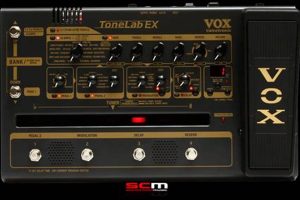
- Multi-effects pedals: Multi-effects pedals combine multiple different effects into a single pedal. They are a great option for guitarists who want to have a variety of effects at their disposal without having to buy multiple pedals.
How to Choose the Right Guitar Modulation Pedal
There are a few things to consider when choosing a guitar modulation pedal. Some of the most important factors to consider include:
- The type of effect you want to create.
- Your budget.
- The size and weight of the pedal.
- The features of the pedal.
Conclusion
Guitar modulation pedals are a great way to add some extra depth and dimension to your guitar playing. They can be used to create a wide variety of effects, from subtle vibrato to swirling chorus to ethereal flange. With so many different types of guitar modulation pedals on the market, you’re sure to find one that’s perfect for your needs.
1. Type

Modulation pedals are electronic devices that alter the frequency and amplitude of a guitar’s signal, creating a variety of different effects. The type of modulation pedal you choose will depend on the sound you want to achieve. Chorus pedals create a lush, shimmering sound, flanger pedals create a more pronounced, swirling effect, and phaser pedals create a psychedelic, ethereal effect.
Each type of modulation pedal has its own unique sound and characteristics. Chorus pedals are known for their warm, lush sound, which is perfect for adding depth and dimension to your guitar sound. Flanger pedals are known for their more pronounced, swirling effect, which can be used to create a variety of psychedelic sounds. Phaser pedals are known for their ethereal, psychedelic sound, which is perfect for creating a sense of space and movement.
The type of modulation pedal you choose will depend on the sound you want to achieve. If you’re not sure which type of pedal is right for you, experiment with different pedals and see what sounds you like best.
Here is a table summarizing the key differences between chorus, flanger, and phaser pedals:
| Type | Effect | Sound |
|---|---|---|
| Chorus | Creates a lush, shimmering sound | Warm, lush |
| Flanger | Creates a more pronounced, swirling effect | Pronounced, swirling |
| Phaser | Creates a psychedelic, ethereal effect | Ethereal, psychedelic |
2. Effect

Modulation pedals are electronic devices that alter the frequency and amplitude of a guitar’s signal, creating a variety of different effects. The effect of a modulation pedal is determined by the type of pedal and the settings of the pedal’s controls.
- Chorus: Chorus pedals create a lush, shimmering sound by adding a slightly delayed and pitch-shifted signal to the original guitar signal. This effect can be used to add depth and dimension to your guitar sound, or to create a more spacious sound.
- Flanger: Flanger pedals create a more pronounced, swirling effect by adding a shorter delay time and a more pronounced pitch shift to the original guitar signal. This effect can be used to create a variety of psychedelic sounds, or to add a sense of movement to your guitar sound.
- Phaser: Phaser pedals create a psychedelic, ethereal effect by using a series of all-pass filters to create a swirling, phasing sound. This effect can be used to create a variety of psychedelic sounds, or to add a sense of space and movement to your guitar sound.
The effect of a modulation pedal can be further customized by adjusting the pedal’s controls. These controls typically include rate, depth, and feedback. The rate control adjusts the speed of the modulation effect, the depth control adjusts the amount of modulation, and the feedback control adjusts the amount of the modulated signal that is fed back into the pedal.
Modulation pedals are a versatile tool that can be used to create a wide range of effects. They can be used to add depth and dimension to your guitar sound, create a variety of psychedelic sounds, or add a sense of space and movement to your guitar sound.
3. Controls
The controls on a modulation pedal al
low you to customize the effect to your liking. The most common controls are rate, depth, and feedback.
Rate controls the speed of the modulation effect. A higher rate will create a faster, more pronounced effect, while a lower rate will create a slower, more subtle effect.
Depth controls the amount of modulation. A higher depth will create a more pronounced effect, while a lower depth will create a more subtle effect.
Feedback controls the amount of the modulated signal that is fed back into the pedal. A higher feedback setting will create a more intense, resonant effect, while a lower feedback setting will create a more subtle effect.
These three controls give you a wide range of possibilities for creating different modulation effects. Experiment with different settings to find the sounds that you like best.
Here is a table summarizing the function of each control:
| Control | Function |
|---|---|
| Rate | Controls the speed of the modulation effect. |
| Depth | Controls the amount of modulation. |
| Feedback | Controls the amount of the modulated signal that is fed back into the pedal. |
By understanding the function of each control, you can create a wide range of modulation effects to enhance your guitar playing.
4. Sound
Modulation pedals are electronic devices that alter the frequency and amplitude of a guitar’s signal, creating a variety of different effects. One of the most important things to consider when choosing a modulation pedal is the sound that you want to achieve.
- Warmth: Modulation pedals can add warmth to your guitar sound by creating a lush, shimmering effect. This can be a great way to add depth and dimension to your sound, or to create a more spacious sound.
- Depth: Modulation pedals can also add depth to your guitar sound by creating a more pronounced, swirling effect. This can be a great way to create a variety of psychedelic sounds, or to add a sense of movement to your guitar sound.
- Movement: Modulation pedals can also add movement to your guitar sound by creating a swirling, phasing effect. This can be a great way to create a variety of psychedelic sounds, or to add a sense of space and movement to your guitar sound.
The sound of a modulation pedal can be further customized by adjusting the pedal’s controls. These controls typically include rate, depth, and feedback. The rate control adjusts the speed of the modulation effect, the depth control adjusts the amount of modulation, and the feedback control adjusts the amount of the modulated signal that is fed back into the pedal.
By understanding the sound of modulation pedals and how to adjust their controls, you can create a wide range of effects to enhance your guitar playing.
5. Versatility
Modulation pedals are electronic devices that alter the frequency and amplitude of a guitar’s signal, creating a variety of different effects. One of the most important things to consider when choosing a modulation pedal is its versatility.
- Genres: Modulation pedals can be used in a variety of genres, from rock to blues to jazz. This is because they can create a wide range of effects, from subtle vibrato to swirling chorus to ethereal flange. This makes them a great choice for guitarists who want to add some extra depth and dimension to their sound.
- Effects: Modulation pedals can create a variety of effects, from subtle vibrato to swirling chorus to ethereal flange. This makes them a great choice for guitarists who want to experiment with different sounds and create their own unique sound.
- Examples: Modulation pedals have been used by some of the most famous guitarists in the world, including Jimi Hendrix, Eric Clapton, and David Gilmour. This shows that modulation pedals are a versatile tool that can be used to create a wide range of sounds.
Overall, modulation pedals are a versatile tool that can be used to add some extra depth and dimension to your guitar sound. They can be used in a variety of genres, from rock to blues to jazz, and they can create a wide range of effects. This makes them a great choice for guitarists who want to experiment with different sounds and create their own unique sound.
6. Analog vs. Digital
The type of modulation pedal you choose will depend on the sound you want to achieve and your budget. Analog pedals are typically warmer and more organic sounding, while digital pedals are more versatile and offer a wider range of effects. Here is a table summarizing the key differences between analog and digital modulation pedals:
| Type | Sound | Versatility | Price |
|---|---|---|---|
| Analog | Warmer, more organic | Less versatile | Typically less expensive |
| Digital | More versatile | Offer a wider range of effects | Typically more expensive |
Ultimately, the best way to decide which type of modulation pedal is right for you is to try out different pedals and see what sounds you like best. However, the information in this article should give you a good starting point for your search.
Here are some examples of how analog and digital modulation pedals have been used by famous guitarists:
- Jimi Hendrix used an analog Uni-Vibe chorus pedal to create his signature swirling sound.
- Eric Clapton used a digital TC Electronic Chorus + Flanger pedal to create the lush, shimmering sound on his album “Slowhand”.
- David Gilmour used a combination of analog and digital modulation pedals to create the ethereal soundscapes on Pink Floyd’s album “The Dark Side of the Moon”.
These are just a few examples of how modulation pedals can be used to create a wide range of sounds. With so many different pedals on the market, you’re sure to find one that’s perfect for your needs.
7. Price

The price of a modulation pedal is an important factor to consider when choosing one. Modulation pedals can range in price from $50 to $500, depending on the type of pedal, the brand, and the features. Analog pedals are typically less expensive than digital pedals, and pedals with more features typically cost more than pedals with fewer features.
It is important to consider your budget when choosing a modulation pedal. If you are on a tight budget, there are many affordable modulation pedals available. However, if you are willing to spend more money, you can get a pedal with more features and better sound quality.
Here are some tips for choosing a modulation pedal within your budget:
- Decide what type of modulation pedal you want. There are many different t
ypes of modulation pedals available, so it is important to decide what type of effect you want to achieve before you start shopping. - Set a budget. Once you know what type of modulation pedal you want, you can start to set a budget. Modulation pedals can range in price from $50 to $500, so it is important to set a budget before you start shopping.
- Do your research. Once you have a budget, you can start to do your research. There are many different modulation pedals available, so it is important to do your research and read reviews before you make a purchase.
By following these tips, you can choose a modulation pedal that fits your budget and your needs.
Here is a table summarizing the key insights:
| Factor | Importance |
|---|---|
| Price | An important factor to consider when choosing a modulation pedal. |
| Type of pedal | The type of modulation pedal you choose will affect the price. |
| Brand | The brand of modulation pedal you choose will also affect the price. |
| Features | Modulation pedals with more features typically cost more than pedals with fewer features. |
8. Size and Weight
The size and weight of a modulation pedal is an important factor to consider when choosing one. Small and lightweight pedals are easy to transport and take up less space on your pedalboard. However, larger and heavier pedals may have more features and better sound quality.
The size and weight of a modulation pedal will also affect its price. Smaller and lighter pedals are typically less expensive than larger and heavier pedals.
Here are some examples of how the size and weight of a modulation pedal can affect its use:
- Small and lightweight pedals are ideal for guitarists who need to save space on their pedalboard or who need to transport their pedals frequently.
- Larger and heavier pedals may have more features and better sound quality, but they can be more difficult to transport and take up more space on your pedalboard.
Ultimately, the best way to decide which size and weight of modulation pedal is right for you is to try out different pedals and see what works best for you.
Here is a table summarizing the key insights:
| Size and Weight | Importance |
|---|---|
| Size | Affects portability and space on pedalboard |
| Weight | Affects portability and ease of use |
| Features | Larger pedals may have more features |
| Sound quality | Larger pedals may have better sound quality |
| Price | Larger pedals may be more expensive |
9. Features
Many modulation pedals come with a variety of additional features that can enhance their functionality and versatility. Some of the most common additional features include:
- Tap tempo: Tap tempo allows you to set the speed of the modulation effect by tapping a button on the pedal. This is a great way to keep the modulation effect in time with the music, even if the tempo changes.
- Stereo outputs: Stereo outputs allow you to connect the modulation pedal to two separate amplifiers. This can create a wider, more immersive sound.
- Expression pedal input: An expression pedal input allows you to control the modulation effect with an expression pedal. This can be used to create a variety of effects, such as gradually increasing or decreasing the depth of the modulation effect.
The additional features on a modulation pedal can greatly expand its functionality and versatility. When choosing a modulation pedal, it is important to consider the features that are important to you and your playing style.
Here are some real-life examples of how the additional features on a modulation pedal can be used to create different effects:
- Tap tempo: Tap tempo can be used to keep the modulation effect in time with the music, even if the tempo changes. This is especially useful for live performances.
- Stereo outputs: Stereo outputs can be used to create a wider, more immersive sound. This is great for creating a more spacious sound on recordings or for live performances in large venues.
- Expression pedal input: An expression pedal input can be used to control the modulation effect with an expression pedal. This can be used to create a variety of effects, such as gradually increasing or decreasing the depth of the modulation effect.
By understanding the different features that are available on modulation pedals, you can choose the pedal that is right for your needs and create the sounds that you want.
Here is a table summarizing the key insights:
| Feature | Importance |
|---|---|
| Tap tempo | Allows you to set the speed of the modulation effect by tapping a button on the pedal. |
| Stereo outputs | Allows you to connect the modulation pedal to two separate amplifiers, creating a wider, more immersive sound. |
| Expression pedal input | Allows you to control the modulation effect with an expression pedal, creating a variety of effects. |
FAQs on Guitar Modulation Pedals
Guitar modulation pedals are electronic devices that alter the frequency and amplitude of a guitar’s signal, creating an array of effects. They are used to enhance a guitarist’s sound, adding depth and movement to their playing.
Question 1: What are the main types of modulation pedals?
There are several main types of modulation pedals, including chorus, flanger, and phaser. Chorus pedals produce a lush, shimmering sound by adding a slightly delayed and pitch-shifted signal to the original guitar signal. Flanger pedals offer a more pronounced, swirling effect by adding a shorter delay time and a more pronounced pitch shift. Phaser pedals create a psychedelic, ethereal effect by using a series of all-pass filters to create a swirling, phasing sound.
Question 2: How do I choose the right modulation pedal for my needs?
To choose the right modulation pedal, it is important to consider the type of effect you want to achieve. If you’re looking for a subtle, shimmering effect, a chorus pedal may be a good choice. If you want a more pronounced, swirling effect, a flanger pedal may be a better option. If you’re looking for a psychedelic, ethereal effect, a phaser pedal is likely to be the best choice.
Question 3: What are the key features to look for in a modulation pedal?
When choosing a modulation pedal, there are several key features to look for. Rate controls the speed of the modulation effect, depth controls the amount of modulation, and feedback controls the amount of the modulated signal that is fed back into the pedal. Other features to consider include tap tempo, stereo outputs, and expression pedal input.
Question 4: How do I use a modulation
pedal effectively?
To use a modulation pedal effectively, start by setting the rate, depth, and feedback controls to the desired levels. Experiment with different settings to find the sound that you like. You can also use the tap tempo feature to keep the modulation effect in time with the music. If your pedal has stereo outputs, you can connect it to two separate amplifiers to create a wider, more immersive sound.
Question 5: What are some tips for getting the most out of a modulation pedal?
To get the most out of a modulation pedal, try using it in combination with other effects pedals. For example, you can use a modulation pedal to add depth to a delay or reverb effect. You can also use an expression pedal to control the modulation effect in real time, creating a variety of different sounds.
Question 6: What are some common mistakes to avoid when using modulation pedals?
One common mistake to avoid when using modulation pedals is using too much modulation. This can make your guitar sound muddy and indistinct. Another mistake is using the wrong type of modulation pedal for the effect you want to achieve. For example, if you’re looking for a subtle, shimmering effect, using a flanger pedal is not likely to give you the desired result.
By understanding the different types of modulation pedals, their key features, and how to use them effectively, you can add depth, movement, and interest to your guitar playing.
Summary: Guitar modulation pedals are versatile tools that can be used to create a wide range of effects, from subtle vibrato to swirling chorus to ethereal flange. When choosing a modulation pedal, it is important to consider the type of effect you want to achieve, the key features of the pedal, and how to use it effectively to get the most out of it.
Transition: To further enhance your understanding of modulation pedals, let’s explore some additional aspects and considerations in the next section.
Tips for Using Guitar Modulation Pedals
Guitar modulation pedals are versatile tools that can be used to create a wide range of effects, from subtle vibrato to swirling chorus to ethereal flange. Here are a few tips to help you get the most out of your modulation pedal:
Tip 1: Experiment with different settings.
The rate, depth, and feedback controls on your modulation pedal can be used to create a wide range of different effects. Experiment with different settings to find the sounds that you like best.
Use modulation pedals in combination with other effects pedals.
Modulation pedals can be used to add depth and movement to other effects pedals. For example, you can use a modulation pedal to add depth to a delay or reverb effect.
Use an expression pedal to control the modulation effect in real time.
An expression pedal can be used to control the modulation effect in real time, creating a variety of different sounds. For example, you can use an expression pedal to gradually increase or decrease the depth of the modulation effect.
Avoid using too much modulation.
Using too much modulation can make your guitar sound muddy and indistinct. Use modulation in moderation to achieve the desired effect.
Use the right type of modulation pedal for the effect you want to achieve.
There are different types of modulation pedals available, each with its own unique sound. Choose the right type of modulation pedal for the effect you want to achieve.
By following these tips, you can get the most out of your guitar modulation pedal and create a wide range of different sounds.
Summary: Guitar modulation pedals are versatile tools that can be used to add depth, movement, and interest to your guitar playing. By understanding the different types of modulation pedals, their key features, and how to use them effectively, you can get the most out of these pedals and create the sounds that you want.
Conclusion
Guitar modulation pedals are versatile tools that can be used to create a wide range of effects, from subtle vibrato to swirling chorus to ethereal flange. They can add depth, movement, and interest to your guitar playing, and they can be used in a variety of genres, from rock to blues to jazz.
When choosing a modulation pedal, it is important to consider the type of effect you want to achieve, the key features of the pedal, and how to use it effectively. By understanding the different types of modulation pedals and their capabilities, you can choose the right pedal for your needs and create the sounds that you want.