Thinking about getting an electric guitar? Not sure where to start? You’re in the right place. In this guide, we’ll cover everything you need to know about electric guitars, from the different types available to the features you should look for when choosing one.
Editor’s Note:Electric guitars are a great way to learn how to play guitar. They’re also a lot of fun to play, and they can be used in a variety of genres of music. If you’re thinking about getting an electric guitar, be sure to do your research and find one that’s right for you.
We’ve done the research for you and put together this guide to help you make the right decision. We’ll cover everything from the different types of electric guitars available to the features you should look for when choosing one. So whether you’re a beginner or a seasoned pro, we’ve got you covered.
Key Differences:
| Feature | Solid Body | Semi-Hollow Body | Hollow Body |
|---|---|---|---|
| Body Type | Solid wood | Hollowbody with solid center block | Fully hollow |
| Weight | Heavier | Lighter | Lightest |
| Tone | Brighter, more sustain | Warmer, less sustain | Warmest, least sustain |
Main Article Topics:
- Types of Electric Guitars
- Features to Look for When Choosing an Electric Guitar
- Tips for Playing Electric Guitar
- Conclusion
1. Body Type

The body type of an electric guitar is one of the most important factors that will affect its sound and weight. Solid body guitars are made from a single piece of wood, and they typically have a brighter, more sustain-oriented sound. Semi-hollow body guitars have a solid center block with hollow wings, and they typically have a warmer, more resonant sound. Hollow body guitars are fully hollow, and they typically have the warmest, most resonant sound.
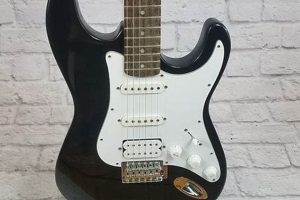
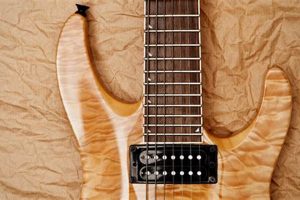
- Solid Body Guitars: Solid body guitars are the most popular type of electric guitar. They are known for their bright, clear sound and their ability to sustain notes for a long time. Solid body guitars are also relatively heavy, which can make them uncomfortable to play for long periods of time.
- Semi-Hollow Body Guitars: Semi-hollow body guitars are a good compromise between solid body and hollow body guitars. They have a solid center block that helps to reduce feedback, but they also have hollow wings that give them a warmer, more resonant sound. Semi-hollow body guitars are also lighter than solid body guitars, making them more comfortable to play for long periods of time.
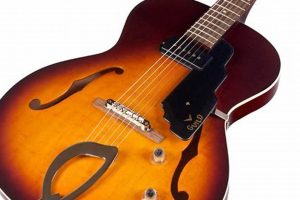
- Hollow Body Guitars: Hollow body guitars have a fully hollow body, which gives them the warmest, most resonant sound of any type of electric guitar. However, hollow body guitars are also the most prone to feedback, and they can be difficult to control at high volumes. Hollow body guitars are also the lightest type of electric guitar, making them the most comfortable to play for long periods of time.
Ultimately, the best way to choose the right body type for your electric guitar is to try out different guitars and see which one feels and sounds the best to you.
2. Pickups

Pickups are one of the most important components of an electric guitar. They are responsible for converting the vibrations of the strings into an electrical signal, which is then amplified and sent to the speaker. The type of pickups you choose will have a significant impact on the sound of your guitar.
- Single-coil pickups are the most common type of pickup. They are known for their bright, clear sound. However, single-coil pickups are also prone to hum, which is a low-level buzzing sound.
- Humbucking pickups are a type of pickup that was developed to reduce hum. Humbuckers have two coils that are wired in opposite directions. This cancels out the hum, but it also gives humbuckers a warmer, more powerful sound.
The choice between single-coil and humbucking pickups is a matter of personal preference. If you are looking for a bright, clear sound, then single-coil pickups are a good choice. If you are looking for a warmer, more powerful sound, then humbuckers are a good choice.
In addition to the two main types of pickups, there are also a number of other pickup variations available. These variations include P-90 pickups, mini-humbuckers, and active pickups. Each type of pickup has its own unique sound, so it is important to experiment with different types to find the one that best suits your playing style.
3. Bridge
The bridge is an important part of an electric guitar. It is responsible for holding the strings in place and transferring the vibrations of the strings to the body of the guitar. The type of bridge you choose will affect the sound and playability of your guitar.
Fixed bridges are the most common type of bridge. They are simple to use and maintain, and they provide a stable platform for the strings. However, fixed bridges do not allow you to adjust the intonation of the guitar. This means that if the intonation is off, you will need to take the guitar to a qualified technician to have it adjusted.
Floating bridges are a more advanced type of bridge. They allow you to adjust the intonation of the guitar yourself. This can be useful if you are playing in different tunings or if you want to fine-tune the sound of your guitar. However, floating bridges can be more difficult to use and maintain than fixed bridges.
The choice of whether to use a fixed bridge or a floating bridge is a matter of personal preference. If you are a beginner, you may want to start with a fixed bridge. Once you have more experience, you can experiment with floating bridges to see if they are a better fit for your playing style.
| Type of Bridge | Pros | Cons |
|---|---|---|
| Fixed Bridge |
Simple to use and maintain Provides a stable platform for the strings | Cannot adjust the intonation of the guitar |
| Floating Bridge | Allows you to adjust the intonation of the guitar | Can be more difficult to use and maintain |
Ultimately, the best way to choose the right bridge for your electric guitar is to try out different guitars and see which one feels and sounds the best to you.
4. Neck

The neck of an electric guitar is one of the most important factors to consider when choosing a new guitar. The shape of the neck will affect the feel of the guitar and the ease of playing. There are a few different factors to consider when choosing the right neck shape for you, including the size of your hands, the length of your fingers, and your playing style.
- Size of your hands: If you have small hands, you may want to choose a neck with a narrower fretboard. This will make it easier to reach the frets and play chords. If you have large hands, you may want to choose a neck with a wider fretboard. This will give you more space to move your fingers around and play complex chords.
- Length of your fingers: If you have short fingers, you may want to choose a neck with a shorter scale length. This will make it easier to reach the frets and play chords. If you have long fingers, you may want to choose a neck with a longer scale length. This will give you more space to move your fingers around and play complex chords.
- Playing style: If you play a lot of lead guitar, you may want to choose a neck with a thinner profile. This will make it easier to move your fingers around the fretboard and play fast solos. If you play a lot of rhythm guitar, you may want to choose a neck with a thicker profile. This will give you more stability and control when playing chords.
Ultimately, the best way to choose the right neck shape for you is to try out different guitars and see which one feels the most comfortable and easiest to play. You may also want to consult with a guitar teacher or experienced guitarist to get their advice.
5. Frets

The frets on an electric guitar are one of the most important factors that affect the playability of the instrument. The size and shape of the frets will determine how easy it is to fret notes, and how comfortable the guitar is to play overall. There are a few different things to consider when choosing the right frets for your electric guitar.
- Fret size: The size of the frets is measured in thousandths of an inch. The most common fret sizes are .090″, .100″, and .110″. Smaller frets are easier to fret, but they can also be more difficult to bend. Larger frets are more difficult to fret, but they can also provide more sustain.
- Fret shape: The shape of the frets can also affect the playability of the guitar. The most common fret shapes are round, wide, and narrow. Round frets are the most comfortable to play, but they can also wear out more quickly. Wide frets are less comfortable to play, but they can provide more sustain. Narrow frets are a good compromise between comfort and sustain.
- Fret material: The material of the frets can also affect the playability of the guitar. The most common fret materials are nickel, stainless steel, and gold. Nickel frets are the most affordable, but they can also wear out more quickly. Stainless steel frets are more durable than nickel frets, but they can also be more expensive. Gold frets are the most expensive, but they are also the most durable.
The choice of frets for your electric guitar is ultimately a personal one. There is no right or wrong answer, and the best way to choose the right frets is to try out different guitars and see what feels and sounds the best to you.
6. Scale Length

The scale length of an electric guitar is one of the most important factors that will affect the sound and feel of the instrument. A longer scale length will result in a tighter string tension, which will produce a brighter, more articulate sound. A shorter scale length will result in a looser string tension, which will produce a warmer, more mellow sound.
- String Tension: The scale length of a guitar will affect the tension of the strings. A longer scale length will result in a higher string tension, while a shorter scale length will result in a lower string tension. The string tension will affect the sound of the guitar, with a higher string tension producing a brighter sound and a lower string tension producing a warmer sound.
- Sound: The scale length of a guitar will also affect the sound of the guitar. A longer scale length will result in a brighter, more articulate sound, while a shorter scale length will result in a warmer, more mellow sound. This is because the scale length will affect the resonance of the guitar body, with a longer scale length resulting in a brighter sound and a shorter scale length resulting in a warmer sound.
- Playability: The scale length of a guitar can also affect the playability of the instrument. A longer scale length can be more difficult to play, especially for players with smaller hands. A shorter scale length can be easier to play, especially for players with larger hands.
Ultimately, the best scale length for an electric guitar is a matter of personal preference. Players should experiment with different scale lengths to find the one that best suits their playing style and sound.
7. Electronics
The electronics of an electric guitar are an essential part of the instrument. They are responsible for converting the vibrations of the strings into an electrical signal, which is then amplified and sent to the speaker. The type of electronics used in a guitar will have a significant impact on the sound and playability of the instrument.
The most important electronic component in an electric guitar is the pickup. Pickups are responsible for converting the vibrations of the strings into an electrical signal. There are two main types of pickups: single-coil pickups and humbucking pickups. Single-coil pickups produce a brighter sound, while humbucking pickups produce a warmer, more powerful sound.
In addition to the pickups, the electronics of an electric guitar also include the controls and the wiring. The controls allow the player to adjust the volume and tone of the guitar. The wiring connects the pickups to the controls and to the output jack.
The electronics of an electric guitar are a complex system, but they are essential for the proper functioning of the instrument. By understanding the different components of the electronics and how they work together, you can better understand the sound and playability of your guitar.
Here are some of the benefits of having good electronics in your electric guitar:
- Improved sound quality: Good electronics will help to produce a clear and powerful sound.
- Increased playability: Good electronics will make your guitar easier to play, especially if you are playing complex chords or solos.
- Versatility: Good electronics will allow you to experiment with a variety of sounds, from clean and sparkly to warm and distorted.
If you are looking for an electric guitar that sounds great and is easy to play, then it is important to invest in good electronics.
Here is a table that summarizes the key insights:
8. Hardware
The hardware on an electric guitar is often overlooked, but it plays a vital role in the durability and playability of the instrument. The tuners, bridge, and strap buttons are all essential components that can make a big difference in the overall performance of your guitar.
- Tuners: The tuners on your guitar are responsible for keeping the strings in tune. Good tuners will be accurate and easy to use, making it quick and easy to get your guitar in tune. Cheap tuners, on the other hand, can be inaccurate and difficult to use, making it a chore to keep your guitar in tune.
- Bridge: The bridge on your guitar is responsible for holding the strings in place and transferring the vibrations of the strings to the body of the guitar. A good bridge will be sturdy and well-built, providing a solid foundation for the strings. A cheap bridge, on the other hand, can be flimsy and unstable, making it difficult to keep the guitar in tune and intonation.
- Strap buttons: The strap buttons on your guitar are responsible for attaching the guitar strap to the body of the guitar. Good strap buttons will be strong and secure, ensuring that your guitar strap will not come loose while you are playing. Cheap strap buttons, on the other hand, can be weak and flimsy, making it more likely that your guitar strap will come loose and your guitar will fall to the ground.
When choosing an electric guitar, it is important to consider the quality of the hardware. Good hardware will make your guitar more durable and playable, while cheap hardware can make your guitar a chore to play and more likely to break.
9. Accessories
Accessories are an essential part of any electric guitar player’s arsenal. They can help you protect your guitar from damage, make it more comfortable to play, and improve your sound. Here are a few of the most important accessories for electric guitar players:
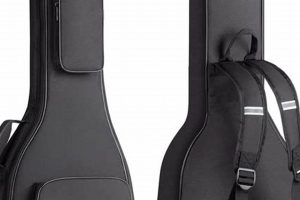
- Cases: A good case is essential for protecting your electric guitar from the elements and from damage when you’re traveling. Cases come in a variety of styles and materials, so you can find one that fits your needs and budget.
- Straps: A comfortable strap is essential for playing your electric guitar for long periods of time. Straps come in a variety of materials and styles, so you can find one that’s both comfortable and stylish.
- Picks: Picks are used to pluck the strings of your electric guitar. They come in a variety of shapes and sizes, so you can find one that fits your playing style.
In addition to these essential accessories, there are a number of other accessories that can be helpful for electric guitar players, such as:
- Tuners: Tuners help you keep your guitar in tune. They come in a variety of styles and formats, so you can find one that fits your needs.
- Capos: Capos are used to change the pitch of your guitar strings. They come in a variety of styles and sizes, so you can find one that fits your needs.
- Effects pedals: Effects pedals can be used to add a variety of effects to your guitar sound, such as distortion, reverb, and delay. They come in a variety of styles and formats, so you can find ones that fit your needs.
Accessories can make a big difference in your electric guitar playing experience. By investing in the right accessories, you can protect your guitar, make it more comfortable to play, and improve your sound.
Key Insights:
- Accessories are an essential part of any electric guitar player’s arsenal.
- Accessories can help you protect your guitar, make it more comfortable to play, and improve your sound.
- There are a variety of accessories available for electric guitar players, so you can find ones that fit your needs and budget.
Challenges:
- Finding the right accessories for your electric guitar can be a challenge.
- Accessories can be expensive.
Practical Applications:
- Use a case to protect your electric guitar from damage.
- Use a strap to make it more comfortable to play your electric guitar.
- Use a pick to pluck the strings of your electric guitar.
- Use a tuner to keep your guitar in tune.
- Use a capo to change the pitch of your guitar strings.
- Use effects pedals to add a variety of effects to your guitar sound.
FAQs About Electric Guitars
Electric guitars have gained immense popularity among musicians of all genres. If you’re considering purchasing one, here are answers to some frequently asked questions that can help you make an informed decision:
Question 1: What are the different types of electric guitars?
Answer: Electric guitars come in various body types, including solid body, semi-hollow body, and hollow body. Each type offers unique tonal characteristics and playing experiences.
Question 2: How do I choose the right electric guitar for my playing style?
Answer: Consider factors such as the body type, pickup configuration, neck shape, and scale length. Research different models and try them out to determine which best suits your technique and musical preferences.
Question 3: What are the essential accessories for an electric guitar?
Answer: Essential accessories include a case or gig bag for protection, a strap for comfortable playing, picks for plucking the strings, a tuner to ensure accurate intonation, and a cable to connect the guitar to an amplifier.
Question 4: How do I maintain an electric guitar?
Answer: Regular maintenance is crucial for preserving your guitar’s condition. This includes cleaning the body and strings, lubricating the moving parts, and checking the electronics periodically. Proper storage in a controlled environment is also essential.
Question 5: What are some tips for playing the electric guitar effectively?
Answer: Practice regularly, experiment with different techniques such as bending, vibrato, and hammer-ons, and seek guidance from experienced players or instructors to refine your skills.
Question 6: How can I troubleshoot common electric guitar problems?
Answer: Common issues include buzzing, crackling, or no sound. Check for loose connections, faulty wiring, or worn-out components. If necessary, consult a qualified technician for repairs or adjustments.
Remember, selecting and playing an electric guitar is a personal journey. Explore different options, ask questions, and dedicate time to practice to enhance your musical abilities.
Transition to the next article section:
Now that you have a better understanding of electric guitars, let’s
delve into the intricacies of their construction and components.
Tips for Playing Electric Guitar
Mastering the electric guitar requires dedication and consistent practice. Here are some essential tips to guide your journey:
Tip 1: Focus on Proper Technique
Develop proper hand positioning, finger placement, and picking technique. This foundation will enhance your dexterity, accuracy, and speed while minimizing strain.
Tip 2: Practice Regularly and Consistently
Regular practice is vital for improving your skills. Set aside dedicated time each day to practice scales, chords, and songs. Consistency is key to building muscle memory and developing a strong technique.
Tip 3: Experiment with Different Sounds
Electric guitars offer a wide range of sounds. Experiment with different pickup combinations, guitar pedals, and amplifiers to discover the tonal possibilities. This exploration will expand your sonic vocabulary.
Tip 4: Learn Music Theory
Understanding music theory, including scales, chords, and progressions, will enhance your ability to improvise, compose, and understand the music you play. It provides a structured framework for your musical journey.
Tip 5: Develop Your Ear
Training your ear to recognize notes, intervals, and chords is crucial. Listen attentively to recordings, transcribe melodies, and engage in ear training exercises to improve your musical perception and understanding.
Tip 6: Seek Guidance from a Teacher or Mentor
Consider seeking guidance from an experienced guitar teacher or mentor. They can provide personalized instruction, offer feedback on your technique, and help you overcome challenges.
Tip 7: Attend Workshops and Clinics
Attend workshops and clinics conducted by renowned guitarists. These events offer opportunities to learn from experts, gain insights into different playing styles, and expand your knowledge.
Tip 8: Stay Inspired and Motivated
Surround yourself with inspiring music and guitarists who motivate you. Set realistic goals, celebrate your progress, and never give up on your musical aspirations.
Remember, mastering the electric guitar is an ongoing journey that requires dedication, practice, and a passion for music. Embrace these tips and embark on a fulfilling musical adventure.
Conclusion
Electric guitars have revolutionized the music industry, offering a diverse range of sounds and playing styles. From the twangy tones of country to the heavy riffs of metal, electric guitars have left an indelible mark on popular music.
Understanding the different components, features, and techniques associated with electric guitars empowers musicians to make informed choices and unlock their creative potential. Whether you’re a seasoned professional or an aspiring beginner, embracing the nuances of electric guitars will enrich your musical journey.