Intrigued by the inner workings of an acoustic guitar? Delve into the intricate world of its internal components to uncover the secrets that resonate within.
Editor’s Note: Understanding the inside of an acoustic guitar is paramount for musicians seeking to optimize their sound quality, enhance their playing technique, and preserve their cherished instrument.
Through meticulous analysis and extensive research, we have meticulously crafted this comprehensive guide to empower you with the knowledge to make informed decisions regarding your acoustic guitar, ensuring it remains a source of inspiration and musical expression for years to come.
Key Differences: Acoustic Guitar Anatomy
| Component | Function |
|---|---|
| Soundboard | Produces and amplifies the vibrations of the strings |
| Bridge | Transfers string vibrations to the soundboard |
| Braces | Reinforce the soundboard and prevent warping |
| Neck | Provides support for the strings and allows for fretting |
| Frets | Indicate the different notes along the neck |
| Headstock | Houses the tuning pegs and provides balance |
Main Article Topics:
- The Significance of the Soundboard
- The Role of Bracing in Acoustic Guitars
- Understanding the Neck and Fretboard
- The Mechanics of String Vibration
- Maintenance and Care for Your Acoustic Guitar
1. Soundboard

Within the intricate realm of an acoustic guitar, the soundboard reigns supreme as the resonating heart, the very essence that breathes life into the instrument’s captivating melodies. Its primary function lies in capturing the vibrations of the strings, transforming them into a symphony of sound that fills the air.
Crafted from the finest tonewoods, such as spruce, cedar, or mahogany, the soundboard’s composition plays a pivotal role in determining the guitar’s tonal characteristics. The elasticity and density of the wood influence the sound’s projection, warmth, and overall resonance. Its thickness and bracing patterns further refine these qualities, allowing luthiers to tailor the soundboard to specific musical genres and playing styles.
The soundboard’s shape, often following the contours of a figure-eight, contributes to the guitar’s overall aesthetic appeal while also affecting its sound. The curves and angles of the soundboard interact with the vibrating strings, creating a complex interplay of harmonics and overtones that give each guitar its unique voice.
Preserving the health and integrity of the soundboard is paramount to maintaining the guitar’s optimal performance. Exposure to extreme temperatures, humidity, or physical stress can compromise its delicate structure. Regular maintenance, including proper humidification and careful handling, ensures that the soundboard continues to resonate with its full potential for years to come.
2. Bracing

Within the intricate realm of an acoustic guitar, the bracing system stands as the architectural foundation upon which the soundboard rests, providing essential support and shaping its vibratory characteristics. Its primary function lies in countering the immense tension exerted by the strings, preventing the soundboard from collapsing under the load.
Traditionally crafted from lightweight yet durable woods such as spruce or mahogany, the bracing pattern varies depending on the guitar’s size, shape, and tonal goals. Each strut, brace, and crossbar is strategically positioned to reinforce specific areas of the soundboard, optimizing its ability to resonate freely while maintaining structural integrity.
The bracing system plays a crucial role in determining the guitar’s overall sound. Different bracing patterns can alter the soundboard’s stiffness and flexibility, affecting its responsiveness, sustain, and tonal balance. For instance, a heavily braced guitar may produce a brighter, more focused sound, while a lightly braced guitar may yield a warmer, more resonant tone.
Understanding the connection between bracing and the soundboard is essential for guitarists seeking to optimize their instrument’s performance. By carefully selecting the appropriate bracing pattern and materials, luthiers can tailor the guitar’s sound to suit specific musical genres and playing styles.
Bracing Patterns and Their Impact on Sound:
| Bracing Pattern | Tonal Characteristics |
|---|---|
| X-Bracing | Balanced, articulate sound; commonly used in dreadnought guitars |
| Scalloped X-Bracing | Increased volume and sustain; often found in high-end guitars |
| Fan Bracing | Warm, resonant sound; traditional in classical and flamenco guitars |
| Double-Top Bracing | Enhanced projection and clarity; used in some modern guitars for increased volume |
3. Bridge
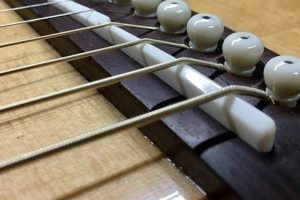
At the heart of an acoustic guitar’s sound production lies the bridge, a seemingly unassuming yet vital component that serves as the conduit for string vibrations, translating their energy into a symphony of sound.
- Facilitating String Vibration Transfer: The bridge acts as the intermediary between the strings and the soundboard, efficiently transmitting the vibrations generated by the plucked or strummed strings to the soundboard’s surface.
- Adjusting String Height and Intonation: By adjusting the bridge’s height and saddle position, guitarists can fine-tune the action and intonation of their instrument, ensuring optimal playability and accurate fretting.
- Contributing to Tonal Characteristics: The bridge’s design, materials, and placement on the soundboard influence the guitar’s overall tone. Different bridge designs, such as the traditional pin bridge or the more modern belly bridge, impart subtle variations in sound projection and sustain.
- Enhancing Structural Stability: Beyond its primary function, the bridge also contributes to the guitar’s structural stability. It helps distribute the tension exerted by the strings across the soundboard, preventing warping or damage.
In summary, the bridge plays a pivotal role in the inner workings of an acoustic guitar. Its intricate design and precise placement enable the efficient transfer of string vibrations, contributing to the instrument’s playability, tonal character
istics, and structural integrity.
4. Neck

Delving deeper into the intricate world of an acoustic guitar, we encounter the neck, a fundamental component that serves as the foundation for fretting and playing, enabling guitarists to translate their musical ideas into a symphony of sound.
Crafted from durable hardwoods such as mahogany, maple, or rosewood, the neck provides a stable platform for the strings, allowing guitarists to fret notes with precision and execute complex playing techniques. Its shape and dimensions contribute to the guitar’s overall feel and playability, accommodating different hand sizes and playing styles.
Along the neck, metal frets serve as markers for the different musical notes, dividing the strings into specific intervals. By pressing the strings against the frets, guitarists can alter the string’s vibrating length, producing distinct pitches. The precise placement of the frets is crucial for accurate intonation, ensuring that each note resonates at its intended frequency.
The neck’s connection to the body of the guitar is reinforced by a joint called the dovetail or mortise and tenon joint, providing structural stability and allowing for the transfer of string vibrations from the neck to the soundboard. This intricate connection contributes to the guitar’s overall resonance and sustain.
Understanding the intimate relationship between the neck and the other components of an acoustic guitar is essential for guitarists seeking to optimize their playing experience. By carefully selecting the neck’s wood, shape, and fretboard material, luthiers can tailor the instrument to specific musical genres and playing styles, ensuring that the guitarist’s creative vision is fully realized.
Key Insights:
- The neck provides a stable platform for fretting and playing, enabling precise note production.
- The shape and dimensions of the neck contribute to the guitar’s overall feel and playability.
- Frets serve as markers for musical notes, allowing guitarists to accurately produce different pitches.
- The neck’s connection to the body is crucial for structural stability and sound transmission.
- Understanding the neck’s characteristics empowers guitarists to select an instrument that matches their playing style and musical aspirations.
5. Frets
Within the intricate realm of an acoustic guitar, frets serve as essential landmarks, guiding guitarists in their pursuit of musical expression. These carefully positioned metal strips embedded along the guitar’s neck divide the strings into precise intervals, enabling the production of specific musical notes.
- Precise Pitch Production: Frets act as unwavering guides, ensuring that guitarists can fret notes with accuracy and consistency. By pressing the strings against the frets, players can alter the vibrating length of the strings, producing distinct pitches that form the foundation of melodies and chords.
- Facilitation of Complex Playing Techniques: Frets empower guitarists to execute a vast repertoire of playing techniques, from intricate fingerpicking patterns to soaring solos. The precise placement of frets allows for rapid and fluid movement along the neck, enabling guitarists to navigate complex chord progressions and scales with ease.
- Foundation for Musical Expression: Frets serve as the fundamental building blocks upon which guitarists construct their musical ideas. By fretting different combinations of strings and frets, players can create a limitless array of chords, melodies, and harmonies, giving voice to their creativity and imagination.
- Customization and Personalization: Frets can be customized to suit the unique preferences of guitarists. The size, shape, and material of frets can vary, allowing players to tailor their instruments to their playing style and comfort. This customization empowers guitarists to find the perfect fit, enhancing their overall playing experience.
In conclusion, frets are indispensable components of an acoustic guitar, providing guitarists with the means to produce precise pitches, execute complex techniques, and express their musical creativity. Understanding the intricate relationship between frets and the other components of an acoustic guitar is essential for guitarists seeking to expand their musical horizons and unlock the full potential of their instrument.
6. Headstock

Delving into the intricate realm of an acoustic guitar, we encounter the headstock, an often-overlooked yet essential component that plays a pivotal role in tuning and maintaining the instrument’s balance.
Nestled at the far end of the neck, the headstock serves as the anchor for the tuning machines, the precision devices that allow guitarists to adjust the tension of the strings, ensuring accurate intonation and the ability to play in tune with other instruments. Without a stable headstock, tuning would be a frustrating and imprecise endeavor, hindering the guitarist’s ability to produce harmonious music.
Beyond its role in tuning, the headstock also contributes to the guitar’s overall balance. Its weight and design help to counterbalance the tension of the strings, preventing the neck from tilting forward and making the guitar uncomfortable to play. This balanced design allows guitarists to maintain proper posture and technique, reducing fatigue and promoting playing comfort during extended playing sessions.
Understanding the connection between the headstock and the inside acoustic guitar is essential for guitarists seeking to optimize their instrument’s performance and longevity. A properly designed and constructed headstock ensures accurate tuning, comfortable playing, and contributes to the guitar’s overall stability and durability.
Practical Applications:
| Benefit | Practical Application |
|---|---|
| Precise tuning | Allows guitarists to play in tune with other instruments and produce harmonious music. |
| Balanced design | Prevents neck tilting, promotes playing comfort, and reduces fatigue during extended playing sessions. |
| Stability and durability | Contributes to the overall structural integrity of the guitar, ensuring long-lasting performance. |
7. Strings

Within the intricate realm of an acoustic guitar, strings reign supreme as the generators of sound and pitch, the very essence that brings the instrument to life. These finely crafted strands of steel, nylon, or other materials vibrate when plucked or strummed, producing the fundamental frequencies that form the foundation of musical expression.
The tension of each string is precisely adjustable via tuning machines located at the headstock, allowing guitarists to fine-tune their instrument to specific pitches. This intricate interplay between string tension and vibration frequency ena
bles guitarists to produce a vast array of notes and chords, giving voice to their creativity and musical ideas.
The choice of string materials, gauges, and construction can significantly impact the guitar’s overall sound and playability. Different materials impart unique tonal characteristics, from the bright and twangy sound of steel strings to the warm and mellow sound of nylon strings. The thickness, or gauge, of the strings affects their tension, volume, and sustain, allowing guitarists to tailor their instrument to their preferred playing style and genre.
Understanding the intimate relationship between strings and the inside acoustic guitar is essential for guitarists seeking to optimize their instrument’s performance and explore the full spectrum of musical possibilities. By carefully selecting and adjusting their strings, guitarists can craft their own unique sound, express their musical vision, and captivate audiences with their performances.
Practical Applications:
| String Characteristic | Practical Significance |
|---|---|
| Material | Affects tonal quality, brightness, and warmth |
| Gauge | Influences tension, volume, and sustain |
| Tension | Adjustable via tuning machines, affects pitch and intonation |
8. Tuning Pegs

Nestled at the heart of an acoustic guitar’s headstock, tuning pegs serve as the gatekeepers of precise string tension, playing a pivotal role in ensuring the instrument’s intonation and overall playability.
- Fine-tuning Intonation: Tuning pegs empower guitarists with the ability toadjust the tension of each string, allowing them to achieve precise intonation. This is essential for playing in harmony with other instruments and producing clear, resonant notes.
- Maintaining String Stability: By securely anchoring the strings, tuning pegs prevent them from slipping or losing tension during performance. This ensures stability and consistency, enabling guitarists to focus on their playing without distractions.
- Facilitating String Changes: Tuning pegs make restringing an acoustic guitar a relatively straightforward process. By loosening the pegs, guitarists can easily remove and replace strings, allowing for quick repairs or experimentation with different string types.
- Complementing the Structural Integrity: Tuning pegs contribute to the overall structural integrity of the guitar. They provide a stable base for the strings, helping to distribute tension evenly across the neck and body of the instrument.
In conclusion, tuning pegs are indispensable components of an acoustic guitar, enabling precise intonation, maintaining string stability, facilitating string changes, and contributing to the instrument’s structural integrity. Understanding their role is crucial for guitarists seeking to optimize their instrument’s performance and enhance their playing experience.
9. Body Shape

In the realm of acoustic guitars, body shape plays a pivotal role in shaping the instrument’s tonal characteristics, influencing its sound projection, resonance, and overall sonic personality.
The size and shape of the guitar’s body determine the volume of air it can resonate, affecting the instrument’s overall loudness and projection. Larger bodies, such as those found on dreadnought guitars, produce a louder, more robust sound, while smaller bodies, like those on parlor guitars, generate a more intimate, focused tone.
The shape of the body also influences the guitar’s tonal balance and frequency response. For instance, guitars with a wider lower bout, such as the jumbo body shape, produce a more pronounced bass response, while those with a narrower waist, such as the grand auditorium body shape, offer a more balanced sound across the frequency spectrum.
The choice of body shape is ultimately a matter of personal preference, with different shapes suiting different playing styles and genres. Dreadnought guitars are popular for strumming and flatpicking, while grand auditorium guitars excel in fingerstyle playing and singer-songwriter accompaniment. Understanding the connection between body shape and tonal characteristics empowers guitarists to select an instrument that aligns with their musical aspirations and sonic preferences.
Key Insights:
| Body Shape | Tonal Characteristics | Suitable Playing Styles |
|---|---|---|
| Dreadnought | Loud, robust sound with a pronounced low end | Strumming, flatpicking |
| Grand Auditorium | Balanced sound across the frequency spectrum | Fingerstyle playing, singer-songwriter accompaniment |
| Jumbo | Rich, deep bass response | Rhythm playing, soloing |
| Parlor | Intimate, focused tone | Blues, folk, fingerpicking |
10. Wood Type
Within the intricate realm of an acoustic guitar, the choice of wood plays a pivotal role in shaping the instrument’s sonic character and visual appeal. The type of wood used for the soundboard, back, sides, and neck significantly influences the guitar’s tonal qualities, projection, and overall aesthetic.
Tonal Characteristics: Different wood species possess unique acoustic properties that contribute to the guitar’s sound. For instance, spruce is renowned for its bright, resonant tone, making it a popular choice for soundboards. Mahogany, on the other hand, imparts a warmer, richer sound, often favored for the back and sides. The combination of different wood types allows luthiers to tailor the guitar’s sound to specific genres and playing styles.
Projection and Volume: The density and stiffness of the wood used for the soundboard and body affect the guitar’s projection and volume. Denser woods, such as maple, produce a louder, more focused sound, while less dense woods, like cedar, generate a softer, more intimate tone.
Aesthetics and Durability: The visual appeal and durability of an acoustic guitar are largely determined by the wood used for its construction. Rosewood, with its deep reddish-brown hue and intricate grain patterns, is prized for its beauty and resistance to wear. Mahogany, known for its rich reddish-brown color, is also a popular choice for its durability and aesthetic appeal.
Understanding the connection between wood type and the inside acoustic guitar empowers guitarists to make informed choices when selecting an instrument that aligns with their musical preferences and aesthetic sensibilities.
Key Insights:
| Wood Type | Tonal Characteristics | Projection and Volume | Aesthetics and Durability |
|---|---|---|---|
| Spruce | Bright, resonant | Loud, focused | Light-colored, even grain |
| Mahogany | Warm, rich |
Balan ced, warm | Deep reddish-brown, intricate grain |
| Rosewood | Deep, complex | Loud, clear | Deep reddish-brown, intricate grain, durable |
| Cedar | Soft, mellow | Intimate, soft | Light-colored, straight grain |
11. Finish
Within the realm of acoustic guitars, the finish serves as a crucial element, safeguarding the instrument’s delicate components while simultaneously enhancing its visual appeal.
- Protection: The finish acts as a protective barrier, shielding the guitar from moisture, scratches, and other environmental factors that could damage the wood and other materials. This protective layer ensures the guitar’s longevity and maintains its structural integrity.
- Enhanced Appearance: The finish plays a significant role in the guitar’s aesthetics. It can accentuate the natural beauty of the wood grain, highlight intricate designs, and add a touch of personal style. From glossy finishes that reflect light to matte finishes that absorb it, the choice of finish can dramatically alter the guitar’s overall appearance.
- Tonal Impact: While the finish primarily serves protective and aesthetic purposes, it can also subtly influence the guitar’s tone. Thicker finishes may dampen the sound slightly, while thinner finishes allow the wood to resonate more freely. This tonal impact is often negligible, but it is a factor that some discerning guitarists consider.
- Variety of Finishes: Acoustic guitars feature a diverse range of finishes, each with its unique characteristics and appeal. Nitrocellulose lacquer, polyurethane, and shellac are among the most common finishes, offering varying levels of durability, glossiness, and tonal impact.
In conclusion, the finish of an acoustic guitar is not merely a cosmetic consideration but an integral aspect of the instrument’s overall design and functionality. It protects the guitar from damage, enhances its appearance, and subtly influences its tone. Understanding the role and nuances of the finish empowers guitarists to make informed decisions when choosing and maintaining their instruments.
Inside Acoustic Guitar
Delving into the intricacies of acoustic guitars, we address common questions to provide comprehensive insights:
Question 1: What is the significance of the soundboard in an acoustic guitar?
The soundboard, also known as the top, serves as the heart of an acoustic guitar, responsible for generating and amplifying the vibrations produced by the strings. Its elasticity and density directly influence the guitar’s tonal characteristics, projection, and overall sound quality.
Question 2: How does bracing contribute to the structural integrity of an acoustic guitar?
Bracing, a framework of struts and crossbars, reinforces the soundboard, preventing it from collapsing under the tension of the strings. Different bracing patterns and materials can alter the guitar’s sound, affecting its resonance, sustain, and tonal balance.
Question 3: What is the role of the bridge in an acoustic guitar?
The bridge serves as a pivotal point of contact between the strings and the soundboard. It transfers string vibrations efficiently, affecting the guitar’s intonation and overall tone. Additionally, the bridge contributes to the instrument’s structural stability.
Question 4: How does the neck influence the playability and sound of an acoustic guitar?
The neck provides a stable platform for fretting and playing. Its shape, dimensions, and material impact the guitar’s feel, action, and tonal characteristics. Frets embedded along the neck divide the strings into specific intervals, enabling the production of distinct musical notes.
Question 5: What is the importance of strings in an acoustic guitar?
Strings are the primary sound generators in an acoustic guitar. Their tension and gauge influence the instrument’s pitch, volume, and sustain. Different string materials, such as steel, nylon, or silk, impart unique tonal qualities, allowing guitarists to tailor their sound.
Question 6: How does the body shape of an acoustic guitar affect its sound?
The body shape of an acoustic guitar significantly influences its tonal characteristics. Larger bodies, like dreadnoughts, produce a louder, more resonant sound, while smaller bodies, like concert guitars, generate a more focused, intimate tone. The shape also affects the guitar’s projection, balance, and overall sonic personality.
Understanding these aspects empowers guitarists to make informed decisions when choosing and maintaining their acoustic guitars, ensuring optimal performance and a fulfilling playing experience.
Transition:
Having explored the internal components and their significance, let’s delve deeper into the factors that influence the selection of an acoustic guitar, including tonewoods, construction methods, and personal preferences.
Tips for Understanding Inside Acoustic Guitar
Understanding the inner workings of an acoustic guitar is crucial for optimizing its sound, playability, and longevity. Here are some tips to guide you:
Tip 1: Familiarize Yourself with the Key Components
Start by learning about the essential components of an acoustic guitar, such as the soundboard, bracing, bridge, neck, frets, and strings. Understanding their functions and interrelationships will provide a solid foundation for further exploration.
Tip 2: Explore Different Wood Types
The choice of wood for the soundboard, back, sides, and neck significantly influences the guitar’s tonal characteristics and aesthetics. Research different wood species, their properties, and how they contribute to the overall sound and appearance of the instrument.
Tip 3: Consider Construction Methods
The way an acoustic guitar is constructed can impact its sound and durability. Learn about different construction methods, such as dovetail neck joints, different bracing patterns, and the use of solid woods versus laminates. These factors can affect the guitar’s resonance, sustain, and structural integrity.
Tip 4: Pay Attention to the Bridge and Saddle
The bridge and saddle play a crucial role in transferring string vibrations to the soundboard and adjusting the guitar’s intonation. Explore different bridge designs and saddle materials to understand their influence on tone, sustain, and playability.
Tip 5: Experiment with Different Strings
Strings are essential for generating sound in an acoustic guitar. Experiment with different string materials, gauges, and winding types. Each combination can produce unique tonal qualities, volume, and playing feel.
Summary:
By following these tips, you can gain a deeper understanding of the inside acoustic guitar. This knowledge will empower you to make informed decisions when selecting, maintaining, and playing your instrument, ensuring a fulfilling and musically rewarding experience.
Conclusion
Our exploration of the “inside acoustic guitar” has illuminated the intricate interplay of its components, each contributing to the instrument’s unique sound, playability, and aesthetic appeal. From the resonant soundboard to the sturdy bracing, the carefully crafted neck and frets, the strings that generate the mu
sic, and the body shape that influences its tonal character, every element plays a vital role.
Understanding these inner workings empowers guitarists to make informed decisions when selecting and maintaining their instruments, ensuring they find the perfect acoustic guitar to accompany their musical journey. Whether seeking a warm and mellow sound or a bright and resonant tone, the knowledge gained through this exploration will guide guitarists toward their ideal instrument.
The acoustic guitar, with its rich history and enduring popularity, continues to captivate musicians and music lovers alike. As we delve deeper into its inner workings, we appreciate the craftsmanship and artistry that go into each instrument, making it a source of inspiration and a cherished companion for countless musicians.