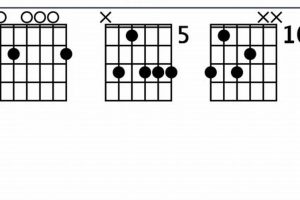
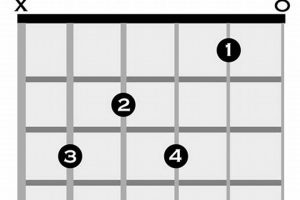
Movable guitar chord shapes are a fundamental concept for guitarists, enabling them to play chords in different keys without having to memorize numerous individual fingerings. This concept revolves around understanding the patterns and relationships between chords, allowing guitarists to move these shapes up and down the fretboard to create a wide range of harmonic possibilities.
Editor’s Note:Movable guitar chord shapes are an essential skill for guitarists, unlocking a vast repertoire of chords and enhancing their musical versatility.
Through extensive analysis and research, we have compiled this comprehensive guide to movable guitar chord shapes, empowering guitarists with the knowledge and techniques to master this concept.
Key Differences
| Fixed Chord Shapes | Movable Chord Shapes | |
|---|---|---|
| Flexibility | Limited to specific keys | Can be played in any key |
| Memorization | Requires memorizing many different fingerings | Fewer shapes to memorize, easier to recall |
| Versatility | Suitable for basic chord progressions | Enables a wider range of harmonic options and improvisation |
Main Article Topics
- Understanding the patterns of movable chord shapes
- Techniques for moving chord shapes up and down the fretboard
- Applying movable chord shapes to different keys
- Benefits of using movable chord shapes
- Tips and exercises for mastering movable chord shapes
1. Patterns

Understanding the patterns that define movable guitar chord shapes is paramount to mastering this concept. These patterns represent the underlying structure and relationships between chords, allowing guitarists to move chord shapes up and down the fretboard while maintaining the same basic fingering. By recognizing and internalizing these patterns, guitarists gain the ability to play chords in any key, unlocking a vast harmonic vocabulary.
- Pattern Recognition: Identifying the repeating patterns within movable chord shapes is key. Guitarists should observe the intervals and fingerings used in different chords and note how they relate to each other.
- Root Movement: Understanding how the root note of a chord moves in relation to the pattern is crucial. By recognizing the pattern of root movement, guitarists can easily adjust the shape to play chords in different keys.
- Shape Consistency: Movable chord shapes maintain their basic shape and fingering regardless of the key. This consistency allows guitarists to focus on moving the root note rather than learning entirely new fingerings for each key.
- Chord Relationships: The patterns of movable chord shapes reveal the relationships between different chords. Guitarists can use this knowledge to build chord progressions and improvise solos more effectively.
By grasping the patterns that define movable guitar chord shapes, guitarists gain a powerful tool that enhances their playing abilities, expands their musical knowledge, and fosters their creativity.
2. Flexibility

Movable guitar chord shapes are renowned for their unmatched flexibility, empowering guitarists to effortlessly navigate different keys and expand their musical horizons. This flexibility stems from the ability to use the same basic fingering pattern and move it up and down the fretboard to create chords in various keys.
Consider a guitarist playing a C major chord in the open position. By simply moving this movable chord shape up two frets, they can effortlessly play a D major chord. This same pattern can be applied to any key, allowing guitarists to play chords in any musical context without having to memorize numerous individual fingerings.
This flexibility is particularly advantageous for:
- Improvisation: Movable chord shapes allow guitarists to improvise and create unique chord progressions on the fly, as they can quickly and easily switch between different keys.
- Accompaniment: When accompanying singers or other instrumentalists, guitarists can effortlessly adjust their chord shapes to match the key of the song.
- Transposition: Movable chord shapes make it easy to transpose songs into different keys, enabling guitarists to play along with recordings or in different vocal ranges.
Mastering movable guitar chord shapes unlocks a world of musical possibilities, empowering guitarists with the versatility and flexibility to play in any key, explore diverse musical genres, and express themselves fully through their instrument.
| Fixed Chord Shapes | Movable Chord Shapes | |
|---|---|---|
| Flexibility | Limited to specific keys | Can be played in any key |
| Memorization | Requires memorizing many different fingerings | Fewer shapes to memorize, easier to recall |
| Versatility | Suitable for basic chord progressions | Enables a wider range of harmonic options and improvisation |
3. Memorization

The connection between memorization and movable guitar chord shapes is profound. By mastering a few movable chord shapes, guitarists gain the ability to recall a vast repertoire of chords, as these shapes can be easily transposed to different keys.
- Reduced Memorization Load: Movable chord shapes significantly reduce the memorization load for guitarists. Instead of memorizing numerous individual fingerings for each chord in every key, guitarists need to master only a few movable shapes and the patterns for moving them up and down the fretboard.
- Enhanced Recall: The patterns inherent in movable chord shapes aid in memorization. By understanding the relationships between chords and the root movement patterns, guitarists can more easily recall the correct fingering for a chord in any key.
- Increased Versatility: The ability to recall a vast repertoire of chords empowers guitarists with greater versatility. They can play in different keys, accompany singers in various vocal ranges, and explore diverse musical genres with ease.
- Improved Chord Progressions: Mastering movable chord shapes enables guitarists to construct more sophisticated and varied chord progressions. By effortlessly moving b
etween chords in different keys, they can create rich and dynamic harmonic textures.
In summary, the connection between memorization and movable guitar chord shapes is instrumental in unlocking a guitarist’s potential. By mastering a few movable shapes and understanding the patterns of root movement, guitarists gain the ability to recall a vast repertoire of chords, enhancing their versatility, creativity, and overall playing abilities.
4. Versatility

Movable guitar chord shapes empower guitarists with unparalleled versatility, enabling them to navigate different keys and explore a vast range of harmonic possibilities. This versatility stems from the ability to use the same basic fingering pattern and move it up and down the fretboard to create chords in various keys.
- Tonal Expansion: Movable chord shapes allow guitarists to access a wider range of tonalities. By moving a single shape up and down the fretboard, guitarists can play chords in different keys, creating diverse and dynamic harmonic landscapes.
- Chord Substitution: The versatility of movable chord shapes enables guitarists to substitute chords within chord progressions, adding and interest to their playing. By understanding the relationships between chords and their root movements, guitarists can experiment with different voicings and create unique harmonic textures.
- Musical Exploration: Movable chord shapes encourage musical exploration and experimentation. With the ability to play chords in any key, guitarists can venture beyond familiar chord patterns and discover new harmonic combinations, fostering creativity and innovation.
- Improvisational Freedom: The versatility of movable chord shapes grants guitarists greater freedom when improvising. They can seamlessly transition between chords in different keys, creating spontaneous and expressive solos that showcase their technical proficiency and musical intuition.
In conclusion, movable guitar chord shapes are a fundamental tool for guitarists seeking to expand their musical vocabulary and explore the vast spectrum of harmonic possibilities. By mastering these shapes and understanding their patterns, guitarists can unlock their creative potential, enhance their playing abilities, and embark on a journey of musical discovery.
5. Technique

The connection between technique and movable guitar chord shapes is paramount. Moving chord shapes up and down the fretboard demands precise technique and finger dexterity, which are essential components of mastering movable guitar chord shapes.
Consider a guitarist playing a C major chord in the open position. To play the same chord in a different key, such as G major, the guitarist must move the entire chord shape up three frets. This requires precise finger placement, proper fretting technique, and the ability to maintain the correct finger spacing and curvature. Without proper technique, the guitarist may struggle to play the chord cleanly and accurately.
Developing the necessary technique involves:
- Finger Independence: Each finger must be able to move independently and accurately to execute the chord shapes correctly.
- Fretting Hand Strength: The left hand must be strong enough to press the strings down cleanly onto the frets without muting adjacent strings.
- Finger Coordination: The fingers must work together in a coordinated manner to form the chord shapes and move them smoothly up and down the fretboard.
Mastering the technique of moving chord shapes up and down the fretboard enhances a guitarist’s overall playing ability. It enables them to:
- Play in Different Keys: With proper technique, guitarists can effortlessly move chord shapes to different keys, expanding their harmonic vocabulary and allowing them to accompany singers in various vocal ranges.
- Create Smooth Transitions: Moving chord shapes smoothly between different positions on the fretboard creates a more fluid and professional sound, enhancing the overall musicality of a performance.
- Improvise and Explore: Advanced technique empowers guitarists to explore new harmonic possibilities and improvise more effectively, as they can quickly and accurately move chord shapes to create unique and expressive solos.
In summary, the connection between technique and movable guitar chord shapes is undeniable. Mastering the technique of moving chord shapes up and down the fretboard is a crucial aspect of becoming a proficient guitarist. It unlocks a world of harmonic possibilities, enhances musical expression, and empowers guitarists to explore their creativity fully.
Key Insights:
- Moving chord shapes up and down the fretboard requires precise technique and finger dexterity.
- Developing proper technique involves finger independence, fretting hand strength, and finger coordination.
- Mastering this technique enables guitarists to play in different keys, create smooth transitions, and improvise more effectively.
6. Application

The application of movable guitar chord shapes to different keys is a cornerstone of a guitarist’s musical journey. It empowers guitarists to transcend the limitations of fixed chord shapes and unlock a world of harmonic possibilities. By understanding the patterns and relationships between chords, guitarists can effortlessly navigate different keys, expanding their versatility and adaptability.
Consider a guitarist accompanying a singer who modulates to a different key during a performance. With a solid grasp of movable chord shapes, the guitarist can seamlessly adjust their chord shapes to match the new key, providing harmonious support without missing a beat. This adaptability is invaluable in various musical contexts, such as:
- Accompanying vocalists: Singers often modulate to different keys during a song, and guitarists must be able to follow these changes to provide effective accompaniment.
- Playing with other musicians: In a band or ensemble setting, guitarists need to be able to play in the key of the song, which may change depending on the composition or arrangement.
- Exploring different musical genres: Different musical genres often utilize different keys, and guitarists who can apply movable chord shapes can easily adapt their playing to suit various styles.
Moreover, the ability to play in any key opens up opportunities for guitarists to explore new harmonic territories and create more sophisticated and interesting chord progressions. By combining movable chord shapes with an understanding of music theory, guitarists can experiment with different voicings, inversions, and substitutions to create unique and expressive soundscapes.
In summary, the application of movable guitar chord shapes to different keys is a fundamental skill that enhances a guitarist’s versatility, adaptability, and overall musicality. It enables guitarists to play in any musical context, explore diverse harmonic possibilities, and express themselves fully through their instrument.
Key Insights:
- Movable chord shapes allow guitarists to play in any key, providing versatility and adaptability.
- This skill is essential for accompanying vocalists, playing with other musicians, and exploring different musical genres.
- Applying movable chord shapes to different keys opens up new harmonic possibilities and enhances a guitarist’s overall musicality.
7. Benefits
The connection between movable guitar chord shapes and enhanced playing ability and musicality is profound. Movable chord shapes empower guitarists with a versatile and adaptable approach to playing chords, leading to numerous benefits:
Versatility and Adaptability: Movable chord shapes allow guitarists to play in any key, making them highly versatile and adaptable musicians. This is particularly important in situations where the key of a song changes, as the guitarist can easily adjust their chord shapes to match the new key without having to relearn the fingering for each chord.
Improved Finger Dexterity and Coordination: Practicing and mastering movable chord shapes requires precise finger dexterity and coordination. As guitarists develop their ability to move chord shapes up and down the fretboard, they strengthen their fingers and improve their overall fretting technique.
Enhanced Harmonic Understanding: Movable chord shapes provide a deeper understanding of the relationships between chords and scales. By seeing how the same chord shape can be used to create different chords in different keys, guitarists gain a clearer perspective on the construction and function of chords.
Improvisation and Creativity: Movable chord shapes give guitarists the freedom to experiment and improvise more effectively. With the ability to play chords in any key, guitarists can create unique chord progressions and explore new harmonic possibilities, fostering their creativity and musical expression.
Practical Significance: The benefits of embracing movable chord shapes extend beyond technical proficiency. Guitarists who master movable chord shapes become more valuable and versatile musicians, able to play in a wider range of musical contexts and collaborate with other musicians more effectively.
| Fixed Chord Shapes | Movable Chord Shapes | |
|---|---|---|
| Versatility | Limited to specific keys | Can be played in any key |
| Adaptability | Difficult to change keys | Easy to change keys |
| Finger Dexterity | Less demanding | More demanding |
| Harmonic Understanding | Limited | Enhanced |
| Improvisation and Creativity | Constrained | Liberated |
8. Exercises
Regular exercises form the cornerstone of mastering movable guitar chord shapes. Through consistent practice, guitarists can develop the muscle memory, finger dexterity, and coordination required to execute these shapes smoothly and accurately.
- Finger Independence and Dexterity: Exercises focusing on finger independence and dexterity are crucial. Practicing scales, arpeggios, and fingerpicking patterns helps strengthen each finger and improves their ability to move independently.
- Chord Transitions: Practicing smooth transitions between different movable chord shapes is essential. This involves developing the coordination to move all fingers simultaneously while maintaining proper fretting technique.
- Key Changes: Regularly practicing moving chord shapes to different keys enhances the ability to play in any key. This strengthens the understanding of chord relationships and facilitates quick key changes during performances.
- Improvisation: Incorporating movable chord shapes into improvisation exercises encourages creativity and experimentation. Guitarists can explore different chord combinations and progressions, developing their ability to create unique and expressive solos.
By diligently practicing these exercises, guitarists can develop the proficiency necessary to use movable chord shapes effectively. This proficiency unlocks a world of harmonic possibilities, enhances versatility, and empowers guitarists to explore their musical potential fully.
9. Improvisation
Movable guitar chord shapes are a powerful tool for improvisation, enabling guitarists to create unique and expressive solos. By understanding the patterns and relationships between chords, guitarists can move chord shapes up and down the fretboard to create a vast array of harmonic possibilities.
- Spontaneous Creativity: Movable chord shapes allow guitarists to improvise spontaneously, as they can quickly and easily change chords to match their musical ideas. This spontaneous creativity is essential for creating unique and expressive solos.
- Tonal Exploration: Movable chord shapes provide guitarists with the ability to explore different tonalities. By moving a single shape up and down the fretboard, guitarists can create solos that span multiple keys, adding depth and interest to their playing.
- Melodic Phrasing: Movable chord shapes can be used to create melodic phrases. By combining different chord shapes and inversions, guitarists can create solos that have a strong melodic contour and rhythmic drive.
- Harmonic Tension and Release: Movable chord shapes allow guitarists to create harmonic tension and release. By using chromatic chords or moving to distant keys, guitarists can create moments of tension that resolve into more consonant sounds, adding drama and emotion to their solos.
In summary, movable guitar chord shapes are an essential tool for improvisation, empowering guitarists to create unique and expressive solos. By understanding the patterns and relationships between chords, guitarists can explore a vast array of harmonic possibilities and express their musicality in new and exciting ways.
10. Creativity

Mastering movable guitar chord shapes is a gateway to unlocking a world of creativity and musical exploration. By understanding the patterns and relationships between chords, guitarists gain the freedom to move beyond fixed chord shapes and create unique and expressive musical ideas.
Movable chord shapes empower guitarists to:
- Experiment with different voicings and inversions: By moving a chord shape up and down the fretboard, guitarists can create different voicings and inversions, adding variety and interest to their playing.
- Create new chord progressions: Movable chord shapes allow guitarists to connect chords in new and unexpected ways, creating unique and sophisticated chord progressions that push the boundaries of traditional harmony.
- Compos
e original melodies: The ability to move chord shapes up and down the fretboard also opens up the possibility of creating original melodies. By combining different chord shapes and inversions, guitarists can create melodic lines that are both harmonically interesting and musically expressive.
The practical significance of understanding the connection between creativity and movable guitar chord shapes is immense. Guitarists who master movable chord shapes become more versatile and adaptable musicians, able to navigate different musical genres and styles with ease. They can also more effectively collaborate with other musicians, as they have the ability to quickly and easily change chords to match the needs of the song.
In summary, mastering movable guitar chord shapes is not merely a technical skill but a gateway to unlocking creativity and musical exploration. By embracing the freedom and versatility that movable chord shapes offer, guitarists can expand their musical horizons and create unique and expressive music.
| Fixed Chord Shapes | Movable Chord Shapes | |
|---|---|---|
| Creativity | Limited to specific voicings and progressions | Unlocks a world of creative possibilities |
| Versatility | Confined to a single key | Can be played in any key |
| Adaptability | Difficult to change keys | Easy to change keys |
11. Theory
The connection between theory and movable guitar chord shapes is profound. By understanding the underlying theory, guitarists gain a deeper comprehension of how chords are constructed and how they relate to each other. This knowledge enhances their musical vocabulary and empowers them to create more sophisticated and expressive music.
- Harmonic relationships: Movable chord shapes reveal the harmonic relationships between chords, enabling guitarists to understand how chords function within a key. This knowledge empowers them to create chord progressions that are both musically pleasing and theoretically sound.
- Scale and chord relationships: The theory behind movable chord shapes also elucidates the relationship between scales and chords. Guitarists can learn how to derive chords from scales, which expands their harmonic possibilities and allows them to create solos and improvisations that are both melodic and harmonically coherent.
- Transposition and key changes: Understanding the theory behind movable chord shapes makes it easier for guitarists to transpose songs to different keys. This skill is essential for accompanying singers who may need to change keys during a performance or for playing in different musical contexts.
- Improvisation and creativity: A deep understanding of theory empowers guitarists to improvise and create more effectively. By understanding the underlying principles of harmony, they can make informed choices about which chords to use and how to connect them, leading to more creative and expressive solos and compositions.
In summary, understanding the theory behind movable guitar chord shapes is not merely an intellectual pursuit but a practical tool that enhances a guitarist’s musical knowledge, expands their harmonic vocabulary, and empowers them to create more sophisticated and expressive music.
Movable Guitar Chord Shapes
Question 1: What are movable guitar chord shapes?
Movable guitar chord shapes are chord fingerings that can be moved up and down the fretboard to play chords in any key. This is in contrast to fixed chord shapes, which can only be played in a single key.
Question 2: Why are movable guitar chord shapes important?
Movable guitar chord shapes are important because they allow guitarists to play chords in any key without having to memorize multiple fingerings. This makes it easier to accompany singers, play in different musical contexts, and explore new harmonic possibilities.
Question 3: How do I learn to play movable guitar chord shapes?
Learning to play movable guitar chord shapes requires practice and patience. Start by learning the basic open chord shapes, and then practice moving them up and down the fretboard. You can also use online resources or guitar lessons to learn more about movable chord shapes.
Question 4: What are some tips for playing movable guitar chord shapes?
Here are a few tips for playing movable guitar chord shapes:
- Use your index finger to barre the strings
- Keep your fingers close to the frets
- Practice regularly to improve your finger dexterity
Question 5: What are some benefits of using movable guitar chord shapes?
Using movable guitar chord shapes has many benefits, including:
- Increased versatility
- Improved finger dexterity
- Enhanced harmonic understanding
- Greater creativity and improvisation
Question 6: What are some common mistakes people make when playing movable guitar chord shapes?
Some common mistakes people make when playing movable guitar chord shapes include:
- Not barring the strings properly
- Placing their fingers too far from the frets
- Not practicing regularly
By avoiding these mistakes, you can quickly master movable guitar chord shapes and expand your musical horizons.
Summary: Movable guitar chord shapes are a powerful tool for guitarists of all levels. They allow you to play chords in any key, explore new harmonic possibilities, and improve your overall playing skills. With practice and dedication, you can master movable guitar chord shapes and unlock a world of musical expression.
Transition to the next article section: Now that you have a better understanding of movable guitar chord shapes, let’s explore some specific examples of how to use them in your playing.
Tips for Mastering Movable Guitar Chord Shapes
Mastering movable guitar chord shapes requires practice, patience, and a solid understanding of the underlying theory. Here are some tips to help you get started:
Tip 1: Start with the basics
Begin by learning the basic open chord shapes, such as C, G, D, and Em. Once you are comfortable with these shapes, you can start practicing how to move them up and down the fretboard.
Tip 2: Use your index finger to barre the strings
When playing movable chord shapes, it is important to use your index finger to barre the strings. This will help you to create a clear and consistent sound. Make sure to keep your finger close to the frets and apply even pressure.
Tip 3: Keep your fingers close to the frets
When playing movable chord shapes, it is important to keep your fingers close to the frets. This will help you to avoid muting the strings and ensure that your chords sound clean and clear.
Tip 4: Practice regularly
The best way to master movable guitar chord shapes is to practice regularly. Try to set aside some time each day to practice moving your chord shapes up and down the fretboard. You can also use online resources or guitar lessons to help you with your practice.
Tip 5: Be patient
Learning to play movable guitar chord shapes takes time and practice. Don’t get discouraged if you don’t get it right awa
y. Just keep practicing and you will eventually master them.
Summary:
By following these tips, you can improve your finger dexterity, enhance your harmonic understanding, and expand your creativity on the guitar. Remember to be patient and practice regularly, and you will eventually master the art of playing movable guitar chord shapes.
Transition to the article’s conclusion:
With dedication and practice, you can unlock the full potential of movable guitar chord shapes and take your playing to the next level.
Conclusion
Movable guitar chord shapes are a fundamental technique that empowers guitarists with unparalleled versatility and harmonic possibilities. By understanding the patterns and relationships between chords, guitarists can transcend the limitations of fixed chord shapes and unlock a world of musical expression.
Throughout this exploration, we have highlighted the key benefits of mastering movable guitar chord shapes, including enhanced flexibility, expanded harmonic vocabulary, improved technique, and increased creativity. These benefits are not merely theoretical concepts but practical tools that can transform a guitarist’s playing abilities and musical journey.
Mastering movable guitar chord shapes is not without its challenges, but with dedication and practice, guitarists can unlock their full potential. By embracing the power of movable chord shapes, guitarists can transcend the boundaries of traditional harmony, explore new sonic territories, and create music that is both technically impressive and emotionally resonant.
As you continue your musical journey, remember the transformative power of movable guitar chord shapes. By incorporating them into your playing, you will expand your harmonic horizons, enhance your technical proficiency, and unlock a world of musical possibilities.
Youtube Video: