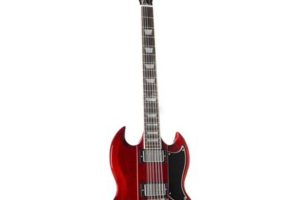
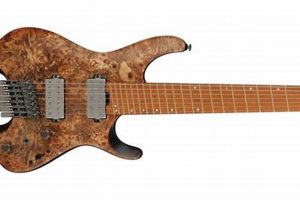
When learning to play the guitar, one of the first things you need to know is the order of the strings. This is important for both playing chords and melodies. The strings are numbered from 1 to 6, with the thickest string being number 6 and the thinnest string being number 1.
Editor’s Note: Knowing the order of the guitar strings is essential for playing the instrument correctly. Without this knowledge, it would be difficult to form chords and melodies.
To help you remember the order of the strings, here is a mnemonic device: “Eddie Ate Dynamite, Good Bye Eddie.” The first letter of each word corresponds to the name of a string, starting with the thickest string (low E) and ending with the thinnest string (high E).
Here is a table that shows the order of the strings on a guitar, from thickest to thinnest:
| String Number | String Name | Note |
|---|---|---|
| 6 | Low E | E2 |
| 5 | A | A2 |
| 4 | D | D3 |
| 3 | G | G3 |
| 2 | B | B3 |
| 1 | High E | E4 |
Once you know the order of the strings, you can start learning to play chords and melodies. With practice, you will be able to play your favorite songs in no time!
1. Thickest to Thinnest
The order of the strings on a guitar, from thickest to thinnest, is essential for playing the instrument correctly. The thickest string, which is the low E string, produces the lowest notes, while the thinnest string, which is the high E string, produces the highest notes. The other strings are arranged in between, with the A string being the second thickest, the D string being the third thickest, and so on.
Knowing the order of the strings is important for several reasons. First, it allows you to form chords correctly. Chords are groups of notes that are played together, and they are typically played on different strings. If you don’t know the order of the strings, you won’t be able to form chords correctly.
Second, knowing the order of the strings is important for playing melodies. Melodies are sequences of notes that are played one after the other, and they are typically played on different strings. If you don’t know the order of the strings, you won’t be able to play melodies correctly.
Finally, knowing the order of the strings is important for understanding guitar tablature. Tablature is a system of notation that is used to represent guitar music. It uses numbers to indicate which strings to play and which frets to press. If you don’t know the order of the strings, you won’t be able to read tablature.
Here is a table that shows the order of the strings on a guitar, from thickest to thinnest:
| String Number | String Name | Note |
|---|---|---|
| 6 | Low E | E2 |
| 5 | A | A2 |
| 4 | D | D3 |
| 3 | G | G3 |
| 2 | B | B3 |
| 1 | High E | E4 |
By understanding the order of the strings on a guitar, you can become a more proficient guitar player. You will be able to play chords and melodies correctly, and you will be able to read tablature. This will open up a whole new world of guitar playing for you.
2. Standard Tuning
The standard tuning for a guitar is EADGBE. This means that the strings are tuned to the notes E, A, D, G, B, and E, from the thickest string (low E) to the thinnest string (high E). Standard tuning is the most common tuning for guitar, and it is used in a wide variety of musical genres.
Standard tuning is important for several reasons. First, it allows guitarists to play chords and melodies in a consistent and familiar way. Second, standard tuning makes it easy to learn new songs, as most guitar tablature is written for standard tuning. Third, standard tuning allows guitarists to play with other musicians in a variety of settings.
There are other tunings that guitarists can use, but standard tuning is the most versatile and widely used. If you are new to guitar, it is recommended that you start by learning standard tuning.
Here is a table that shows the notes of the strings in standard tuning:
| String Number | String Name | Note |
|---|---|---|
| 6 | Low E | E2 |
| 5 | A | A2 |
| 4 | D | D3 |
| 3 | G | G3 |
| 2 | B | B3 |
| 1 | High E | E4 |
3. Mnemonic Device
Knowing the order of the strings on a guitar is essential for playing the instrument correctly. It is the foundation for forming chords and melodies. However, remembering the order of the six strings can be challenging, especially for beginners. This is where mnemonic devices come in.
A mnemonic device is a phrase or sentence that helps you remember something. The mnemonic device for the order of the guitar strings is “Eddie Ate Dynamite, Good Bye Eddie.” The first letter of each word in this phrase corresponds to the name of a string, starting with the thickest string (low E) and ending with the thinnest string (high E).
Here is a table that shows the connection between the mnemonic device and the order of the strings:
| Mnemonic Device Word | String Name |
|---|---|
| Eddie | Low E |
| Ate | A |
| Dynamite | D |
| Good | G |
| Bye | B |
| Eddie | High E |
Using a mnemonic device like “Eddie Ate Dynamite, Good Bye Eddie” can be a helpful way to remember the order of the guitar strings. This can make it easier to learn chords and melodies, and to read guitar tablature.
Here are some additional tips for remembering the order of the guitar strings:
- Practice regularly. The more you play guitar, the more familiar you will become with the order of the strings.
- Use visual aids. There are many charts and diagrams available online that can help you visualize the order of the strings.
- Sing the mnemonic device. Singing the mnemonic device can help you to remember it more easily.
With a little practice, you will be able to remember the order of the guitar strings without using a mnemonic device.
4. String Names
Knowing the names of the strings on a guitar is essential for effective communication with other guitarists and for understanding guitar tablature. The names of the strings are also used to describe chords and scales. For example, the C major chord is played on the first, second, and third strings, which are the C, E, and G strings.
The names of the strings are derived from the notes that they produce when played open. The low E string is the thickest string and produces the lowest note, while the high E string is the thinnest string and produces the highest note. The other strings are named in between, with the A string being the second thickest, the D string being the third thickest, and so on.
Understanding the names of the strings is important for several reasons. First, it allows guitarists to communicate with each other more effectively. When discussing chords or scales, guitarists often use the names of the strings to identify which notes are being played. For example, a guitarist might say that they are playing a C major chord on the “C, E, and G strings.”
Second, understanding the names of the strings is important for reading guitar tablature. Tablature is a system of notation that is used to represent guitar music. It uses numbers to indicate which strings to play and which frets to press. Tablature is often used by guitarists to learn new songs or to create their own music.
Third, understanding the names of the strings is important for playing guitar in a band or ensemble setting. When playing with other musicians, it is important to be able to identify which notes are being played by the other instruments. This can help to ensure that everyone is playing the correct notes and that the music sounds cohesive.
Here is a table that summarizes the names of the strings on a guitar:
| String Number | String Name | Note |
|---|---|---|
| 6 | Low E | E2 |
| 5 | A | A2 |
| 4 | D | D3 |
| 3 | G | G3 |
| 2 | B | B3 |
| 1 | High E | E4 |
By understanding the names of the strings on a guitar, you can become a more proficient guitar player. You will be able to communicate with other guitarists more effectively, read guitar tablature more easily, and play guitar in a band or ensemble setting more confidently.
5. String Materials
The choice of string material has a significant impact on the sound, feel, and playability of a guitar. Steel strings are brighter and louder than nylon strings, and they produce a more metallic sound. Nylon strings are softer and warmer than steel strings, and they produce a more mellow sound. They are also easier on the fingers, making them a good choice for beginners.
- Material Properties
Steel strings are made of a high-carbon steel alloy, which gives them their strength and brightness. Nylon strings are made of a synthetic material called polyamide, which gives them their flexibility and warmth.
- Sound and Feel
The sound of a guitar string is determined by its material, tension, and thickness. Steel strings produce a brighter, louder sound than nylon strings. They also have a more metallic sound, while nylon strings have a warmer, mellower sound.
- Playability
Nylon strings are easier to play than steel strings, as they are softer and more flexible. This makes them a good choice for beginners, as they are less likely to cause finger pain.
- Maintenance
Steel strings require more maintenance than nylon strings, as they are more prone to rust and corrosion. Nylon strings are less likely to rust or corrode, making them a good choice for guitars that are not played regularly.
Ultimately, the best choice of string material for a particular guitar depends on the player’s personal preferences. However, understanding the different properties of steel and nylon strings can help players make an informed decision.
6. String Gauges
The string gauges on a guitar have a direct impact on the sound, feel, and playability of the instrument. Thicker strings produce a fuller, louder sound, while thinner strings produce a brighter, more articulate sound. The thickness of the strings also affects the tension of the strings, which in turn affects the playability of the guitar.
When choosing string gauges for your guitar, it is important to consider the following factors:
- The type of guitar you are playing: Different types of guitars have different string gauges that are best suited for them. For example, electric guitars typically use lighter string gauges than acoustic guitars.
- The playing style you use: If you play with a lot of bends and vibrato, you will need to use lighter string gauges than if you play with a more aggressive style.
- The tuning you use: Different tunings require different string gauges. For example, if you play in a lower tuning, you will need to use thicker string gauges than if you play in a higher tuning.
Once you have considered these factors, you can start to experiment with different string gauges to find the ones that best suit your playing style and preferences.
Here is a table that shows the different string gauges that are available, along with the corresponding thicknesses in millimeters:
| String Gauge | Thickness (mm) |
|---|---|
| Extra Light | 0.009 – 0.011 |
| Light | 0.012 – 0.016 |
| Medium | 0.017 – 0.021 |
| Heavy | 0.022 – 0.026 |
| Extra Heavy | 0.027 – 0.032 |
By understanding the connection between string gauges and the sound, feel, and playability of a guitar, you can make informed decisions about which string gauges to use for your instrument.
7. String Tension
The tension of the strings on a guitar is an important factor that affects the sound and playability of the instrument. String tension is determined by the thickness of the strings, the length of the strings, and the tuning of the guitar. Thicker strings have higher tension than thinner strings, longer strings have higher tension than shorter strings
, and guitars that are tuned to a higher pitch have higher string tension than guitars that are tuned to a lower pitch.
String tension has a direct impact on the sound of the guitar. Guitars with higher string tension produce a brighter, more articulate sound, while guitars with lower string tension produce a warmer, more mellow sound. String tension also affects the playability of the guitar. Guitars with higher string tension are more difficult to bend and vibrato, while guitars with lower string tension are easier to bend and vibrato.
The ideal string tension for a particular guitar depends on the type of guitar, the playing style, and the desired sound. For example, electric guitars typically have lower string tension than acoustic guitars, and guitars that are used for lead playing typically have lower string tension than guitars that are used for rhythm playing.
Guitarists can adjust the tension of the strings by tuning the guitar. Tuning the guitar to a higher pitch increases the string tension, while tuning the guitar to a lower pitch decreases the string tension. Guitarists can also adjust the string tension by using different string gauges. Thicker strings have higher tension than thinner strings, so using thicker strings will increase the string tension and using thinner strings will decrease the string tension.
Understanding the relationship between string tension and the sound and playability of the guitar is essential for guitarists who want to get the most out of their instrument. By adjusting the string tension, guitarists can customize the sound and feel of their guitar to suit their individual playing style and preferences.
| String Tension | Effect on Sound | Effect on Playability |
|---|---|---|
| High Tension | Brighter, more articulate sound | More difficult to bend and vibrato |
| Low Tension | Warmer, more mellow sound | Easier to bend and vibrato |
8. String Action
String action is an important factor to consider when playing the guitar. It can affect the sound, playability, and overall comfort of the instrument. The action is measured in thousandths of an inch, and the ideal action height varies depending on the type of guitar and the player’s preferences. Generally, a lower action will make the guitar easier to play, while a higher action will make it more difficult. However, a lower action can also cause fret buzz, while a higher action can make it more difficult to bend the strings.
The string action is affected by several factors, including the neck relief, the saddle height, and the nut height. The neck relief is the amount of curvature in the neck, and it can be adjusted by tightening or loosening the truss rod. The saddle height is the distance between the top of the bridge and the bottom of the strings, and it can be adjusted by raising or lowering the individual saddles. The nut height is the distance between the top of the nut and the bottom of the strings, and it can be adjusted by filing down the nut slots.
When setting the string action, it is important to find a balance between playability and sound. If the action is too low, the strings will buzz against the frets. If the action is too high, the strings will be more difficult to press down, and bending the strings will be more difficult. The ideal action height will vary depending on the player’s preferences and the type of guitar being played.
Here is a table that summarizes the relationship between string action and the sound and playability of the guitar:
| String Action | Effect on Sound | Effect on Playability |
|---|---|---|
| Low Action | Brighter, more articulate sound | Easier to play, less fret buzz |
| High Action | Warmer, mellower sound | More difficult to play, more fret buzz |
By understanding the connection between string action and the sound and playability of the guitar, players can adjust the action to suit their individual preferences and playing style.
9. String Care
The care and maintenance of guitar strings are essential for maintaining the instrument’s sound and playability. Strings that are not properly cared for will wear out more quickly and are more likely to break. They will also produce a duller, less resonant sound. In addition, dirty strings can cause corrosion on the guitar’s frets and bridge, leading to further problems.
The most important aspect of string care is to clean them regularly. This can be done with a soft cloth or astring cleaner. It is important to avoid using harsh chemicals or abrasives, as these can damage the strings.
In addition to cleaning, strings should also be replaced periodically. The frequency with which you need to replace your strings will depend on how often you play and how hard you play. If you play frequently, you may need to replace your strings every few months. If you play less often, you may be able to get away with replacing them less frequently.
Knowing how to care for your guitar strings is an important part of being a guitar player. By following these simple tips, you can help to keep your guitar sounding and playing its best.
Here are some additional tips for string care:
- Avoid touching the strings with your bare hands. The oils from your skin can cause the strings to corrode.
- Use a soft cloth or a string cleaner to clean your strings after each use. This will help to remove dirt and grime that can build up on the strings.
- Replace your strings regularly. The frequency with which you need to replace your strings will depend on how often you play and how hard you play. If you play frequently, you may need to replace your strings every few months. If you play less often, you may be able to get away with replacing them less frequently.
By following these tips, you can help to keep your guitar strings sounding and playing their best.
10. String Bending
String bending is a guitar technique that involves pushing or pulling the string sideways to create expressive sounds. It is commonly used in a variety of genres, including rock, blues, and country music. String bending can be used to create a variety of effects, such as vibrato, portamento, and pitch bends.
- Vibrato is a technique that involves rapidly bending the string back and forth, creating a wavering effect. This can be used to add expression to notes or to create a more sustained sound.
- Portamento is a technique that involves bending the string from one note to another, creating a smooth transition between the two notes. This can be used to create a legato effect or to add a sense of movement to a melody.
- Pitch bends are a technique that involves bending the string to a specific pitch, either above or below the original note. This can be used to create a variety of effects, such as creating tension or resolving a
melody.
String bending is a versatile technique that can be used to create a wide variety of sounds and effects. It is an essential technique for any guitarist who wants to expand their musical vocabulary.
11. String Harmonics
String harmonics are an important part of playing the guitar. They add a unique and expressive sound to your playing, and they can be used to create a variety of different effects. By understanding how to play string harmonics, you can expand your musical vocabulary and become a more versatile player.
- Natural Harmonics: Natural harmonics are the most common type of harmonics. They are created by lightly touching the string at specific points along its length, which are called “nodes.” The most common natural harmonics are the octave harmonic (12th fret), the fifth harmonic (7th fret), and the fourth harmonic (5th fret).
- Artificial Harmonics: Artificial harmonics are created by lightly touching the string with one finger while fretting the string with another finger. This creates a more complex sound than natural harmonics, and it can be used to create a variety of different effects.
- Pinch Harmonics: Pinch harmonics are created by pinching the string with your picking hand while simultaneously striking the string with your fretting hand. This creates a high-pitched, squealing sound that is often used in rock and metal music.
- Tapping Harmonics: Tapping harmonics are created by tapping the string with your picking hand while simultaneously fretting the string with your fretting hand. This creates a high-pitched, bell-like sound that is often used in jazz and fusion music.
String harmonics are a versatile technique that can be used to create a variety of different sounds and effects. By understanding how to play string harmonics, you can expand your musical vocabulary and become a more versatile player.
12. String Effects
String effects play a crucial role in shaping the overall sound of a guitar, allowing guitarists to explore a wide range of sonic possibilities beyond the natural sound of the strings. By manipulating the electrical signal generated by the strings, effects pedals and devices can alter the tone, dynamics, and texture of the sound, enhancing the expressive capabilities of the instrument.
The connection between string effects and the order of the strings on a guitar is significant because different effects can be applied to specific strings or combinations of strings. For instance, a guitarist might use a distortion pedal to add overdrive to the low E string for a heavy, aggressive sound, while leaving the higher strings clean for clarity and articulation. Alternatively, a chorus pedal can be used to create a shimmering, ethereal effect on the middle strings, while leaving the bass and treble strings unaffected.
Understanding the order of the strings on a guitar is essential for effectively utilizing string effects. By knowing which strings correspond to which notes, guitarists can precisely target their effects to achieve the desired sonic results. This knowledge enables them to create complex and nuanced soundscapes that would not be possible with a random or haphazard approach to string effects.
In practical terms, the order of the strings on a guitar dictates the order in which effects are applied to the signal chain. The signal from the guitar typically passes through a series of effects pedals or devices in a specific order, such as distortion, compression, modulation, and reverb. By understanding the order of the strings, guitarists can optimize the placement of their effects to achieve the desired tonal progression and avoid unwanted interactions between effects.
Furthermore, the order of the strings on a guitar can influence the choice of effects used. For example, a guitarist playing lead guitar might opt for a wah pedal to manipulate the tone of the higher strings, while a rhythm guitarist might prioritize a compressor pedal to even out the dynamics of the lower strings. By considering the order of the strings, guitarists can make informed decisions about the effects they use and their placement in the signal chain.
In conclusion, understanding the connection between string effects and the order of the strings on a guitar is essential for guitarists seeking to expand their sonic palette and achieve greater control over their sound. By mastering the order of the strings and the effects applied to them, guitarists can unlock a world of creative possibilities and elevate their playing to new heights.
Frequently Asked Questions
This section addresses frequently asked questions relating to the order of the strings on a guitar, providing clear and informative answers to common concerns or misconceptions.
Question 1: Why is it important to know the order of the guitar strings?
Understanding the order of the guitar strings is crucial for several reasons. Firstly, it enables guitarists to form chords accurately. Chords are fundamental building blocks of music, and knowing the string order ensures that guitarists can play the correct notes together. Secondly, it allows guitarists to play melodies correctly. Melodies consist of sequences of notes played one after another, and knowing the string order ensures that guitarists can play the notes in the intended order. Thirdly, it facilitates reading guitar tablature. Tablature is a simplified form of musical notation that indicates which strings and frets to play, and understanding the string order is essential for interpreting tablature accurately.
Question 2: What is the standard tuning for a guitar?
The standard tuning for a guitar is EADGBE. This means that the strings, from thickest to thinnest, are tuned to the notes E, A, D, G, B, and E, respectively. Standard tuning is the most common tuning used on guitars, and it is the tuning that most guitarists learn first.
Question 3: Are there any alternative tunings for guitar?
Yes, there are many alternative tunings for guitar. Some common alternative tunings include:
- Drop D: DADGBE
- Open G: DGDGBD
- Open C: CGCGCE
- Open A: EAEAC#E
Alternative tunings can be used to create different sounds and effects. For example, Drop D tuning is often used in rock and metal music, as it allows guitarists to play power chords more easily. Open tunings are often used in folk and blues music, as they make it easier to play certain chords and melodies.
Question 4: How can I remember the order of the guitar strings?
There are several ways to remember the order of the guitar strings. One common method is to use a mnemonic device, such as “Eddie Ate Dynamite, Good Bye Eddie.” The first letter of each word corresponds to the name of a string, starting with the thickest string (low E) and ending with the thinnest string (high E).
Question 5: What are the different materials used for guitar strings?
Guitar strings are typically made from steel, nylon, or a combination of both. Steel strings are brighter and louder than nylon strings, and they are commonly used on electric guitars. Nylon strings are warmer and mellower than steel strings, and they are commonly used on classical guitars and acoustic guitars.
Question 6: How often should I change my guitar strings?The frequency with which you need to change your guitar strings depends on several factors, such as how often you play, how hard you play, and the type of strings you use. As a general rule of thumb, it is a good idea to change your strings every 3-6 months. However, if you play frequently or if you use coated strings, you may be able to go longer between string changes.
Understanding the order of the guitar strings and related concepts is essential for guitarists of all levels. By addressing common questions and providing informative answers, this FAQ section empowers guitarists with the knowledge they need to enhance their playing and musical expression.
Proceed to the next section to delve deeper into the world of guitar strings.
Tips for Understanding the Order of Guitar Strings
Understanding the order of the guitar strings is essential for playing the instrument effectively. Here are a few tips to help you memorize and utilize this knowledge:
Tip 1: Use a Mnemonic Device
Create a memorable phrase where the first letter of each word corresponds to the name of a string. A common example is “Eddie Ate Dynamite, Good Bye Eddie,” representing EADGBE from thickest to thinnest.
Tip 2: Visualize the Guitar Neck
Mentally picture the guitar neck with the strings in place. This visual representation can help you associate the string names with their positions.
Tip 3: Practice String Skipping Exercises
Play exercises that require you to skip over certain strings. This forces you to focus on the order and location of each string.
Tip 4: Use Colored Strings or Markers
Temporary colored strings or markers can help you differentiate between the strings visually, making it easier to remember their order.
Tip 5: Learn Chords and Scales
Chords and scales require specific string combinations. Practicing these musical elements reinforces the order of the strings.
Tip 6: Tune Your Guitar Regularly
Tuning your guitar regularly not only ensures accurate intonation but also helps you identify the string names by their corresponding notes.
Tip 7: Experiment with Different Tunings
Alternative guitar tunings can change the string order. Experimenting with different tunings can expand your understanding of string relationships.
Tip 8: Use Online Resources and Apps
Utilize online guitar lessons, diagrams, and apps that provide interactive ways to learn and practice string order.
Remember, consistency and practice are key to mastering the order of the guitar strings. By incorporating these tips into your learning routine, you can develop a solid understanding of this fundamental aspect of guitar playing.
Mastering the order of the guitar strings is not merely about memorization but about creating a foundation for your musical journey. It empowers you to play chords, melodies, and solos accurately, unlocking the full potential of this versatile instrument.
Conclusion
Throughout this comprehensive guide, we have explored the fundamental concept of “what are the strings on a guitar in order.” We have highlighted the significance of knowing the string order for playing chords, melodies, and solos accurately.
Understanding the order of the guitar strings is not merely about rote memorization; it is about establishing a solid foundation for your musical journey. It empowers you to navigate the fretboard with confidence, enabling you to unlock the full potential of this versatile instrument. Whether you are a beginner or an experienced guitarist, a thorough grasp of string order is essential for your continued growth and musical expression.