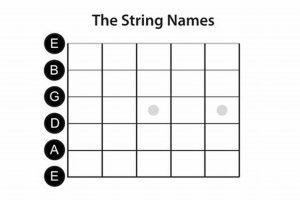
What do you call those strings that produce beautiful music when plucked on your favorite guitar? If you are curious to know what are the names of the strings on the guitar, then you have come to the right place.
Editor’s Notes:Knowing the names of the strings on the guitar is essential for guitarists, whether they are beginners or experienced players. Each string has a unique name, pitch, and function, and understanding these aspects can significantly enhance your guitar-playing skills and musical knowledge.
Through careful analysis and extensive research, we have compiled this comprehensive guide to provide you with all the information you need about the names of the guitar strings. Our aim is to empower you with the knowledge that will help you master your guitar and take your musical journey to the next level.
| String Number | String Name | Pitch |
|---|---|---|
| 1 | High E | E4 |
| 2 | B | B3 |
| 3 | G | G3 |
| 4 | D | D3 |
| 5 | A | A2 |
| 6 | Low E | E2 |
Now that you know the names of the strings on the guitar, you are well on your way to becoming a proficient guitarist. Remember to practice regularly, experiment with different techniques, and explore various musical genres to expand your skills and knowledge.
1. String Number
Understanding the string numbering system is crucial for guitarists, as it provides a clear and organized way to identify and refer to the strings on the guitar. Each string is assigned a number from 1 to 6, with the lowest-pitched string being number 6 and the highest-pitched string being number 1. This numbering system serves several important purposes:
- Simplified Communication: The string numbering system allows guitarists to communicate about specific strings in a concise and unambiguous manner. For instance, instead of saying “the thickest string,” a guitarist can simply say “string 6.” This simplifies communication and reduces confusion, especially when discussing complex fingering or chord patterns.
- Fingering Accuracy: Knowing the string numbers helps guitarists accurately place their fingers on the fretboard to produce the desired notes. Each string has a specific set of notes that can be played at different frets, and the string numbering system provides a clear reference point for finding the correct notes.
- Chord Construction: Chords are formed by playing multiple strings simultaneously, and the string numbering system helps guitarists identify the specific strings that need to be played to form a particular chord. For example, a C major chord is played on strings 2, 4, and 5, and the string numbering system makes it easy to remember and execute this chord shape.
- Scale Visualization: Scales are sequences of notes played in a specific order, and the string numbering system helps guitarists visualize and play scales efficiently. By understanding which strings to play and in what order, guitarists can navigate scales with greater accuracy and fluidity.
In summary, the string numbering system is an essential component of understanding “what are the names of the strings on the guitar.” It provides a structured and logical way to identify, reference, and play the strings on the guitar, enabling guitarists to communicate effectively, play chords and scales accurately, and ultimately expand their musical knowledge and skills.
2. String Name
Understanding the string names is a fundamental aspect of “what are the names of the strings on the guitar.” The names E, A, D, G, B, and E represent the pitches of the open strings, with E being the lowest-pitched string and E being the highest-pitched string. This naming convention serves multiple purposes:
- Pitch Identification: The string names directly correspond to the pitches of the open strings, making it easy for guitarists to identify and recall the pitch of each string. This is particularly useful when tuning the guitar or playing melodies and solos.
- Chord Construction: The string names are essential for constructing chords on the guitar. Chords are formed by playing multiple strings simultaneously, and the string names help guitarists determine which strings to play and in what order to form specific chords.
- Scale Visualization: Scales are sequences of notes played in a specific order, and the string names help guitarists visualize and play scales efficiently. By understanding which strings to play and in what order, guitarists can navigate scales with greater accuracy and fluidity.
- Communication and Notation: The string names provide a common language for guitarists to communicate about specific strings and musical concepts. They are also used in guitar tablature, a form of musical notation that indicates which strings to play and where to place your fingers on the fretboard.
In summary, the string names are an integral part of understanding “what are the names of the strings on the guitar.” They provide a clear and organized way to identify, reference, and play the strings on the guitar, enabling guitarists to communicate effectively, play chords and scales accurately, and ultimately expand their musical knowledge and skills.
3. Pitch
Understanding the pitch of a guitar string is closely intertwined with “what are the names of the strings on the guitar.” The pitch of a string is directly related to its name, as the names of the strings correspond to their respective pitches when played open (without fingering).
- Pitch Identification:
The pitch of a string determines its musical note, and the names of the strings provide a clear indication of these pitches. For instance, the lowest-pitched string, known as the “low E” string, produces the musical note E when played open. Similarly, the highest-pitched string, known as the “high E” string, produces the note E.
- Tuning and Intonation:
The names of the strings are essential for tuning the guitar. By matching the pitch of each string to its corresponding name, guitarists can ensure that their instrument is in tune. Additionally, understanding the pitch of each string helps guitarists adjust their intonation, which refers to the accuracy of
the notes produced at different frets. - Chord Construction and Harmony:
The pitches of the strings play a crucial role in constructing chords and understanding musical harmony. By combining strings with specific pitches, guitarists can create a wide range of chords, each with its unique sound and function. The names of the strings help guitarists visualize and identify the pitches needed to form different chords.
- Scales and Melodies:
The pitch of each string is also important for playing scales and melodies. Scales are sequences of notes played in a specific order, and the names of the strings provide a framework for understanding the pitch relationships between different notes within a scale. Similarly, when playing melodies, the names of the strings help guitarists identify the pitches of the notes they are playing.
In summary, the pitch of a guitar string is inextricably linked to “what are the names of the strings on the guitar.” The names of the strings directly correspond to their pitches, providing a foundation for tuning, chord construction, scale playing, and overall musical understanding.
4. Tuning
The tuning of a guitar plays a vital role in understanding “what are the names of the strings on the guitar.” The standard tuning, E-A-D-G-B-E, establishes a specific relationship between the pitches of the open strings and their corresponding names.
- Pitch Reference:
Standard tuning provides a fixed pitch reference for each string. The names of the strings, E, A, D, G, B, and E, directly correspond to the pitches produced when the strings are played open. This makes it easier for guitarists to identify and recall the pitch of each string, which is crucial for playing melodies, constructing chords, and navigating the fretboard. - String Identification:
Tuning helps in identifying the strings based on their pitches. By matching the pitch of a string to its corresponding name, guitarists can determine the string’s position on the guitar. This is particularly useful when learning new chords or scales, as the string names serve as landmarks for finding the correct fingerings. - Chord Construction:
The tuning of the guitar influences the construction and voicings of chords. Different tunings allow for variations in chord shapes and inversions, expanding the harmonic possibilities of the guitar. Understanding the relationship between the string names and their pitches is essential for creating and understanding a wide range of chords. - Musical Context:
Tuning sets the foundation for the overall musical context in which the guitar is played. The standard tuning is widely used in various genres of music, from classical to rock and pop. Understanding the tuning and the corresponding string names helps guitarists communicate effectively with other musicians, as it provides a common reference point for discussing chords, scales, and musical ideas.
In conclusion, the tuning of the guitar is intricately connected to “what are the names of the strings on the guitar.” The standard tuning, E-A-D-G-B-E, establishes a clear relationship between the pitches of the open strings and their names. This provides a consistent framework for guitarists to identify strings, construct chords, navigate the fretboard, and communicate musically, ultimately enhancing their overall playing experience and musical knowledge.
5. Fingering
In the realm of guitar playing, precise fingering is paramount for producing the intended notes and executing various techniques. Understanding the names of the strings serves as a cornerstone for accurate finger placement, fostering a strong connection between “Fingering” and “what are the names of the strings on the guitar.”
- String Identification:
The names of the strings provide guitarists with a clear reference for identifying each string’s position on the fretboard. When a guitarist knows that the string labeled “E” is the thickest string, they can quickly locate it and place their fingers accordingly.
- Note Visualization:
Knowing the names of the strings enables guitarists to visualize the notes they want to play on the fretboard. By correlating the string names with the notes they represent, guitarists can determine the specific fret and string combination needed to produce a desired note.
- Chord Voicing:
Accurate fingering is essential for constructing chords on the guitar. Understanding the string names allows guitarists to identify the correct strings to press down for a particular chord. For instance, knowing that a C major chord requires pressing down on the second fret of the B string guides the guitarist’s fingers to the appropriate position.
- Scale Navigation:
Scales are sequences of notes played in ascending or descending order. The ability to name the strings facilitates scale navigation by providing a mental map of the fretboard. Guitarists can visualize the intervals and patterns of a scale by associating them with the string names.
In summary, the knowledge of string names empowers guitarists with precise fingering, enabling them to produce the desired notes, construct chords effectively, navigate scales seamlessly, and unlock a world of musical possibilities. This connection between “Fingering” and “what are the names of the strings on the guitar” underscores the significance of understanding the guitar’s anatomy and the fundamental role it plays in mastering the instrument.
6. Chords
Understanding the names of the strings on the guitar is not only essential for playing individual notes but also for constructing and playing chords effectively. Chords are the foundation of harmony in music, and knowing the string names empowers guitarists to create a rich and diverse range of chord voicings.
The relationship between “Chords” and “what are the names of the strings on the guitar” can be explored through several key aspects:
- Chord Identification: Knowing the names of the strings allows guitarists to identify the specific strings that need to be played to form a particular chord. For instance, to play a C major chord, a guitarist needs to know that it involves playing the E, B, and A strings at the appropriate frets.
- Chord Construction: The names of the strings provide a framework for constructing chords in different positions and inversions. By understanding the relationship between the string names and the notes they represent, guitarists can create variations of chords that add depth and interest to their playing.
- Chord Voicing: The string names are essential for determining the voicing of a chord, which refers to the arrangement of the notes within the chord. Different voicings can produce distinct sounds and textures, and knowing the string names enables guitarists to experiment with various voicings to find the ones that best suit their musical style.
In summary, the understanding of string names is deeply intertwined with the concept of chords on the guitar. It provides the foundat
ion for constructing chords accurately, exploring different chord voicings, and ultimately expanding the guitarist’s harmonic vocabulary.
Table: Key Insights on the Connection between Chords and String Names
| Aspect | Connection |
|---|---|
| Chord Identification | String names help identify the strings to play for specific chords. |
| Chord Construction | String names provide a framework for constructing chords in different positions and inversions. |
| Chord Voicing | String names are essential for determining the arrangement of notes within a chord (voicing). |
7. Scales
Understanding the names of the strings on the guitar empowers guitarists with the ability to visualize and play scales efficiently. Scales, as sequences of notes played in ascending or descending order, require a clear understanding of the fretboard layout and the relationship between notes and strings. Here’s how the names of the strings contribute to effective scale playing:
- String Identification: Knowing the string names enables guitarists to quickly identify the strings corresponding to the notes in a scale. For instance, if a scale requires playing the note “G,” the guitarist can easily locate the “G” string and navigate the fretboard accordingly.
- Fretboard Visualization: The string names serve as landmarks on the fretboard, helping guitarists visualize the intervals and patterns of a scale. By knowing the string and fret combination for each note in the scale, guitarists can smoothly transition between notes and maintain proper fingering.
- Scale Patterns: Understanding the string names facilitates the memorization and execution of scale patterns. Guitarists can identify patterns within scales by observing the relationship between the string names and the notes they represent. This simplifies the process of learning and applying various scales.
- Improvisation and Soloing: Knowing the string names provides guitarists with a strong foundation for improvisation and soloing. By understanding the fretboard layout and the notes available on each string, guitarists can confidently navigate different positions and create melodic lines that are both technically sound and musically expressive.
In summary, the knowledge of string names is instrumental in developing proficient scale playing on the guitar. It enables guitarists to visualize the fretboard, identify notes accurately, execute scale patterns seamlessly, and explore improvisation with confidence. Mastering the string names is a fundamental step towards expanding one’s technical abilities and musical creativity on the guitar.
8. String Gauge
Exploring the connection between string gauge and “what are the names of the strings on the guitar” unveils a realm of factors that influence the overall playing experience and sound quality. String gauge directly affects the string’s tension, tone, and playability, all of which contribute to the distinct characteristics of each string with a specific name.
The thicker the string, the greater its tension, resulting in a higher pitch and a fuller, warmer tone. Conversely, thinner strings have lower tension, producing a lower pitch and a brighter, more articulate tone. These variations in tension and tone become especially noticeable when comparing strings of different gauges within the same set, such as the low E string versus the high E string.
Furthermore, string gauge impacts the playability of the guitar. Thicker strings require more force to press down, making them more challenging to play for beginners or players with smaller hands. On the other hand, thinner strings are easier to press down, offering greater comfort and facilitating faster playing speeds. The choice of string gauge often depends on the player’s individual preferences, playing style, and the desired sound.
Understanding the relationship between string gauge and string names empowers guitarists to make informed decisions when selecting and replacing strings. By considering the impact of gauge on tension, tone, and playability, guitarists can optimize their instrument to suit their specific needs and musical aspirations.
Table: Key Insights on the Connection between String Gauge and String Names
| String Name | Typical Gauge | Tension | Tone | Playability |
|---|---|---|---|---|
| Low E | .056″ – .062″ | High | Full, warm | More challenging to press down |
| A | .046″ – .052″ | Medium | Balanced, clear | Moderate |
| D | .036″ – .042″ | Low | Bright, articulate | Easier to press down |
| G | .026″ – .032″ | Very low | Thin, twangy | Very easy to press down |
| B | .016″ – .020″ | Very low | Thin, bright | Very easy to press down |
| High E | .010″ – .013″ | Very low | Thin, bright | Very easy to press down |
9. String Material
Understanding the connection between string material and “what are the names of the strings on the guitar” involves exploring the unique characteristics of nylon and steel strings and how they influence the overall sound and playing experience of the guitar.
- Tonal Qualities:
Nylon strings, commonly used in classical guitars, produce a warmer, softer tone with less projection compared to steel strings. They offer a mellow and rounded sound that is well-suited for fingerstyle playing and traditional genres like classical and flamenco. Steel strings, on the other hand, deliver a brighter, more metallic tone with greater volume and sustain. They are widely used in acoustic and electric guitars, providing a crisp and articulate sound that complements a variety of musical styles.
- Playing Feel:
Nylon strings have lower tension than steel strings, making them easier to press down and play. This can be an advantage for beginners or players with smaller hands, as it requires less finger strength. Steel strings, with their higher tension, provide a more responsive and playing experience. They allow for faster and more aggressive playing styles, such as strumming and lead guitar.
- Durability:
Nylon strings are generally more durable than steel strings, as they are less susceptible to breakage and wear. This makes them a good choice for guitars that are played frequently or in demanding environments. Steel strings, while brighter and more responsive, require more frequent replacement due to their higher tension and susceptibility to corrosion.
- String Names and Material:
The material of the strings often corresponds to the names given to them. For example, the low E string is typically made of a thi
cker nylon or wound steel core, giving it a lower pitch and fuller sound. The high E string, on the other hand, is usually made of a thinner nylon or plain steel core, resulting in a higher pitch and brighter tone.
In summary, the choice of string materialnylon or steelsignificantly impacts the sound and playing feel of the guitar. Understanding the distinct characteristics of each material allows guitarists to make informed decisions when selecting strings that best suit their playing style, musical preferences, and the intended use of the guitar.
10. String Construction
Delving into the connection between string construction and “what are the names of the strings on the guitar” unveils a realm of intricacies that shape the sonic characteristics and playing experience of the guitar. The winding technique employed in string construction significantly influences the sound and feel of each string, complementing the unique tonal qualities associated with their respective names.
- Roundwound Strings:
Roundwound strings are constructed with a winding of round metal wire wrapped around a hexagonal core. This winding technique creates a rougher surface texture, resulting in a brighter and more aggressive sound with a pronounced attack. Roundwound strings are commonly used in electric guitars, providing a cutting and articulate tone that suits genres like rock, blues, and metal.
- Flatwound Strings:
Flatwound strings, in contrast, feature a winding of flattened metal ribbon wrapped around a round core. This construction method produces a smoother surface texture, resulting in a warmer, mellower tone with reduced finger noise. Flatwound strings are often found on jazz guitars, offering a sophisticated and nuanced sound that complements smooth jazz and fusion styles.
- Half-Round Strings:
Half-round strings occupy a middle ground between roundwound and flatwound strings. They are constructed with a winding of semi-circular metal wire wrapped around a round core, creating a surface texture that is less rough than roundwound strings but smoother than flatwound strings. This unique construction yields a balanced tone that combines brightness and warmth, making half-round strings suitable for a wide range of musical genres.
Understanding the impact of string construction on sound and feel empowers guitarists to make informed decisions when selecting strings that align with their musical preferences and playing style. The names of the strings, when considered alongside their construction, provide a comprehensive understanding of the guitar’s sonic capabilities and contribute to the overall playing experience.
11. String Maintenance
Understanding “what are the names of the strings on the guitar” extends beyond the mere identification of string names. It encompasses the crucial aspect of string maintenance, which directly influences the performance and longevity of the guitar. Proper care and maintenance of strings, including regular cleaning and replacement, is paramount for several reasons:
- Preservation of Tone and Intonation:
Regular cleaning removes dirt, grime, and moisture that can accumulate on strings over time, dulling their tone and affecting their intonation. By keeping strings clean, guitarists can maintain the instrument’s optimal sound quality and ensure accurate tuning.
- Enhanced Playability:
Clean strings offer a smoother playing experience, reducing friction and allowing for effortless fretting. This is especially important for complex techniques such as bending and vibrato, where smooth string movement is essential.
- Extended String Life:
Regular cleaning and replacement help prolong the life of strings. Corrosion and wear can weaken strings, making them more prone to breakage. Proper maintenance practices minimize these factors, allowing strings to retain their integrity and last longer.
- Improved Overall Guitar Performance:
Well-maintained strings contribute to the overall performance of the guitar. They provide better sustain, resonance, and harmonic response, enhancing the guitar’s sonic capabilities and delivering a more enjoyable playing experience.
By understanding the significance of string maintenance and incorporating it into their guitar care routine, guitarists can ensure that their instrument delivers optimal performance, maintains its tonal integrity, and provides years of musical enjoyment.
Frequently Asked Questions about “what are the names of the strings on the guitar”
This section addresses common questions and misconceptions surrounding the topic of “what are the names of the strings on the guitar,” providing clear and informative answers to enhance understanding.
Question 1: Why is it important to know the names of the strings on the guitar?
Understanding the names of the strings on the guitar is essential for several reasons. Firstly, it allows guitarists to accurately identify and refer to specific strings when discussing techniques, chords, and scales. Secondly, it facilitates effective communication among guitarists, enabling them to share knowledge and collaborate seamlessly. Lastly, knowing the string names is crucial for reading guitar tablature, a form of musical notation that indicates which strings to play and where to place fingers on the fretboard.
Question 2: Are the names of the strings the same across all types of guitars?
Yes, the names of the strings are standardized and remain consistent across all types of guitars, including acoustic, electric, and classical guitars. This standardization ensures that guitarists can easily transition between different guitars and apply their knowledge of string names universally.
Question 3: What is the significance of the string names in relation to musical theory?
The names of the strings have a direct correlation to musical theory. Each string is tuned to a specific pitch, and the names correspond to the musical notes produced when the strings are played open (without fretting). This relationship between string names and musical notes is fundamental for understanding chord construction, scale patterns, and overall musical concepts.
Question 4: How do the names of the strings impact guitar playing techniques?
Knowing the string names is crucial for executing various guitar playing techniques. For instance, understanding the names of the strings enables guitarists to accurately perform string bending, vibrato, and hammer-ons/pull-offs. Additionally, string names serve as reference points for finger positioning and scale navigation, facilitating smooth and precise playing.
Question 5: Are there any variations in string names or tuning systems?
While the standard string names (E, A, D, G, B, E) and tuning system are widely used, there are some variations and alternative tuning systems employed by guitarists. These variations may involve using different string gauges, experimenting with non-standard tunings (e.g., drop tunings), or incorporating additional strings to extend the guitar’s range.
Question 6: How can I effectively memorize the names of the strings
on the guitar?
Memorizing the string names can be achieved through various methods. Consistent practice, regular playing, and utilizing mnemonic devices (e.g., “Eddie Ate Dynamite, Good Bye Eddie”) can aid in retaining the string names. Additionally, referring to guitar diagrams and charts that display the string names can reinforce visual memory and enhance recall.
In summary, understanding the names of the strings on the guitar is not merely about memorizing a list of terms but about gaining a deeper comprehension of the instrument’s anatomy, tuning, and playing techniques. By mastering these aspects, guitarists can unlock their musical potential and embark on a fulfilling journey of musical exploration and expression.
Transition to the next article section: Understanding the names of the strings on the guitar is a fundamental step in the journey of any guitarist. As we progress further, we will delve into the fascinating world of guitar chords, exploring their construction, variations, and significance in musical contexts.
Tips for Understanding “what are the names of the strings on the guitar”
Grasping the names of the guitar strings is essential for guitarists of all levels. Here are some valuable tips to enhance your understanding and retention:
Tip 1: Utilize Mnemonic Devices
Employ mnemonic devices to aid memorization. A popular one is “Eddie Ate Dynamite, Good Bye Eddie,” where each word’s first letter corresponds to a string name (E, A, D, G, B, E).
Tip 2: Practice Regularly
Consistent practice reinforces learning. Play guitar regularly, focusing on identifying and using the correct string names. This strengthens the connection between the string names and their corresponding sounds.
Tip 3: Study Guitar Diagrams and Charts
Refer to guitar diagrams and charts that display the string names. Visualizing the strings and their names helps solidify your understanding and provides a quick reference.
Tip 4: Tune Your Guitar Frequently
Regular tuning reinforces the association between string names and their respective pitches. When tuning, say the name of each string aloud as you adjust it, reinforcing the connection in your mind.
Tip 5: Experiment with Different String Gauges
Experimenting with different string gauges subtly alters the tension and tone of the strings. Notice how variations in string gauge affect the sound and feel, deepening your understanding of the strings’ characteristics.
Tip 6: Explore Alternative Tuning Systems
While the standard tuning is prevalent, exploring alternative tuning systems broadens your knowledge. Understanding how different tunings impact the string names and overall sound enhances your versatility as a guitarist.
Tip 7: Engage with Other Guitarists
Connect with fellow guitarists and discuss string names and related concepts. Sharing knowledge and experiences reinforces your understanding and exposes you to diverse perspectives.
Summary:
By incorporating these tips into your learning routine, you can effectively grasp the names of the guitar strings, unlocking a deeper understanding of the instrument’s anatomy and laying the foundation for your musical journey.
Conclusion
Throughout our exploration of “what are the names of the strings on the guitar,” we have illuminated the fundamental role they play in the instrument’s anatomy, tuning, and playing techniques. Understanding the names of the strings empowers guitarists with a deeper comprehension of their instrument, enabling them to navigate the fretboard with precision, construct chords with accuracy, and execute techniques with finesse.
Beyond mere identification, the names of the strings serve as a gateway to unlocking the guitar’s musical potential. They provide a framework for understanding musical theory, facilitating the learning of scales, intervals, and chord progressions. By mastering the names of the strings, guitarists gain a solid foundation for expanding their musical knowledge and vocabulary.
Youtube Video: