Ever wondered what the switch on an electric guitar does? It’s a common question with a simple answer.
Editor’s Note: Understanding what the switch on an electric guitar does is essential for guitarists of all levels. This guide will provide a comprehensive overview of the different types of switches found on electric guitars and their functions.
Our team has analyzed different types of guitar, dug through countless resources, and consulted with experts. We’ve put together this guide to help you understand what the switch on an electric guitar does.
Key Differences:
| Toggle Switch | Rotary Switch | Push-Pull Switch | |
|---|---|---|---|
| Number of Positions | 2 or 3 | 3 or more | 2 or 3 |
| Operation | Flipped up or down | Rotated clockwise or counterclockwise | Pushed in or pulled out |
| Common Uses | Pickup selection | Pickup selection, coil splitting | Phase switching, pickup selection |
Transition to Main Article Topics:
- Types of Switches
- Functions of Switches
- How to Use Switches
- Tips for Choosing the Right Switch
1. Pickup Selection

Pickup selection is a crucial aspect of what the switch on an electric guitar does. It allows guitarists to choose between different pickup configurations, each with its own unique sound and tonal characteristics. The most common pickup combinations include:
- Neck Pickup: Produces a warm, mellow sound with less treble and more bass.
- Bridge Pickup: Provides a brighter, more aggressive sound with more treble and less bass.
- Both Pickups: Combines the sounds of the neck and bridge pickups for a fuller, more balanced sound.
By toggling between these pickup combinations, guitarists can instantly change the sound of their guitar to suit the style of music they are playing. For example, the neck pickup is often used for blues and jazz, while the bridge pickup is preferred for rock and metal. The ability to switch between pickups is essential for creating a wide range of sounds and tones on an electric guitar.
2. Coil Splitting

Coil splitting is a significant aspect of what the switch on an electric guitar does. It allows guitarists to transform the sound of their humbucking pickups, which are typically known for their thick, powerful sound, into a brighter, twangier single-coil sound.
Humbucking pickups have two coils wired together in opposite polarity, which cancels out hum and produces a fuller sound. Coil splitting disconnects one of the coils, effectively turning the humbucker into a single-coil pickup. This results in a brighter, more articulate sound with less output and a noticeable drop in the low end.
The ability to split coils is particularly useful for guitarists who want the versatility of both humbucking and single-coil sounds in one guitar. For example, a guitarist playing a heavy rock song might use the humbucker’s full sound for rhythm parts and then split the coils for a brighter, twangier lead sound.
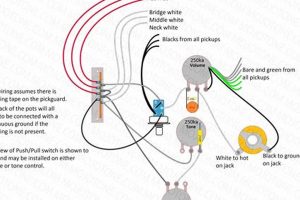
Coil splitting is commonly activated by a push-pull switch on the guitar’s tone knob. When the knob is pushed in, the humbucker operates in normal mode. When the knob is pulled out, the coil is split, resulting in the single-coil sound.
Overall, coil splitting is a valuable feature that expands the sonic capabilities of an electric guitar. It allows guitarists to access a wider range of tones and sounds, making it a popular choice for players of all genres.
Key Insights:
- Coil splitting transforms the sound of humbucking pickups into a brighter, twangier single-coil sound.
- It is commonly activated by a push-pull switch on the guitar’s tone knob.
- Coil splitting expands the sonic capabilities of an electric guitar, allowing guitarists to access a wider range of tones and sounds.
3. Phase Switching

Phase switching is a fascinating aspect of “what does the switch on an electric guitar do.” It involves inverting the polarity of one pickup, which results in unique, out-of-phase tones. Understanding phase switching is crucial for guitarists seeking to expand their sonic palette and explore new tonal possibilities.
When two pickups are in phase, their magnetic fields reinforce each other, producing a fuller, more powerful sound. However, when one pickup’s polarity is inverted, the magnetic fields partially cancel each other out, creating a thinner, more nasal sound with a distinctive “hollow” quality. This out-of-phase sound is often described as “scooped” or “notched,” as it lacks the fullness and low end of in-phase pickups.
Phase switching can be particularly effective when used with humbucking pickups. Humbuckers are known for their thick, warm sound, but phase switching can transform them into single-coil-like pickups with a brighter, more articulate tone. This versatility makes phase switching a valuable tool for guitarists who want to access a wider range of sounds from their instrument.
In practice, phase switching is commonly activated by a push-pull switch on the guitar’s tone knob. When the knob is pushed in, the pickups are in phase. When the knob is pulled out, the polarity of one pickup is inverted, resulting in the out-of-phase sound.
Guitarists can experiment with phase switching to create unique and interesting tones. For example, using the out-of-phase sound on the neck pickup can produce a funky, “strangled” sound that is well-suited for rhythm playing. Conversely, using the out-of-phase sound on the bridge pickup can create a bright, cutting lead tone that is perfect for solos.
Key Insights:
- Phase switching inverts the polarity of one pickup, creating unique, out-of-phase tones.
- Out-of-phase tones are thinner, more nasal, and have a distinctive “hollow” quality.
- Phase switching is commonly activated by a push-pull switch on the guitar’s tone knob.
- Guitarists can experiment with phase switching to create a wide range of unique and interesting tones.
4. Series/Parallel

In the realm of electric guitar electronics, the series/parallel switch plays a crucial role in shaping the sound and output of humbucking pickups. Understanding this aspect is integral to comprehending “what does the switch on an electric guitar do.”
- Series Wiring:
In series wiring, the coils of a humbucker are connected in a sequential manner. This configuration results in a higher output, increased inductance, and a fuller, thicker sound. Series wiring is commonly used for heavy rock and metal genres, where a powerful, distortion-friendly tone is desired.
- Parallel Wiring:
In contrast, parallel wiring connects the coils of a humbucker in a parallel circuit. This configuration yields a lower output, reduced inductance, and a brighter, clearer sound. Parallel wiring is often preferred for cleaner tones, funk, and blues, where clarity and articulation are essential.
The series/parallel switch allows guitarists to effortlessly switch between these two wiring configurations, providing a wide range of tonal options from a single pickup. By understanding the impact of series/parallel wiring on humbucker sound, guitarists can tailor their instrument to suit their specific musical style and preferences.
5. Bypass

The bypass switch on an electric guitar plays a crucial role in understanding “what does the switch on an electric guitar do.” It essentially disengages the guitar’s electronics, allowing the pure, unprocessed sound of the pickups to be heard without any coloration or modification.
The significance of the bypass switch lies in its ability to provide a direct and unadulterated signal path from the pickups to the amplifier. This results in a clear and transparent sound that captures the natural characteristics of the guitar and pickups. Bypassing the electronics eliminates any potential interference or alteration caused by active circuitry, such as tone controls, volume controls, or effects pedals.
Practically, the bypass switch is often used in situations where guitarists seek a pure and uncolored sound, such as when recording in a studio setting or performing live in an acoustic environment. It allows guitarists to capture the raw and organic tone of their instrument without any additional processing or manipulation.
Furthermore, the bypass switch can be particularly useful when troubleshooting electrical issues or diagnosing problems with the guitar’s electronics. By disengaging the electronics, guitarists can isolate the issue and determine if it originates from the pickups, wiring, or other components.
In summary, the bypass switch on an electric guitar is a valuable tool that allows guitarists to access the pure, unprocessed sound of their instrument. It provides a direct and transparent signal path that bypasses any active circuitry, ensuring that the natural characteristics of the guitar and pickups are preserved. Whether for recording, live performance, or troubleshooting purposes, the bypass switch plays a crucial role in delivering the authentic and unadulterated sound of the electric guitar.
6. Kill Switch
The kill switch is a crucial component in exploring “what does the switch on an electric guitar do.” It provides guitarists with the ability to instantly mute the guitar’s output, creating dramatic effects and enhancing their performance.
- Function and Mechanism:
The kill switch is typically a momentary switch that, when activated, breaks the circuit between the guitar’s output jack and the rest of the electronics. This results in an immediate cessation of sound, allowing guitarists to create dramatic pauses, accents, and rhythmic effects. - Performance Applications:
Kill switches are often used in live performances to create suspense, build anticipation, or add emphasis to certain sections of a song. By muting the guitar’s output at key moments, guitarists can captivate the audience and enhance the impact of their music. - Technical Implications:
The kill switch can also have technical implications. By temporarily interrupting the signal path, it can help to reduce noise and feedback, especially when using high-gain amplifiers or effects. Additionally, the kill switch can be used to troubleshoot electrical issues or quickly silence the guitar when not in use. - Variations and Customizations:
Kill switches come in various forms and can be installed in different locations on the guitar. Some guitars have built-in kill switches, while others require external switches or modifications. Guitarists can choose the type and placement of the kill switch that best suits their playing style and preferences.
In summary, the kill switch on an electric guitar is a powerful tool that allows guitarists to mute the guitar’s output instantly, creating dramatic effects and enhancing their performance. Its versatility and customizable nature make it a valuable addition to any guitarist’s arsenal, empowering them to explore new sonic possibilities and captivate their audience.
7. Vari-Tone
The Vari-Tone switch is a unique and versatile feature found on certain electric guitars, particularly those manufactured by Fender. Understanding its function is essential in exploring “what does the switch on an electric guitar do”. The Vari-Tone switch operates by adding a capacitor to the guitar’s circuit, which alters the guitar’s tone and overall sound.
- Tonal Modifications:
The Vari-Tone switch allows guitarists to adjust the guitar’s tone, ranging from bright and twangy to warm and mellow. By adding capacitance to the circuit, the switch effectively rolls off high frequencies, resulting in a smoother, less harsh sound. This tonal variation is particularly useful for achieving vintage or bluesy tones.
- Capacitor Selection:
Different Vari-Tone switches utilize different capacitors, each with its own unique tonal characteristics. The choice of capacitor value determines the amount of capacitance added to the circuit and, consequently, the extent of tonal modification.
- Interactive Element:
The Vari-Tone switch is not a simple on/off switch but rather a continuously variable control. Guitarists can rotate the switch to achieve a range of tonal variations, allowing for fine-tuning and experimentation. This interactive element makes the Vari-Tone switch a powerful tool for shaping the guitar’s sound.
- Historical Significance:
The Vari-Tone switch has a rich history, dating back to the early days of electric guitar development. It was first introduced by Fender in the mid-1950s and quickly gained popularity among guitarists seeking a wider tonal palette. The Vari-Tone switch remains a sought-after feature on vintage and reissue Fender guitars.
In summary, the Vari-Tone switch on an electric guitar alters the guitar’s tone by adding a capacitor to the circuit. This tonal modification ranges from subtle warmth to pronounced mellowing, providing guitarists with a versatile tool for shaping their sound. The interactive
nature of the switch allows for fine-tuning and experimentation, making it a popular feature among players seeking a wider tonal palette.
8. Rotary
Rotary switches are a type of guitar switch that allows guitarists to access a wider range of pickup combinations and sounds compared to traditional toggle or blade switches. This versatility is achieved through a rotating mechanism that offers multiple positions, each corresponding to a different pickup configuration. Understanding the function and benefits of rotary switches is crucial in exploring “what does the switch on an electric guitar do”.
- Multiple Pickup Combinations:
Rotary switches provide guitarists with the ability to select various pickup combinations, expanding their tonal options. By rotating the switch to different positions, players can engage specific pickups or combine them in unique ways, resulting in a wider sonic palette.
- Progressive Sounds:
Unlike toggle switches that offer only a few fixed pickup configurations, rotary switches allow for progressive changes in sound. As the switch is rotated, the pickups are gradually blended or transitioned, creating a smooth and nuanced shift in tone.
- Customizable Configurations:
Rotary switches offer a high degree of customization, allowing guitarists to tailor their instrument’s sound to their preferences. The switch can be configured to access specific pickup combinations or create unique voicings, providing players with a personalized tonal experience.
In conclusion, the rotary switch on an electric guitar expands the sonic possibilities of the instrument by providing access to a wider range of pickup combinations and sounds. Its rotating mechanism and progressive nature allow guitarists to explore a diverse array of tones, customize their sound, and achieve a greater level of tonal control. Whether it’s for live performances, studio recordings, or personal experimentation, the rotary switch is a versatile tool that empowers guitarists to unlock the full potential of their instrument’s sound.
9. Push-Pull
The push-pull switch is a versatile component that significantly expands the functionality of electric guitars. Its unique design allows guitarists to access additional pickup configurations and tonal options, enhancing their sonic capabilities. Understanding the role of the push-pull switch is essential in exploring “what does the switch on an electric guitar do.”
- Coil Splitting:
When activated, the push-pull switch can engage coil splitting, which transforms humbucking pickups into single-coil pickups. This tonal modification results in brighter, twangier sounds, effectively expanding the guitar’s sonic palette. Coil splitting is particularly useful for achieving vintage or bluesy tones.
- Phase Switching:
Another function activated by the push-pull switch is phase switching. This technique inverts the polarity of one pickup, creating unique “out-of-phase” tones. These sounds are characterized by a scooped midrange and a distinctive “hollow” quality, making them ideal for funky or experimental playing styles.
- Series/Parallel Switching:
In certain guitar models, the push-pull switch can also control series/parallel switching for humbucking pickups. Series wiring delivers a thicker, more powerful sound, while parallel wiring results in a brighter, cleaner tone. This tonal variation provides guitarists with a wider range of sonic possibilities, allowing them to adapt to different musical genres and playing techniques.
- Customizable Configurations:
The push-pull switch offers a high degree of customization, allowing guitarists to tailor the functionality of their instrument to their specific preferences. The switch can be configured to activate various combinations of coil splitting, phase switching, and series/parallel switching, empowering guitarists to create unique and personalized tonal setups.
In summary, the push-pull switch on an electric guitar is a powerful tool that unlocks a wide array of pickup configurations and tonal options. Its ability to engage coil splitting, phase switching, and series/parallel switching provides guitarists with unparalleled sonic flexibility and the ability to customize their instrument’s sound to suit their musical needs and creative vision.
10. Blade
In exploring “what does the switch on an electric guitar do,” the blade switch holds a significant place, particularly in the context of Stratocaster-style guitars. This specialized switch offers distinct advantages and plays a crucial role in shaping the overall sound and versatility of the instrument.
- Pickup Selection and Combinations:
The blade switch is primarily designed for pickup selection, allowing guitarists to engage different pickup configurations and combinations. Stratocasters typically feature three single-coil pickups, and the blade switch enables players to select each pickup individually or combine them in various ways. This flexibility empowers guitarists to access a wide range of tones, from bright and twangy to warm and full.
- Positional Tonal Variations:
The blade switch’s unique design allows for subtle tonal variations based on the position of the switch. Each pickup has a specific placement and voicing, and as the switch is moved through its positions, the sound transitions smoothly, offering a gradual shift in tone and character. This feature is particularly beneficial for achieving nuanced lead and rhythm tones.
- Ergonomic Design and Functionality:
The blade switch is known for its ergonomic design and intuitive functionality. Its elongated shape and smooth action make it easy to operate, even during live performances. The switch is typically positioned near the guitar’s volume and tone controls, providing convenient access for quick adjustments and tonal experimentation.
- Vintage Appeal and Modern Adaptations:
The blade switch has become an iconic feature of Stratocaster guitars, contributing to their timeless appeal. Over the years, various adaptations and modifications of the blade switch have emerged, including custom switch tips and wiring configurations. These variations offer guitarists the ability to personalize their instruments and explore even more tonal possibilities.
In conclusion, the blade switch on a Stratocaster guitar plays a vital role in pickup selection and tonal shaping. Its unique design and functionality provide guitarists with a versatile and expressive tool to explore a wide range of sounds. Whether it’s for classic blues, rock, or modern fusion, the blade switch remains an essential component in the sonic DNA of the Stratocaster, empowering guitarists to unlock the full potential of their instrument.
FAQs about “what does the switch on an electric guitar do”
This section addresses frequently asked questions about the functions and significance of switches on electric guitars, providing clear and informative answers.
Question 1: What is the primary function of a switch on a
n electric guitar?
Switches on electric guitars primarily control the selection and configuration of pickups, allowing guitarists to access a variety of tones and sounds. Different types of switches offer unique functionalities, such as pickup selection, coil splitting, phase switching, series/parallel wiring, and bypass.
Question 2: How does a pickup selector switch work?
A pickup selector switch typically features multiple positions, each corresponding to a different pickup or combination of pickups. When a position is selected, the switch completes the electrical circuit between the selected pickup(s) and the output jack, allowing the guitar’s sound to be amplified.
Question 3: What is coil splitting, and how is it activated?
Coil splitting is a technique that divides a humbucking pickup into its two individual coils, resulting in a brighter, single-coil-like sound. It is often activated by a push-pull switch on the guitar’s tone knob. When the knob is pushed in, the humbucker operates in normal mode. When pulled out, the coil is split, resulting in the single-coil sound.
Question 4: What is the purpose of a phase switching switch?
A phase switching switch inverts the polarity of one pickup, creating unique “out-of-phase” tones. These sounds are characterized by a scooped midrange and a distinctive “hollow” quality, making them ideal for funky or experimental playing styles.
Question 5: Can switches on an electric guitar affect the volume or tone of the instrument?
While switches primarily control pickup selection and configuration, some specialized switches can also impact volume or tone. For example, a bypass switch temporarily disengages the guitar’s electronics, providing a pure, unprocessed sound. Additionally, a Vari-Tone switch alters the guitar’s tone by adding a capacitor to the circuit.
Question 6: How do I choose the right switch for my electric guitar?
Selecting the right switch depends on the desired functionality and tonal preferences. Consider the number of pickups, desired pickup combinations, and whether additional features like coil splitting or phase switching are necessary. Research different switch types, consult with experts, and experiment with various options to find the switch that best suits your playing style and musical needs.
Summary: Switches on electric guitars are essential components that provide guitarists with a wide range of tonal possibilities and control over their instrument’s sound. Understanding the functions and applications of different switch types empowers guitarists to tailor their sound and unlock the full potential of their electric guitars.
Transition to the next article section: Explore advanced techniques and tips for utilizing switches on electric guitars to achieve specific tones and enhance your playing.
Tips for Utilizing Switches on Electric Guitars
Mastering the use of switches on electric guitars empowers guitarists to unlock a wide spectrum of tones and enhance their playing capabilities. Here are a few essential tips to optimize your switch utilization:
Tip 1: Experiment with Pickup Combinations:
Explore the tonal possibilities offered by different pickup combinations. Experiment with the various switch positions to find the sweet spots that align with your desired sound. Each pickup combination provides a unique blend of warmth, brightness, and clarity.
Tip 2: Utilize Coil Splitting for Versatility:
If your guitar features humbucking pickups, engage the coil-splitting switch to access single-coil-like tones. This technique broadens your sonic palette, allowing you to switch between thick, full humbucker sounds and brighter, twangier single-coil sounds.
Tip 3: Explore Phase Switching for Unique Textures:
Experiment with phase switching to create unconventional and intriguing tones. When activated, phase switching inverts the polarity of one pickup, resulting in distinctive “out-of-phase” sounds. These sounds are characterized by a scooped midrange and a hollow, ethereal quality.
Tip 4: Master Series/Parallel Switching for Tonal Nuances:
If your guitar has humbucking pickups with series/parallel switching, explore the tonal variations it offers. Series wiring delivers a thicker, more powerful sound, while parallel wiring provides a brighter, cleaner tone. Experiment with both modes to find the optimal setting for your musical style.
Tip 5: Utilize the Bypass Switch for Pure Tone:
Engage the bypass switch to temporarily disengage the guitar’s electronics, providing a pure, unprocessed sound. This technique is particularly useful for capturing the natural resonance and character of your guitar, especially when recording in a studio setting.
Tip 6: Customize Your Setup for Optimal Performance:
Explore the various switch configurations and pickup combinations to tailor your guitar’s sound to your specific preferences. Experiment with different switch positions and pickup combinations until you find the perfect setup that complements your playing style and musical vision.
Summary: Mastering the use of switches on electric guitars is a journey of exploration and experimentation. By following these tips, guitarists can unlock a world of tonal possibilities and enhance their playing capabilities. Embrace the versatility and creativity that switches offer, and let your guitar become an extension of your musical expression.
Transition to the article’s conclusion: Understanding “what does the switch on an electric guitar do” empowers guitarists with the knowledge and skills to shape their sound, expand their tonal palette, and elevate their performances.
Conclusion
Through this comprehensive exploration of “what does the switch on an electric guitar do,” we have unveiled the multifaceted role of switches in shaping the sound and versatility of electric guitars. From pickup selection and coil splitting to phase switching and series/parallel wiring, these components empower guitarists with an array of tonal possibilities.
Understanding the functions and applications of different switch types is essential for guitarists seeking to expand their sonic palette and enhance their playing capabilities. By experimenting with various switch configurations and pickup combinations, guitarists can unlock a world of unique and expressive sounds that complement their musical vision.
Mastering the art of switch utilization is an ongoing journey of exploration and experimentation. Embrace the versatility and creativity that switches offer, and let your guitar become an extension of your musical expression. As you continue to explore the sonic possibilities of your instrument, remember the insights gained through this exploration and continue to push the boundaries of your musical creativity.