The best acoustic guitar for intermediate players can elevate your playing to the next level. If you’re ready to upgrade from a beginner guitar, choosing the right intermediate acoustic guitar is crucial for your musical journey.
Editor’s Note:We’ve done the research and consulted with experts to bring you this comprehensive guide to the best acoustic guitars for intermediate players. Whether you’re looking for a dreadnought, grand auditorium, or parlor guitar, we’ve got you covered.
We’ve analyzed the top acoustic guitars on the market, digging into their features, sound quality, and playability. Our goal is to provide you with all the information you need to make an informed decision about your next guitar purchase.
Key Differences:
| Feature | Key Differences |
|---|---|
| Body Shape | Dreadnought, grand auditorium, parlor |
| Tonewood | Spruce, mahogany, rosewood |
| Electronics | Built-in pickups and preamps |
| Playability | Neck shape, string action, fretwork |
Main Article Topics:
- Body Shape and Tonewoods
- Electronics and Playability
- Top Acoustic Guitar Brands
- Tips for Choosing the Best Acoustic Guitar
1. Body Shape (Dreadnought, Grand Auditorium, Parlor)

The body shape of an acoustic guitar significantly influences its sound and projection, making it a crucial consideration for intermediate players. Here’s an exploration of the three primary body shapes:
- Dreadnought:
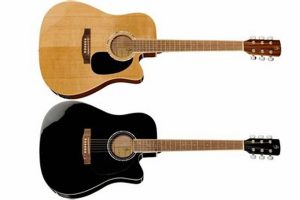
Known for its large, robust body, the dreadnought produces a powerful, full-bodied sound with strong bass response. Its versatility makes it suitable for various genres, including strumming and flatpicking.
- Grand Auditorium:
With a slightly smaller body than the dreadnought, the grand auditorium offers a more balanced sound with clear mids and highs. Its comfortable size and excellent projection make it ideal for fingerstyle playing and vocal accompaniment.
- Parlor:
The smallest of the three, the parlor guitar produces a warm, intimate sound with a focus on the mid-range. Its compact size and portability make it perfect for home practice, songwriting, and travel.
Ultimately, the choice of body shape depends on the intermediate player’s playing style and preferences. Dreadnoughts excel in volume and projection, grand auditoriums provide a balanced and versatile sound, while parlors offer a more intimate and portable experience.
2. Tonewoods (Spruce, Mahogany, Rosewood)

Tonewoods play a vital role in determining the sound and character of an acoustic guitar, making them an essential consideration for intermediate players. The choice of tonewoods affects the guitar’s tonal qualities, resonance, and projection.
Spruce is a popular choice for soundboards due to its bright, articulate sound with a strong mid-range response. Mahogany, often used for back and sides, produces a warm, rich tone with excellent sustain and projection. Rosewood, known for its deep, resonant sound, is commonly used for both soundboards and back and sides.
The combination of spruce, mahogany, and rosewood offers a versatile range of tonal possibilities for intermediate players. Spruce provides clarity and articulation, mahogany adds warmth and sustain, while rosewood delivers depth and resonance. By understanding the characteristics of these tonewoods, players can select a guitar that aligns with their desired sound.
Table: Tonewoods and Their Characteristics
| Tonewood | Characteristics |
|---|---|
| Spruce | Bright, articulate sound with strong mid-range response |
| Mahogany | Warm, rich tone with excellent sustain and projection |
| Rosewood | Deep, resonant sound with excellent sustain and projection |
Understanding the connection between tonewoods and the best acoustic guitar for intermediate players empowers them to make informed decisions based on their musical preferences and playing style. By carefully considering the tonal qualities of different woods, intermediate players can find a guitar that inspires their creativity and enhances their musical journey.
3. Electronics (Pickups, Preamps)
For intermediate players seeking to expand their musical horizons, electronics play a pivotal role in unlocking the versatility of the best acoustic guitar. Electronics, encompassing pickups and preamps, provide the means to amplify the guitar’s natural sound, allowing for stage performance, recording, and creative exploration.
Piezoelectric pickups, commonly used in acoustic guitars, convert the vibrations of the guitar’s strings into electrical signals. These signals are then processed by a preamp, which amplifies and shapes the sound, providing control over volume, tone, and EQ. The preamp also includes features such as phase inversion and feedback control, ensuring optimal sound quality and minimizing unwanted noise.
The integration of electronics opens up a world of possibilities for intermediate players. With the ability to amplify their sound, they can confidently perform in a variety of settings, from intimate coffeehouses to large concert halls. Electronics also facilitate recording, enabling players to capture their performances or collaborate with other musicians. Additionally, the use of effects pedals, such as reverb and chorus, becomes possible, further enhancing the guitar’s sonic capabilities.
When selecting the best acoustic guitar with electronics, intermediate players should consider the type of pickup system, the features of the preamp, and the overall sound quality. Renowned brands such as Fishman, LR Baggs, and Seymour Duncan offer a range of options to suit different playing styles and budgets.
In conclusion, electronics are an essential component of the best acoustic guitar for intermediate players, empowering them to amplify their sound, enhance their performances, and explore new musical possibilities. Understanding the connection between electronics and aco
ustic guitars enables players to make informed decisions, unlocking the full potential of their instruments.
Table: Benefits of Electronics for Intermediate Acoustic Guitar Players
| Benefit | Description |
|---|---|
| Amplification | Electronics allow players to amplify their guitar’s sound, making it suitable for stage performances and large venues. |
| Recording | Electronics facilitate recording, enabling players to capture their performances or collaborate with other musicians. |
| Effects and Versatility | Electronics allow players to connect effects pedals, such as reverb and chorus, expanding the guitar’s sonic capabilities. |
| Control and Flexibility | Preamplifiers provide control over volume, tone, and EQ, allowing players to shape their sound to suit different playing styles and environments. |
4. Playability (Neck Shape, String Action, Fretwork)

For intermediate acoustic guitar players, playability is paramount in unlocking their technical potential and musical expression. Three key elements of playabilityneck shape, string action, and fretworkintertwine to create a guitar that feels comfortable, responsive, and facilitates effortless playing.
Neck shape refers to the profile of the guitar’s neck, which can vary in thickness, width, and curvature. The ideal neck shape is subjective, but generally, a neck that fits snugly in the player’s hand without causing strain or fatigue is preferred. String action, measured by the distance between the strings and the fretboard, affects the ease of fretting and the overall feel of the guitar. Lower action allows for faster and more fluid playing, while higher action may be necessary for certain techniques like slide guitar.
Fretwork encompasses the quality of the frets, their placement, and their finish. Well-crafted frets contribute to clear and accurate intonation, eliminating buzzing or dead spots on the fretboard. A smooth fret finish ensures a comfortable playing experience, reducing finger fatigue during extended playing sessions.
The connection between playability and the best acoustic guitar for intermediate players is evident in its impact on technique development and musical expression. A guitar with excellent playability allows players to execute complex chords, scales, and arpeggios with greater ease and precision. It facilitates smooth transitions between frets, enabling seamless soloing and lead playing. Moreover, a playable guitar inspires confidence, encouraging players to push their boundaries and explore new musical ideas.
Understanding the importance of playability empowers intermediate players to make informed decisions when selecting their next acoustic guitar. By carefully assessing the neck shape, string action, and fretwork, they can find an instrument that aligns with their playing style and technical aspirations.
Table: Playability Factors and Their Impact
| Factor | Impact on Playability |
|---|---|
| Neck Shape | Comfort, hand fit, ease of fretting |
| String Action | Ease of fretting, speed, and fluidity |
| Fretwork | Intonation, accuracy, finger fatigue |
5. Scale Length

Scale length, a crucial consideration in choosing the best acoustic guitar for intermediate players, refers to the distance between the nut and the bridge saddle. This seemingly technical aspect significantly influences the guitar’s playability, tone, and overall feel.
- Impact on Playability:
Scale length affects the distance between frets, with longer scales resulting in greater spacing. For intermediate players with larger hands, a longer scale length provides more room for finger movement and easier fretting. Conversely, players with smaller hands may find a shorter scale length more comfortable and less fatiguing for extended playing sessions.
- Tonal Implications:
Guitars with longer scale lengths tend to produce a brighter, more articulate sound with increased sustain. The added string tension results in a tighter, more focused tone. On the other hand, guitars with shorter scale lengths often have a warmer, mellower sound with less sustain. This tonal difference is due to the reduced string tension, which allows for more string vibration.
- Playability and Genre Considerations:
The choice of scale length can also be influenced by the player’s preferred musical genres. Fingerstyle guitarists who rely on intricate picking patterns may favor a shorter scale length for its increased comfort and ease of playability. Conversely, flatpickers and strummers who prioritize volume and projection may opt for a longer scale length to enhance string tension and sustain.
- Examples and Recommendations:
Common scale lengths for acoustic guitars include 24.75 inches, 25.4 inches, and 25.5 inches. Many intermediate players find the 25.4-inch scale length to be a versatile choice that offers a balance of playability, tone, and projection. However, the optimal scale length ultimately depends on the player’s individual preferences and playing style.
Understanding the connection between scale length and the best acoustic guitar for intermediate players empowers them to make informed decisions based on their technical abilities, musical aspirations, and playing preferences. By carefully considering the implications of scale length, intermediate players can find an instrument that supports their growth and enhances their musical journey.
6. Bracing

Bracing, the intricate framework of struts and supports within an acoustic guitar’s body, plays a pivotal role in determining the instrument’s sound, projection, and overall quality. Understanding the connection between bracing and the best acoustic guitar for intermediate players is essential for making informed choices that support their musical journey.
Bracing serves several crucial functions:
- Structural Integrity: Bracing reinforces the guitar’s body, preventing it from collapsing under the tension of the strings.
- Soundboard Support: It supports the soundboard, allowing it to vibrate freely and produce a resonant, full-bodied sound.
- Tonal Shaping: The placement, size, and shape of the braces influence the guitar’s tonal characteristics, affecting its volume, sustain, and frequency response.
Intermediate players should consider the following when evaluating bracing in the context of the best acoustic guitar:
- Scalloped Bracing: This technique involves shaving or scalloping the braces, reducing their mass and allowing the soundboard to vibrate more freely. This results in a brighter, more responsive sound with increased projection.
- X-Bracing vs. A-Bracing: X-bracin
g is the most common bracing pattern, providing a balanced sound with good volume and sustain. A-bracing, on the other hand, produces a warmer, more mellow tone with less projection. - Forward-Shifted Bracing: This design positions the braces closer to the soundhole, resulting in a more focused, articulate sound with enhanced mid-range clarity.
Understanding the connection between bracing and the best acoustic guitar for intermediate players empowers them to select an instrument that aligns with their playing style and sonic preferences. By carefully considering the type, placement, and design of the bracing, they can find a guitar that supports their musical growth and inspires their creativity.
Table: Bracing Types and Their Impact
| Bracing Type | Impact on Sound |
|---|---|
| Scalloped Bracing | Brighter, more responsive sound with increased projection |
| X-Bracing | Balanced sound with good volume and sustain |
| A-Bracing | Warmer, mellower tone with less projection |
| Forward-Shifted Bracing | More focused, articulate sound with enhanced mid-range clarity |
7. Nut Width

Nut width, a crucial component of the best acoustic guitar for intermediate players, refers to the width of the nut at the headstock. This seemingly minor detail has a significant impact on the guitar’s playability, comfort, and overall feel.
A wider nut width provides more space between the strings, making it easier for players with larger hands or longer fingers to fret chords and notes accurately. This increased spacing reduces the risk of accidental string muting and allows for more precise finger placement. Conversely, a narrower nut width may be more suitable for players with smaller hands, as it requires less stretching and finger contortion.
In addition to affecting playability, nut width also influences the guitar’s tone and sustain. A wider nut width generally produces a brighter, more articulate sound with increased sustain. This is because the wider spacing allows for more vibration and resonance along the strings. On the other hand, a narrower nut width tends to produce a warmer, mellower sound with less sustain.
Intermediate players should carefully consider nut width when selecting the best acoustic guitar. Those seeking a guitar with enhanced playability and a brighter, more resonant sound may prefer a wider nut width. Conversely, players with smaller hands or those who prioritize a warmer, mellower tone may opt for a narrower nut width.
Table: Nut Width and Its Impact
| Nut Width | Impact on Playability | Impact on Tone |
|---|---|---|
| Wider Nut Width | Easier fretting for larger hands, reduced accidental string muting | Brighter, more articulate sound with increased sustain |
| Narrower Nut Width | More suitable for smaller hands, less finger stretching | Warmer, mellower sound with less sustain |
8. Bridge
The bridge of an acoustic guitar is a crucial component that plays a vital role in the instrument’s playability, tone, and overall quality. Understanding the connection between the bridge and the best acoustic guitar for intermediate players is essential for making informed choices that enhance their musical journey.
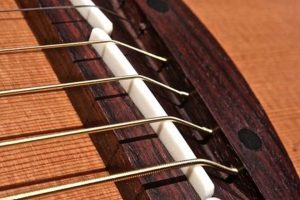
- String Support and Intonation: The bridge supports the strings at the correct height above the soundboard, ensuring proper intonation and accurate fretting. It also allows for precise adjustment of the string action, which affects the ease of playing and the overall feel of the guitar.
- Tone and Projection: The bridge transfers the vibrations of the strings to the soundboard, influencing the guitar’s tone and projection. Different bridge designs and materials can produce variations in sound, with some bridges enhancing brightness and sustain, while others contribute to a warmer, more mellow tone.
- Playability and Comfort: The shape and design of the bridge affect the player’s comfort and ease of playing. A well-designed bridge provides a comfortable resting place for the picking hand and allows for smooth transitions between strings.
- Aesthetic Appeal: The bridge also contributes to the guitar’s aesthetic appeal, with different designs and materials complementing the overall look and feel of the instrument.
Intermediate players should consider the following when evaluating the bridge in the context of the best acoustic guitar:
- Material: Common bridge materials include rosewood, ebony, and bone, each offering unique tonal characteristics and durability.
- Design: The shape and design of the bridge can affect playability, tone, and projection. Some popular bridge designs include the traditional pin bridge and the more modern compensated bridge, which improves intonation.
- Saddle: The saddle is a small piece that sits on the bridge and supports the strings. The material and shape of the saddle can the guitar’s tone and sustain.
By understanding the connection between the bridge and the best acoustic guitar for intermediate players, they can make informed decisions that align with their playing style and musical aspirations. A well-chosen bridge will not only enhance playability and comfort but also contribute to the overall tone and quality of the instrument.
9. Saddle
The saddle of an acoustic guitar is a small but crucial component that plays a significant role in the instrument’s playability, tone, and overall quality. It is a narrow strip of material, typically made of bone, plastic, or Tusq, that sits on the bridge and supports the strings at their termination point.
The saddle has several important functions:
- String Support and Intonation: The saddle supports the strings at the correct height above the soundboard, ensuring proper intonation and accurate fretting. It also allows for precise adjustment of the string action, which affects the ease of playing and the overall feel of the guitar.
- Tone and Projection: The saddle transfers the vibrations of the strings to the bridge and soundboard, influencing the guitar’s tone and projection. Different saddle materials and shapes can produce variations in sound, with some saddles enhancing brightness and sustain, while others contribute to a warmer, more mellow tone.
- Playability and Comfort: The saddle’s shape and design affect the player’s comfort and ease of playing. A well-designed saddle provides a smooth transition between strings and allows for comfortable picking and strumming.
For intermediate players seeking to upgrade their acoustic guitar, understanding the connection between the saddle and the best acoustic guitar is essential. A well-chosen saddle can greatly enhance the instrument’s playability, tone, and overall quality. When selecting a s
addle, intermediate players should consider the following factors:
- Material: Common saddle materials include bone, plastic, and Tusq, each offering unique tonal characteristics and durability.
- Shape: The shape of the saddle can affect intonation and tone. A compensated saddle is designed to improve intonation, especially for chords played higher up the neck.
- Height and Radius: The height and radius of the saddle determine the string action and the overall feel of the guitar. A higher saddle will result in a higher string action, which can be beneficial for fingerstyle players or those who prefer a heavier picking style.
By understanding the connection between the saddle and the best acoustic guitar for intermediate players, they can make informed decisions that align with their playing style and musical aspirations. A well-chosen saddle will not only enhance playability and comfort but also contribute to the overall tone and quality of the instrument.
Table: Saddle Materials and Their Impact
| Material | Characteristics |
|---|---|
| Bone | Natural material that provides a warm, resonant tone with excellent sustain. |
| Plastic | Affordable material that offers a bright, clear sound with good durability. |
| Tusq | Synthetic material that mimics the tonal qualities of bone, providing a balanced and articulate sound. |
10. Tuning Machines

Tuning machines, often referred to as tuning pegs or tuners, play a crucial role in the functionality and overall quality of an acoustic guitar, making them an essential consideration for intermediate players seeking the best acoustic guitar. These mechanical devices, located on the headstock of the guitar, serve the primary purpose of adjusting and maintaining the tension of the strings, ensuring the guitar stays in tune and produces accurate intonation.
The connection between tuning machines and the best acoustic guitar for intermediate players is multifaceted. Firstly, precise and stable tuning is paramount for intermediate players as they explore more complex musical pieces and techniques. Well-functioning tuning machines allow for quick and effortless adjustments, enabling players to fine-tune their guitars with accuracy and maintain the desired pitch throughout their performance or practice sessions.
Secondly, the quality and design of tuning machines can significantly impact the guitar’s overall stability and reliability. Durable and well-crafted tuning machines resist wear and tear, ensuring that the guitar stays in tune even after extended playing sessions or changes in environmental conditions. This reliability is particularly important for intermediate players who may be experimenting with different tunings or playing in various settings.
Furthermore, the choice of tuning machines can influence the guitar’s aesthetic appeal and complement the overall design. Different styles and finishes of tuning machines are available, allowing players to customize their guitars and match their personal preferences. This attention to detail reflects the intermediate player’s growing appreciation for the instrument’s craftsmanship and visual appeal.
In conclusion, understanding the connection between tuning machines and the best acoustic guitar for intermediate players empowers them to make informed decisions when selecting their instrument. By prioritizing precise tuning, stability, and aesthetics, intermediate players can find a guitar that meets their evolving musical needs and supports their journey toward becoming accomplished musicians.
Table: Types of Tuning Machines and Their Characteristics
| Type | Characteristics |
|---|---|
| Open-Gear Tuners | Exposed gears provide a vintage aesthetic and allow for quick and precise adjustments. |
| Closed-Gear Tuners | Enclosed gears protect against dust and dirt, ensuring smooth and reliable tuning. |
| Locking Tuners | Locking mechanisms prevent string slippage, enhancing tuning stability and reducing the need for frequent adjustments. |
11. Finish
The finish applied to an acoustic guitar plays a significant role in its durability, aesthetics, and tonal characteristics, making it an important consideration for intermediate players seeking the best acoustic guitar. The finish protects the guitar’s wood from moisture, scratches, and wear, extending its lifespan and preserving its beauty.
The choice of finish can also influence the guitar’s sound. Gloss finishes, which create a smooth and reflective surface, tend to produce a brighter and more articulate tone, while satin finishes, which have a more matte appearance, often result in a warmer and more mellow sound. The thickness of the finish can also affect the guitar’s resonance and sustain.
For intermediate players, selecting a finish that aligns with their playing style and musical preferences is crucial. Those who prefer a brighter and more cutting sound may opt for a gloss finish, while those who favor a warmer and more mellow tone may prefer a satin finish. Additionally, the durability of the finish should be considered, especially for players who frequently perform or travel with their guitars.
Understanding the connection between finish and the best acoustic guitar for intermediate players empowers them to make informed decisions that meet their specific needs and aspirations. By carefully considering the type, quality, and durability of the finish, intermediate players can find a guitar that not only sounds great but also looks and feels its best.
Table: Finish Types and Their Characteristics
| Finish Type | Characteristics |
|---|---|
| Gloss Finish | Smooth and reflective surface, producing a brighter and more articulate tone |
| Satin Finish | Matte appearance, resulting in a warmer and more mellow tone |
| Semi-Gloss Finish | Balance between gloss and satin finishes, offering a versatile sound and appearance |
FAQs on Choosing the Best Acoustic Guitar for Intermediate Players
Navigating the world of acoustic guitars as an intermediate player can lead to several questions. Here are some frequently asked questions and their answers to guide your decision-making process:
Question 1:What body shape is best for an intermediate player?
Answer: The choice of body shape depends on the player’s playing style and preferences. Dreadnought guitars offer a powerful and versatile sound, while grand auditorium guitars provide a more balanced tone. Parlor guitars are ideal for fingerstyle playing and offer a warm and intimate sound.
Question 2:What tonewoods should I consider for improved sound quality?
Answer: Spruce is a popular choice for soundboards due to its bright and articulate sound. Mahogany offers a warm and rich tone, while rosewood provides depth and resonance. The combin
ation of these tonewoods allows for a versatile range of tonal possibilities.
Question 3:How does electronics impact the functionality of an acoustic guitar?
Answer: Electronics, including pickups and preamps, enable the amplification of the guitar’s natural sound. This allows for stage performances, recording, and creative exploration. Preamplifiers provide control over volume, tone, and EQ, enhancing the overall sound quality.
Question 4:What are the key factors that affect playability?
Answer: Playability encompasses neck shape, string action, and fretwork. A comfortable neck shape, low string action, and well-crafted frets contribute to effortless playing. These factors impact technique development and musical expression, enabling players to execute complex chords and scales with greater ease.
Question 5:How does scale length influence the guitar’s sound and feel?
Answer: Scale length affects the distance between frets and the overall feel of the guitar. Longer scale lengths provide a brighter and more articulate sound with increased sustain. Shorter scale lengths offer a warmer and mellower tone and are often preferred by fingerstyle guitarists.
Question 6:What is the significance of the guitar’s finish?
Answer: The finish protects the guitar’s wood and influences its aesthetics and tone. Gloss finishes produce a brighter sound, while satin finishes offer a warmer tone. The durability of the finish is also crucial, especially for players who frequently perform or travel with their guitars.
Understanding these aspects empowers intermediate players to make informed decisions when selecting the best acoustic guitar that aligns with their musical aspirations and playing style.
Transition to the next article section: Acoustic guitars come in a wide range of options, each with its unique characteristics. Exploring the different body shapes, tonewoods, and features available will help intermediate players find the perfect guitar to elevate their musical journey.
Tips for Choosing the Best Acoustic Guitar for Intermediate Players
Selecting the ideal acoustic guitar as an intermediate player requires careful consideration of various factors. Here are several crucial tips to guide your decision-making process:
Tip 1: Determine Your Playing Style and Musical Preferences
Identify the genres you enjoy playing and the techniques you commonly employ. Different body shapes, such as dreadnought, grand auditorium, and parlor, offer unique tonal characteristics and playing experiences. Choose a guitar that complements your musical style and aspirations.
Tip 2: Consider Tonewoods for Desired Sound Quality
The type of wood used in the guitar’s construction significantly influences its sound. Spruce provides a bright and articulate tone, while mahogany offers warmth and richness. Rosewood adds depth and resonance. Experiment with different tonewood combinations to find the sound that resonates with you.
Tip 3: Explore Electronics for Versatility
If you plan on performing live or recording, consider a guitar equipped with electronics. Pickups and preamps allow you to amplify your guitar’s natural sound, providing greater versatility and control over volume and tone.
Tip 4: Prioritize Playability for Comfort and Technique
The guitar’s neck shape, string action, and fretwork directly impact your playing comfort and technique development. Choose a guitar with a neck shape that fits your hand comfortably, low string action for effortless fretting, and well-crafted frets for clear intonation.
Tip 5: Understand Scale Length’s Impact on Sound and Feel
Scale length refers to the distance between the nut and the bridge. Longer scale lengths produce a brighter sound with increased sustain, while shorter scale lengths offer a warmer tone and are often preferred for fingerstyle playing. Consider your playing style and desired sound when selecting a scale length.
Tip 6: Evaluate the Guitar’s Finish for Protection and Aesthetics
The guitar’s finish not only enhances its visual appeal but also protects the wood from damage. Gloss finishes provide a brighter sound, while satin finishes offer a warmer tone. Choose a finish that aligns with your aesthetic preferences and durability requirements.
By following these tips, intermediate players can make informed decisions when selecting the best acoustic guitar to support their musical journey and elevate their playing to the next level.
Best Acoustic Guitar for Intermediate Player
The journey towards musical excellence for intermediate guitarists demands a discerning choice of instrument. This comprehensive guide has explored the intricacies of selecting the best acoustic guitar for intermediate players, empowering them with the knowledge to make informed decisions that align with their musical aspirations.
Understanding the impact of body shape, tonewoods, electronics, playability, and other factors on a guitar’s sound, feel, and versatility enables intermediate players to identify the instrument that will amplify their creativity and propel their musical growth. By carefully considering their playing style, tonal preferences, and technical needs, they can find the perfect acoustic guitar companion that will inspire and elevate their musical journey to new heights.
Youtube Video: